
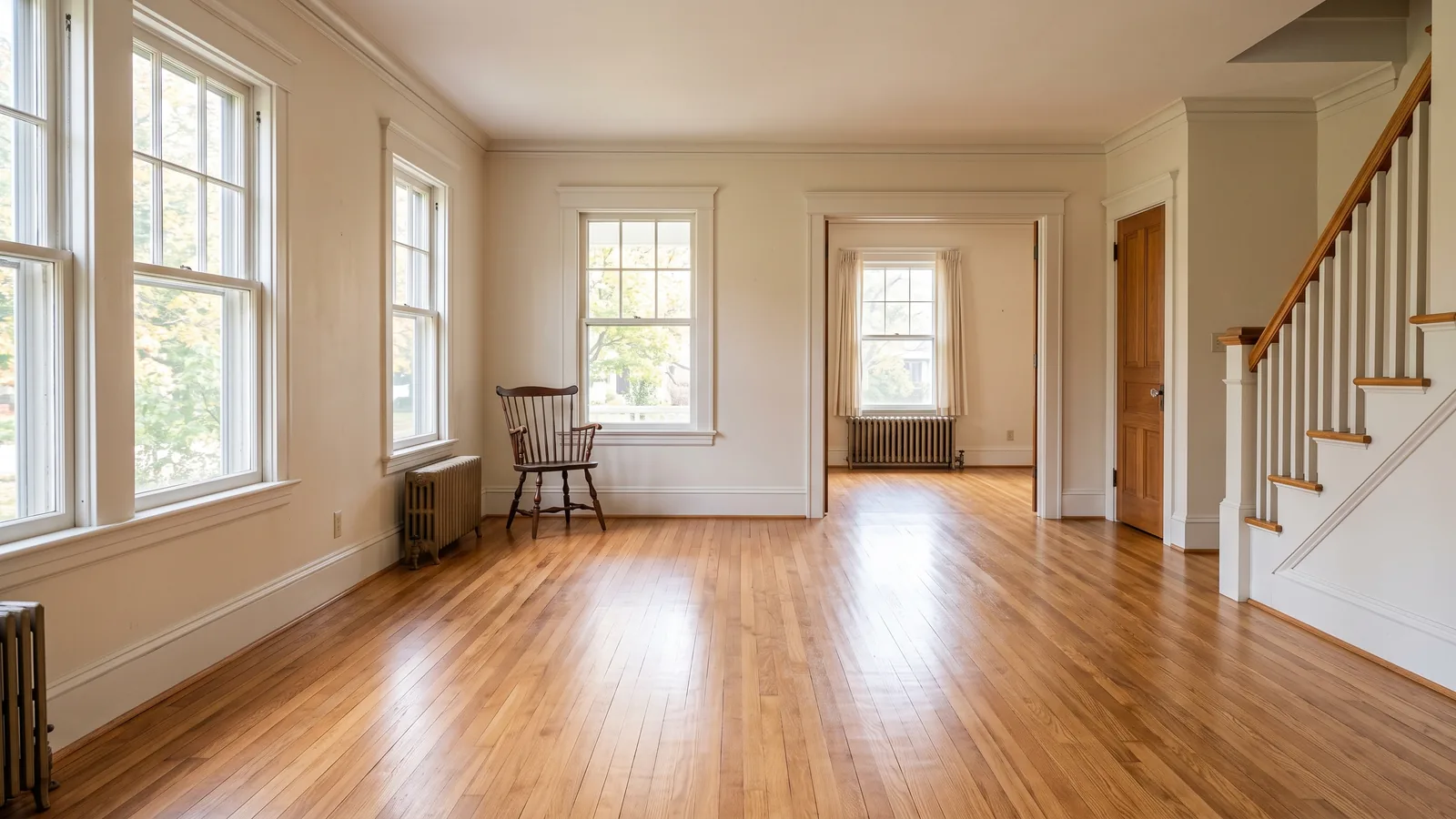
Dustless Hardwood Floor Refinishing Equipment and Setup
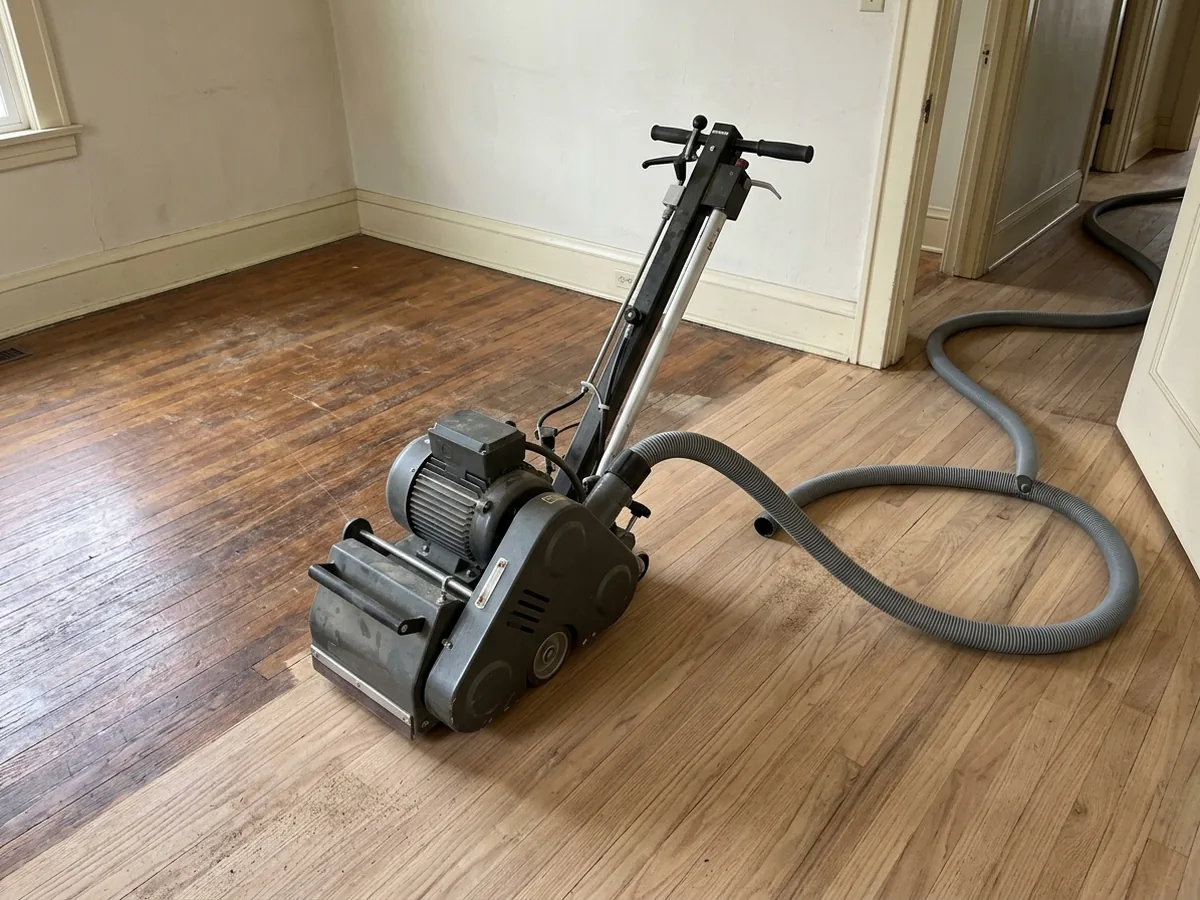
Vacuum-Connected Drum and Belt Sanders
A standard floor sander throws its dust into a cloth bag hanging off the back. A dust-contained sander sends it down a hose instead, to a separator and vacuum parked away from the work area. The sanding itself is the same full sand to bare wood, with the same grit sequence, described under hardwood floor refinishing.
The hard part is airflow. A Hardwood Floors Magazine piece by a dust-collector maker points out that every sander already blows dust away from its belt, so a vacuum attached to it has to fight the sander's own air. Long, kinked hoses make that worse. The fix the article describes is relieving air pressure at the sander so the vacuum can pull the remaining dust cleanly. In plain terms, a vacuum with a big CFM number on its label isn't enough by itself; the hose, fittings and sander have to be matched to it.
The same article makes a point worth repeating when you compare quotes: many contractors claim "dust-free" or "dustless", and very few can back it up. Ask what's attached to the drum sander, how long the hose run is, and where the dust ends up.
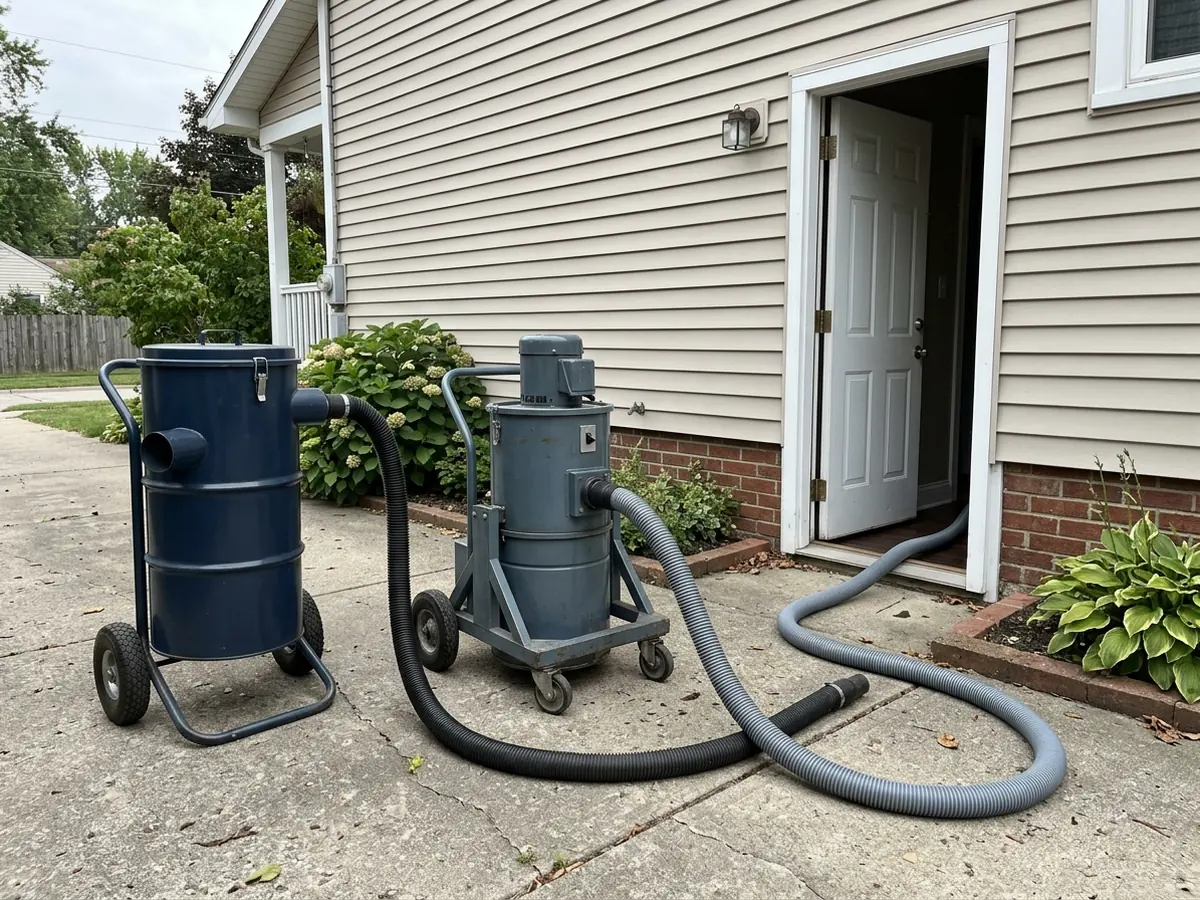
Cyclone and HEPA Dust Collection
Most dust-contained systems work in two stages. A cyclone separator spins the heavy dust out of the airstream and drops it into a drum or a bag that can be tied off. What's left, the fine dust, goes on to a vacuum with a HEPA filter.
The fine dust is the reason for the second stage. HEPA, as the U.S. Department of Energy defines it, means a filter that removes at least 99.97 percent of airborne particles at 0.3 microns, according to the EPA. The Hardwood Floors Magazine article notes that cloth sander bags work best at about 1 micron, so the smallest particles pass through, and that a bag should be emptied when it's a third full because a fuller bag pushes more dust back out. OSHA says breathing airborne wood dust from sanding may cause allergic and other respiratory symptoms, and cancer.
Ask for "full-unit" HEPA, meaning the whole vacuum is sealed so air can't bypass the filter, and for hoses that are sealed airtight along their length. In an older house, it matters for another reason: sanding near lead paint calls for HEPA collection and lead-safe practices, explained on hardwood floor restoration.
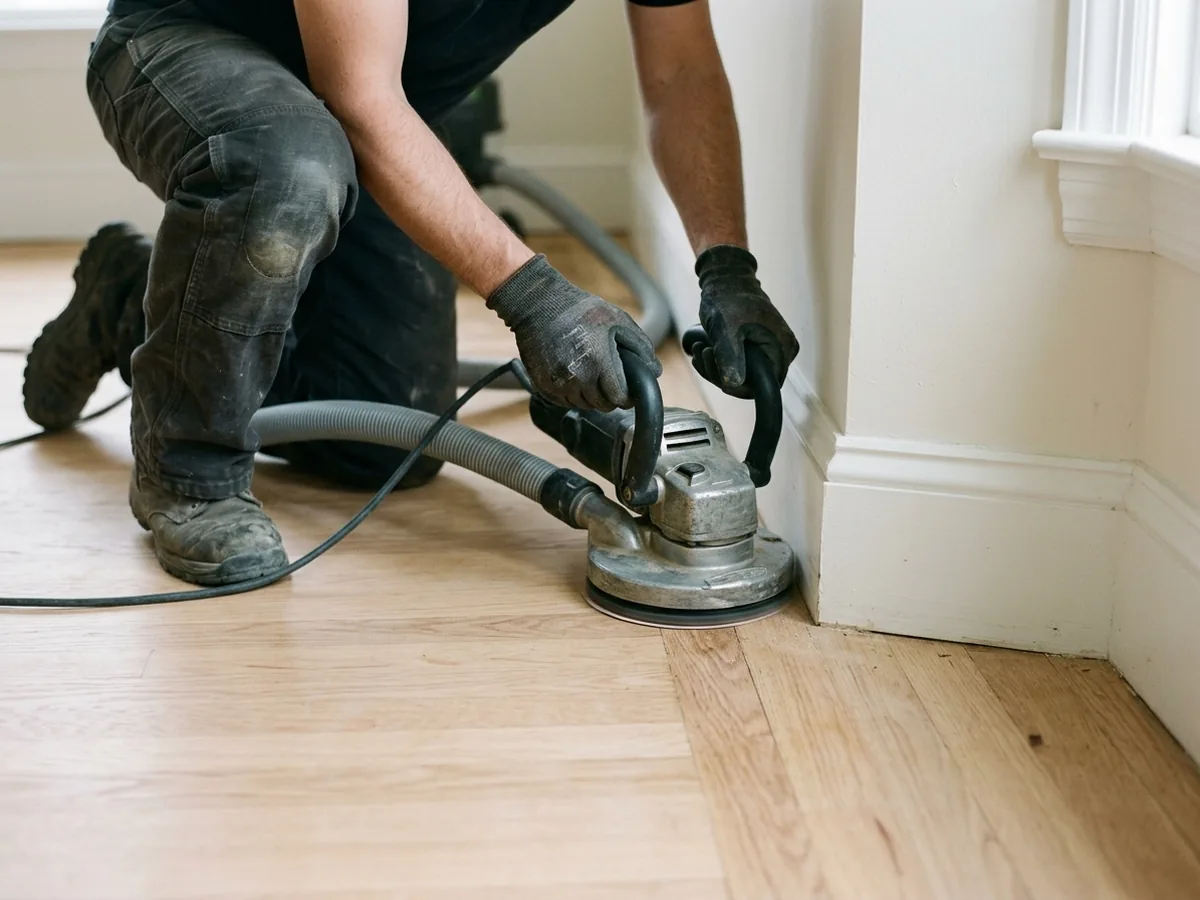
Edging, Corners and Hand Scraping
The drum sander covers the open floor, but the edger sands the last few inches along every wall, and it throws dust right at the baseboards. A system that only connects the big machine leaves that part of the job uncontained. Ask whether the edger runs on the same collector.
Corners, the space under radiators and the edges of stair landings are reached with a hand scraper or a small detail sander. Scraping makes curls of wood, which are easy to vacuum. The detail sander is the leftover dust source, and a good crew will run a vacuum attachment on it too. Between finish coats, the floor is buffed lightly with a fine screen, which raises a little more dust; that's usually vacuumed and tacked off before the next coat.
Sealing Off Rooms, Doorways and HVAC Returns
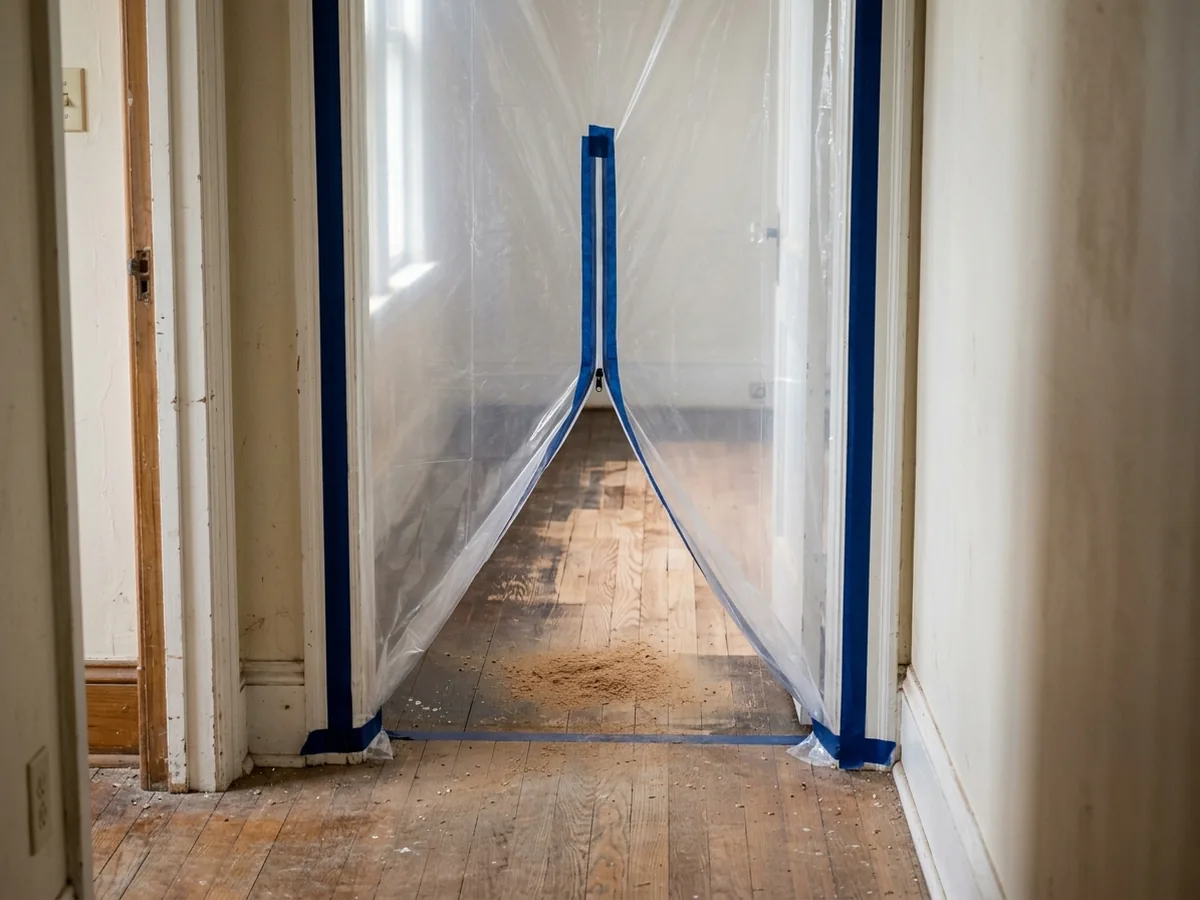
Even with good collection, some dust escapes, so the room still gets closed off. Doorways get plastic with a zipper door, and supply registers and return grilles get covered. Ask the crew to have the furnace or air conditioning fan turned off during sanding, so the return air doesn't pull dust into the ductwork and spread it through the house. In an Ann Arbor winter, that means planning around a cold house for a few hours, or scheduling sanding for a milder day.
The Hardwood Floors Magazine author describes the old way: a vented plastic room around the sanding that took ages to build and still left the crew cleaning as long as it sanded. Good collection means less plastic. It doesn't mean none. Cabinets, built-ins and closets near the work still deserve covering, especially in kitchens where dust settles on everything.
Why Ann Arbor homeowners call Ann Arbor Wood Flooring
- Free estimate, and you can ask for it in writing, species and finish named
- One independent local floor contractor gets your request, not a call list
- No fee to homeowners for the referral
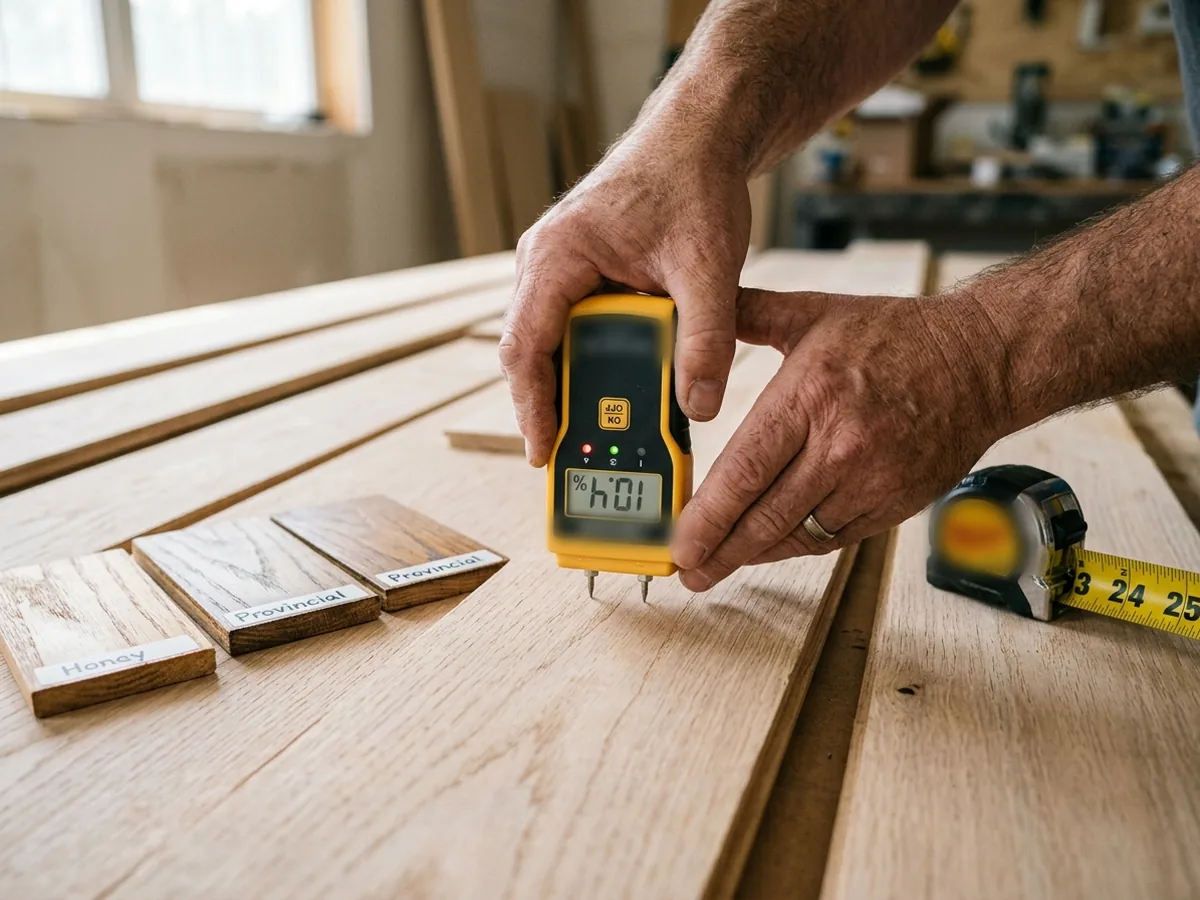
- Ask for moisture readings before any new floor goes down
How Much Does Dustless Refinishing Add?
HomeGuide's 2025 figures add $2 to $4 a square foot for dust-capturing equipment on top of the normal refinishing rate. Angi and This Old House quote dustless refinishing at $5 to $8 a square foot in total, against $3 to $8 for traditional sanding. Full refinishing prices are on the refinishing cost page.
Part of the extra cost comes back in time. The dust-collector maker's article claims jobs run about 30 percent faster on average, because there's less plastic to hang and less cleanup after. That's a vendor's figure, not an independent one, but the logic holds: a crew that isn't wiping down every surface finishes sooner.
Who Benefits Most from Dust-Contained Sanding?
Dust-contained sanding matters most when people stay in the house during the work, when someone has asthma or allergies, in homes with open floor plans where a closed door won't contain a room, and in pre-1978 houses with painted trim near the floor. Kitchens and rooms with built-in cabinets also gain a lot, since fine dust is hard to clean out of cabinet interiors.
If the floor only needs fresh finish, a screen and recoat makes far less dust than any full sand, contained or not. For everything else about your floor, start at hardwood floors in Ann Arbor.