
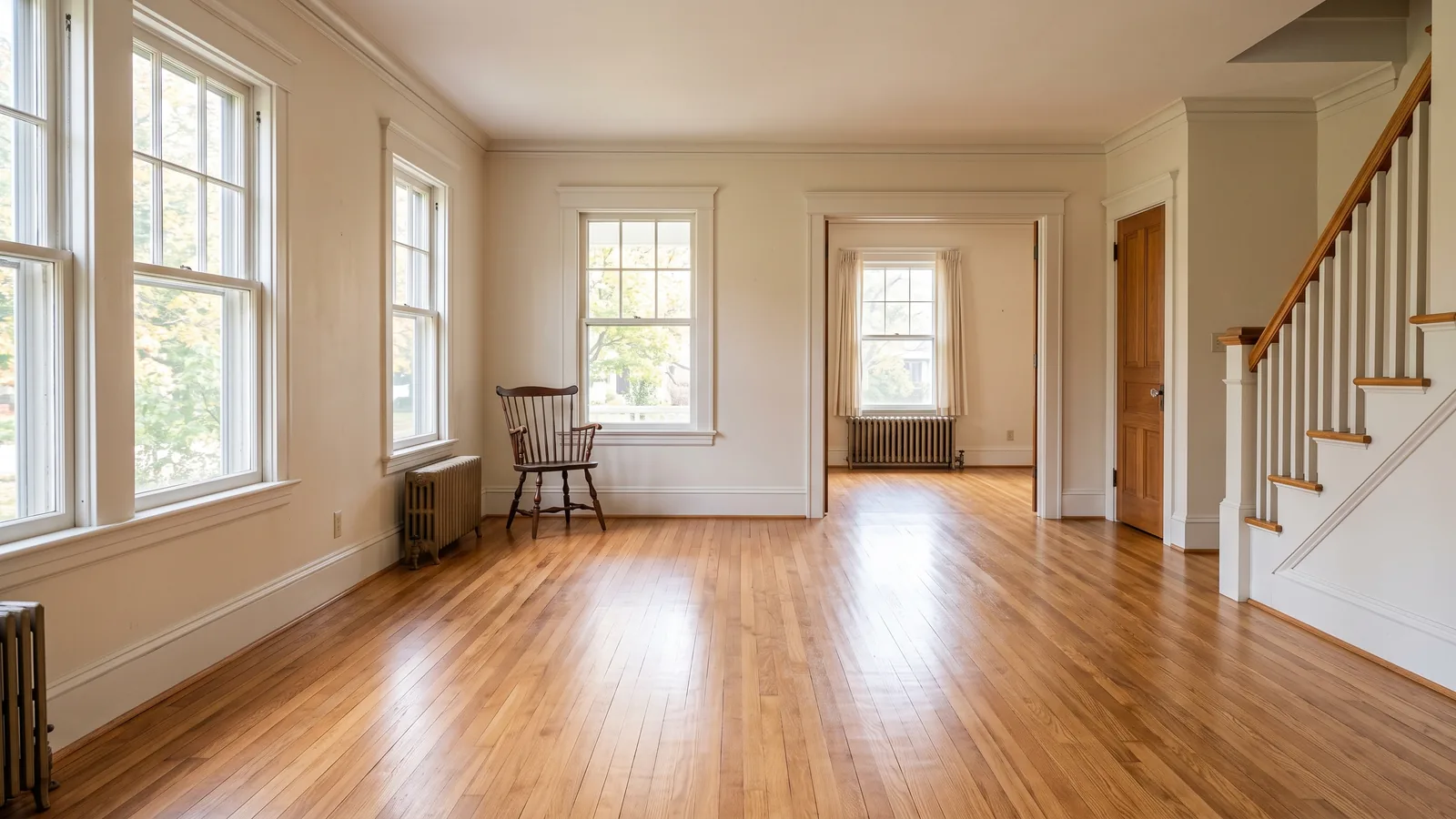
Hardwood Floor Repair, Board by Board
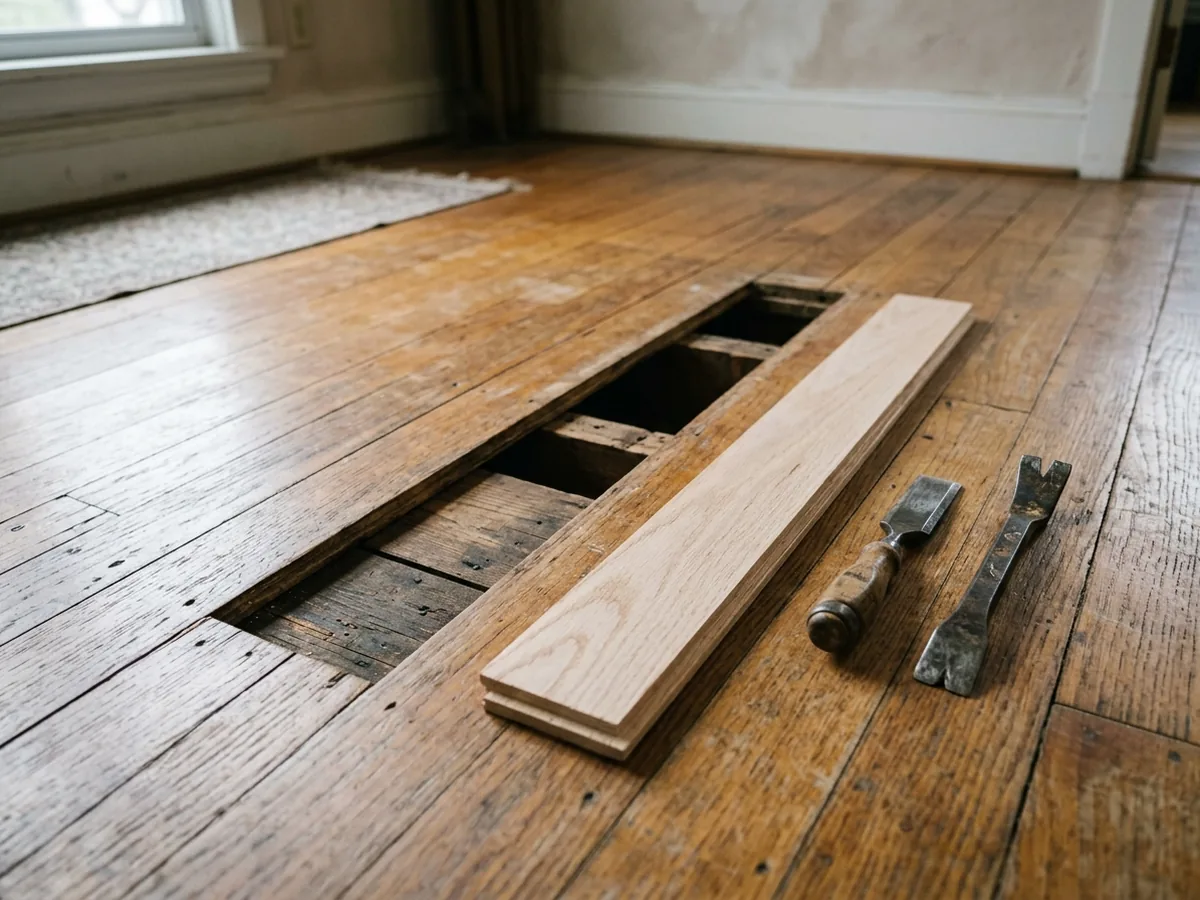
Board Replacement with Matching Species and Width
A cracked, burned or badly gouged board comes out without disturbing the boards around it. The usual method is to plunge-cut down the middle of the bad board, split the halves free of their tongues and grooves, and clean out the old nails. The new board has the bottom lip of its groove trimmed so it can drop into place, and then it's glued and fastened.
Matching is the hard part. Red and white oak differ in color and grain, and the difference grows under finish. Width matters too, since an old floor's boards may be a size that's hard to buy now. When a match can't be bought, a careful installer pulls boards from inside a closet or under a built-in and puts new wood back there instead. HomeGuide puts board and section replacement at $5 to $20 a square foot nationally. Ask whether that price includes sanding and finishing the repaired area to blend.
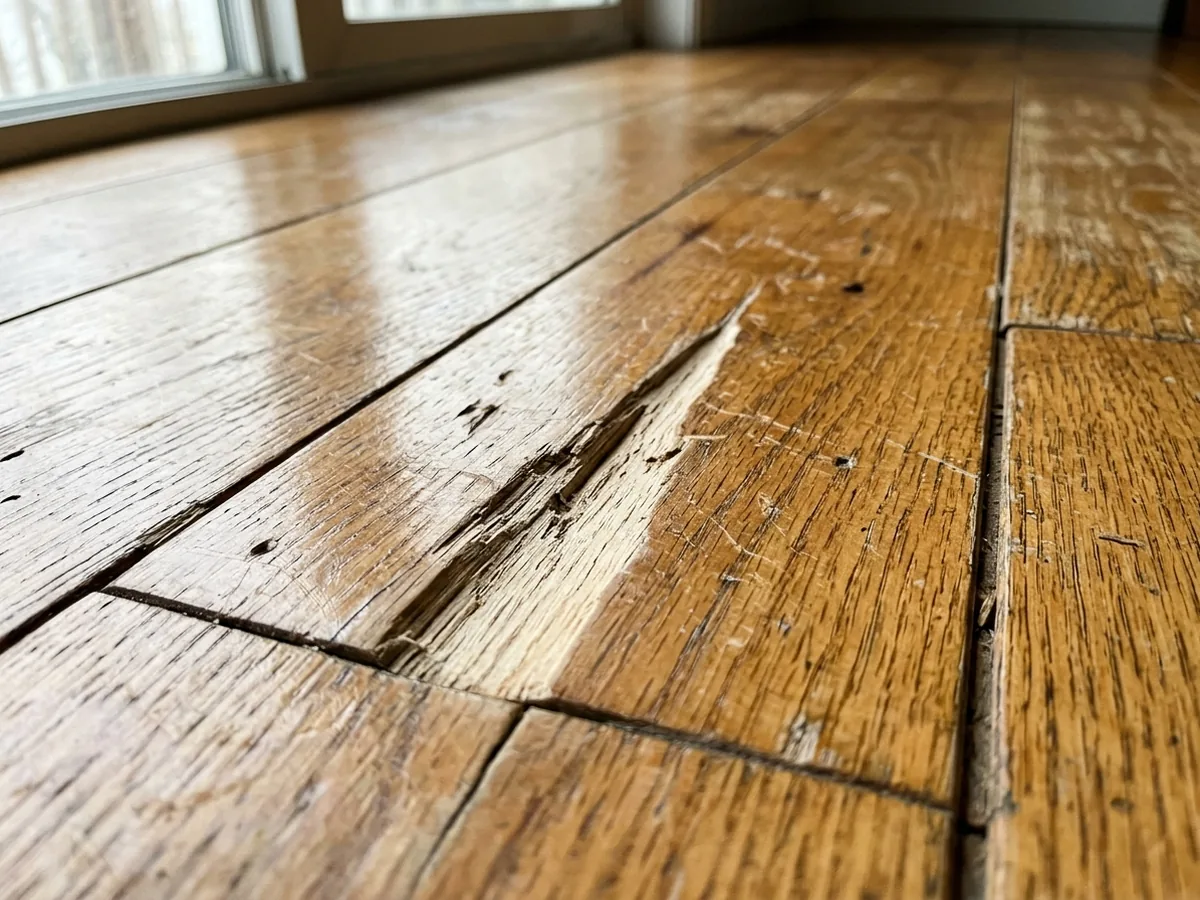
Scratches, Gouges and Dents
Wood Floor Business offers a simple test: wipe the damage with a damp cloth. If the scratch disappears while it's wet, it lives in the finish and a recoat will usually hide it. If it stays, it has reached the wood. The NWFA recommends a full sand and refinish for deep scratches and dents. HomeGuide lists scratch repair at $25 to $100 per scratch when it's done spot by spot.
Our view: spot repairs on a site-finished floor rarely vanish completely, because the new finish has a different sheen from the old one around it. One deep gouge in a hallway can get a new board. Twenty scratches across a living room mean the room needs a full sand and refinish. Dents are harder to avoid in softer woods; the homepage compares species hardness.
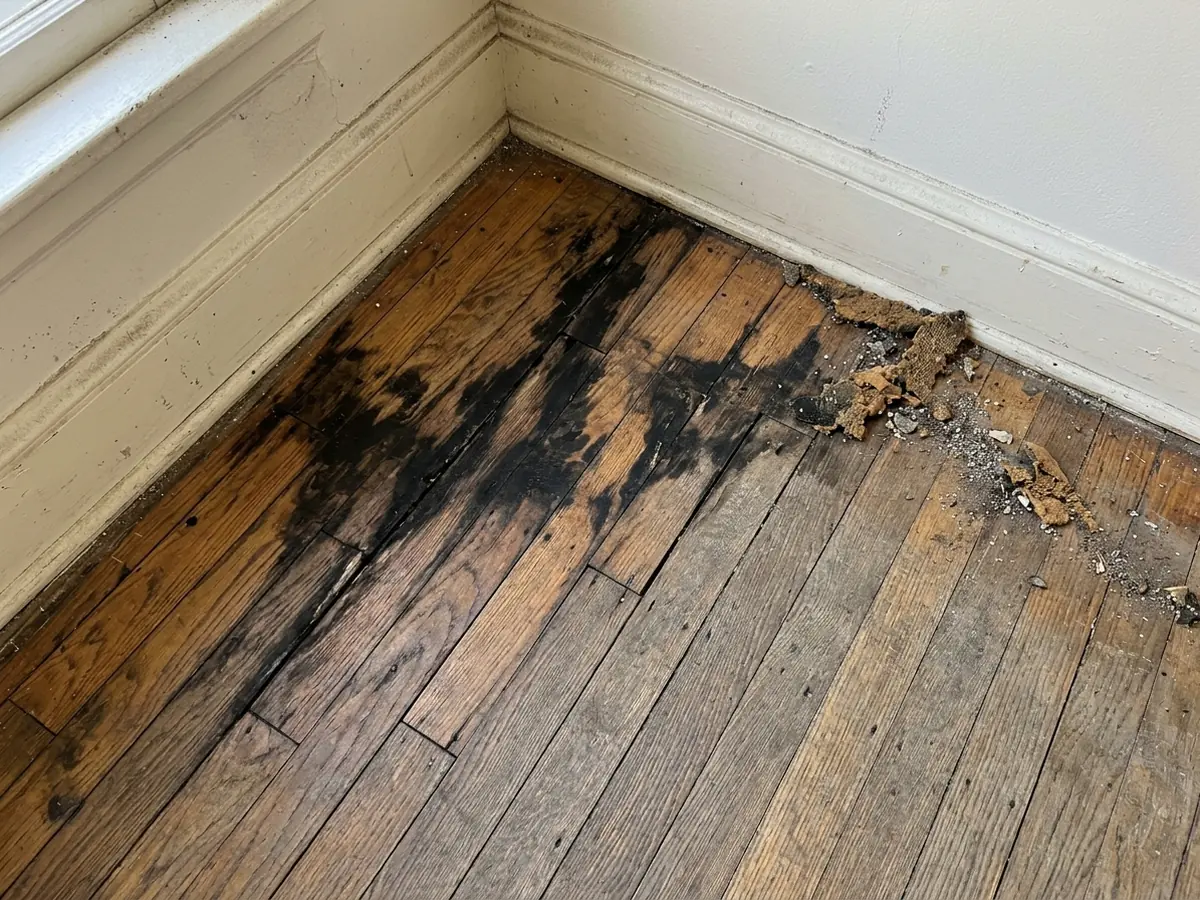
Black Pet Urine Stains in Oak
Wood Floor Business calls pet stains a common challenge for floor pros. Urine stains wood dark as it soaks into the fibers, and the same article explains why sanding so often fails: the urine runs through gaps and cracks "down to the tongues and grooves and beyond." In bad cases the damage reaches the subfloor and sometimes the joists. That's why black spots under old carpet are worth showing the contractor before you get a refinishing price.
There are three ways to handle it, from cheapest to most thorough:
- Bleach after sanding. With the finish sanded off, repeated coats of hydrogen peroxide or an oxalic acid product can lighten shallow stains. Expect a lighter patch that may need tinting.
- Stain dark. A deep stain color can make faint marks hard to see. It won't cover true black.
- Cut out and weave in. For a uniform floor, the stained boards come out and new ones are woven in, with any damaged subfloor repaired underneath.
If the smell comes back once the sander starts, the urine has gone deep. In our view that's the point to stop bleaching and replace the boards.
Gaps Between Boards
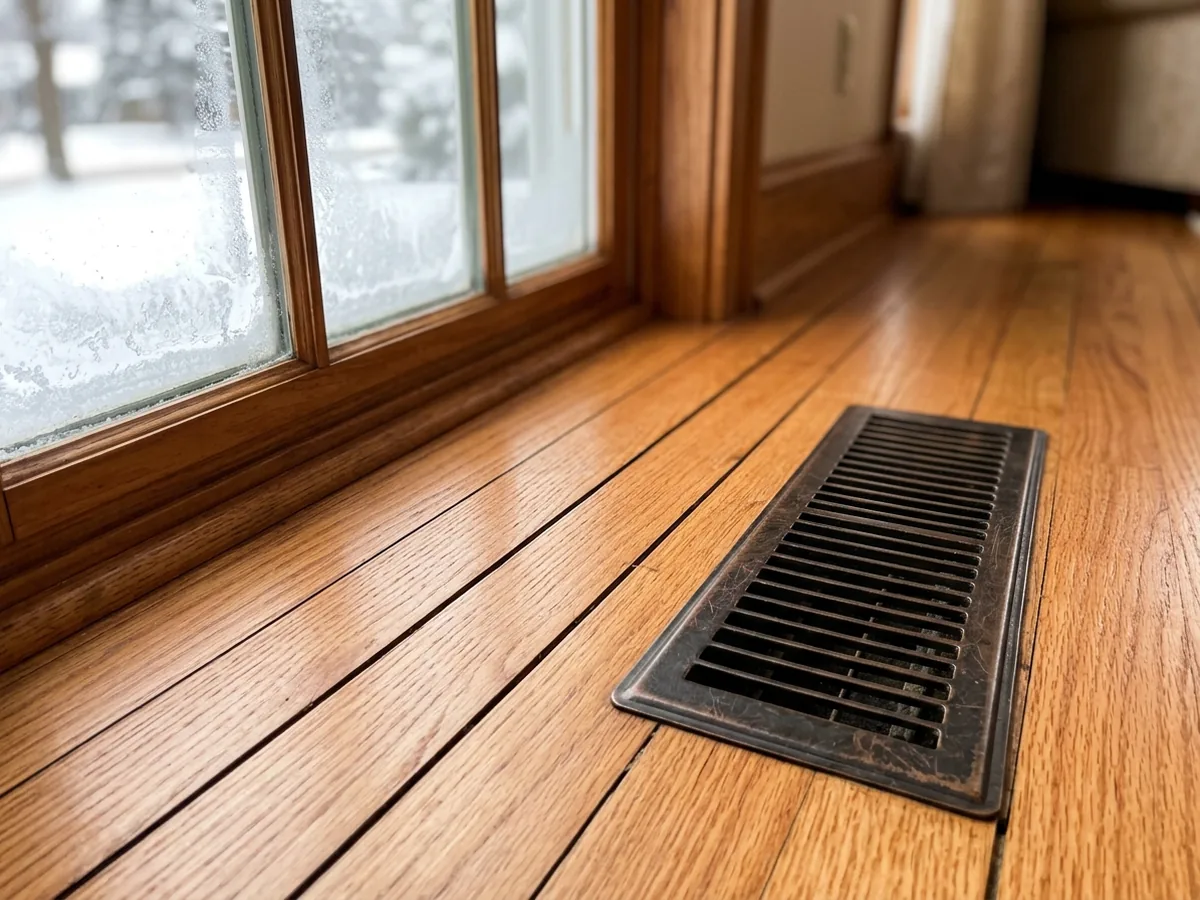
Most gaps aren't damage. Hardwood Floors Magazine calls heating-season gaps "a normal phenomenon": boards shrink when furnace air dries the house, then close up in humid months. Michigan winters make them common (see humidity). Filling them in January can backfire. Wood Floor Business describes a floor that was trowel-filled in winter, and by summer the swelling boards had squeezed the filler up above the surface, where it snagged socks.
So the fixes are narrow: fill once the humid season has closed the gaps, or spot-fill only the large ones and leave small gaps for normal movement. Wide gaps that never close are a different problem. Hardwood Floors Magazine says the first step is checking indoor temperature, relative humidity and the boards' moisture content against the season, and it calls tearing out a floor to cure gaps "usually both unnecessary and self-defeating." Permanent gaps are sometimes filled with thin glued-in wood slivers; ask the contractor what they'd use and why.
Lacing In a Patch Where a Wall Came Out
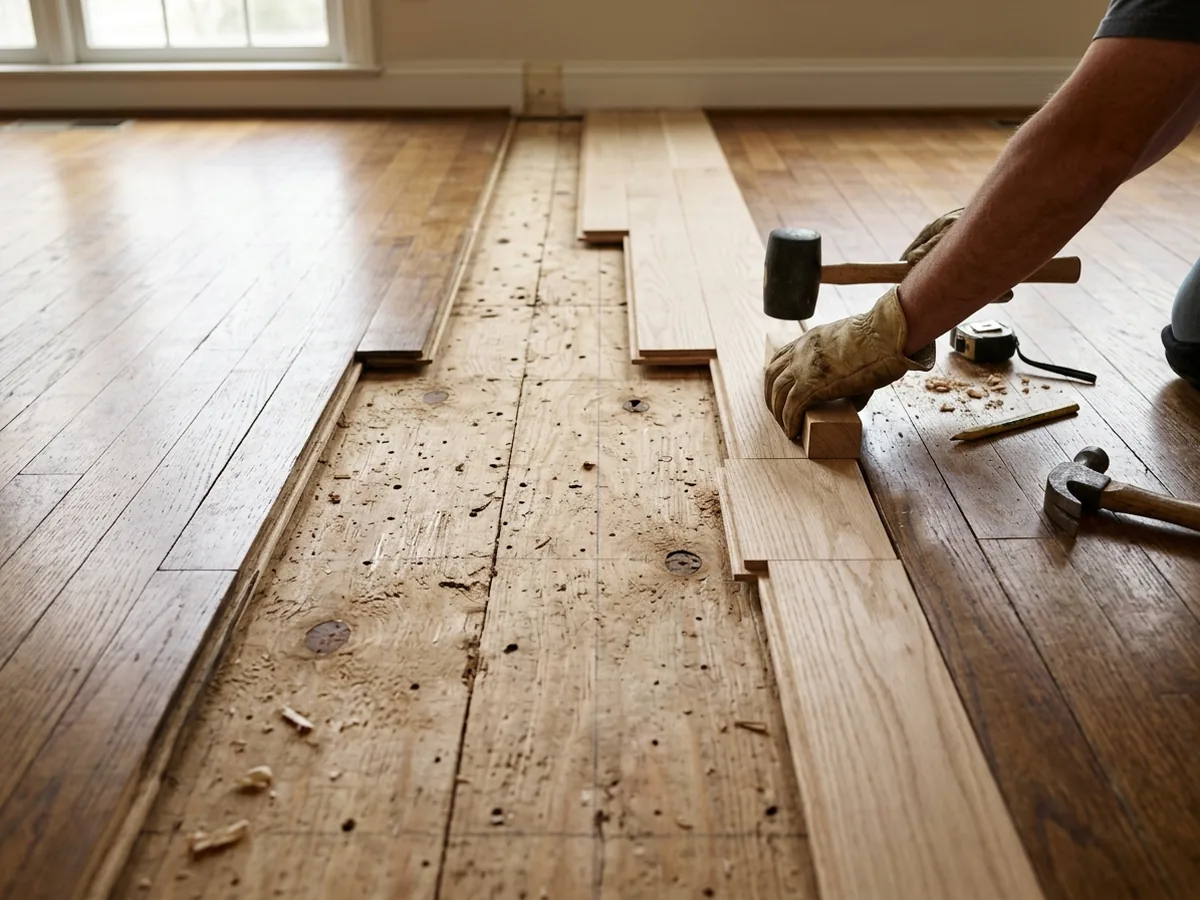
Taking out a wall leaves a strip of bare subfloor, often with old plates and nails, between two rooms of flooring. A plain board laid in that strip leaves a stripe you'll see forever. Lacing in removes boards on both sides at staggered lengths so the new boards key into the old ones, the way the original floor was laid.
The two rooms may not match each other. One may be red oak and the other white oak, or the boards may run different widths or sit at different heights. Sorting that out, and choosing which way the new boards run, is part of the repair. Wood Floor Business calls a proper weave-in the line between a "repair" and a "patch." Plan to sand and finish both rooms together afterward so the color matches.
Why Ann Arbor homeowners call Ann Arbor Wood Flooring
- Free estimate, and you can ask for it in writing, species and finish named
- One independent local floor contractor gets your request, not a call list
- No fee to homeowners for the referral
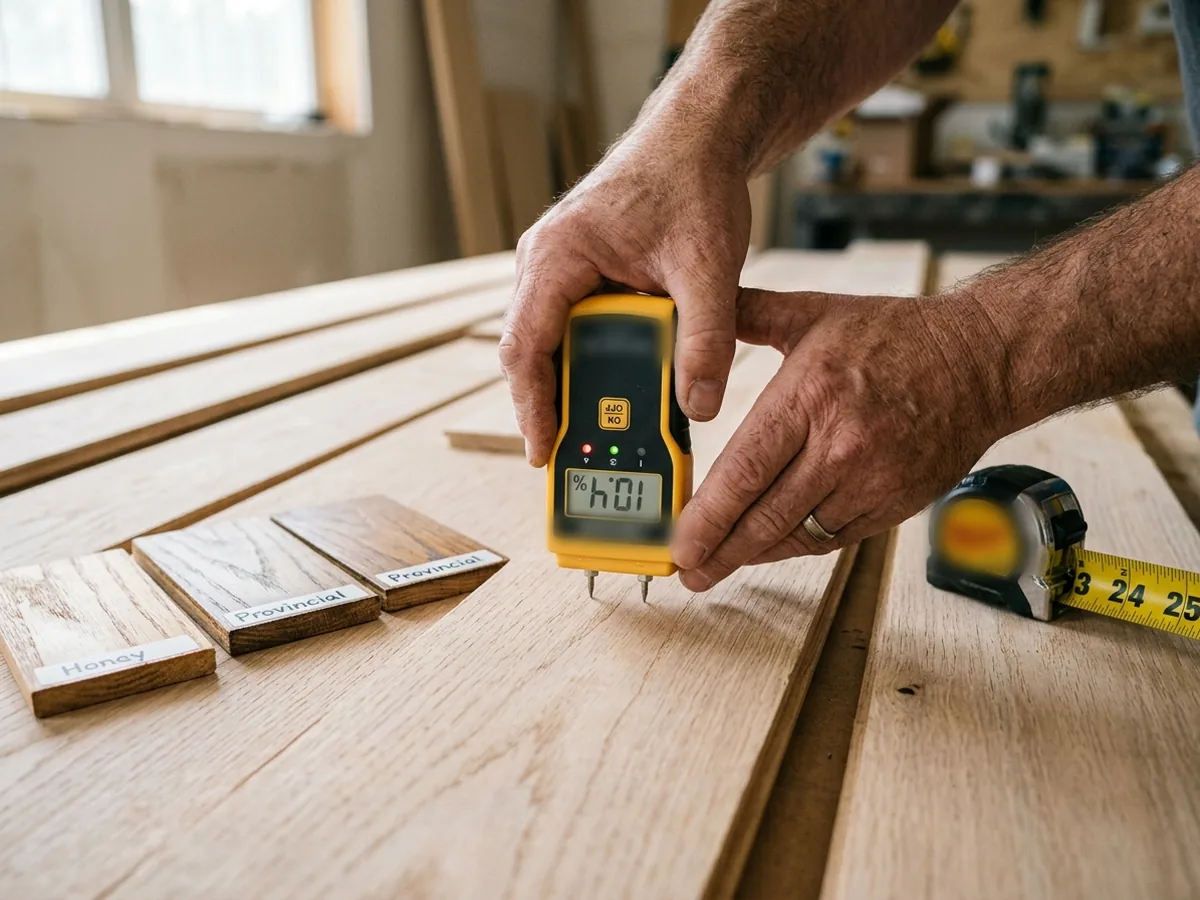
- Ask for moisture readings before any new floor goes down
Will the Repair Show After Refinishing?
A repair stops showing when the new boards match the old in species, width and thickness, are woven in with staggered joints, and the whole room is sanded and finished together. Patching a few boards and finishing only those almost always leaves a visible patch, at least in the sheen.
New wood often looks lighter than wood that has aged in the house, so expect the repaired boards to look a little brighter for a while, even under the same stain. That's why the stain choice and the repair belong on the same estimate. Color samples and stain matching are covered on hardwood floor staining.
What Should a Hardwood Floor Repair Estimate Include?
The estimate should list which boards come out, where replacement wood comes from, how it's fastened, any subfloor work under stained or rotted boards, and whether the repaired area or whole room gets sanded and finished afterward. HomeGuide's late-2025 national average for a repair is about $930.
Damage caused by a leak is a separate job, with drying and moisture readings before any board work: see water-damaged hardwood floor repair. Squeaks and soft spots usually come from below the boards and belong to subfloor repair. Old original floors with many small problems are covered on hardwood floor restoration. For everything else on hardwood floors in Ann Arbor, start at the homepage.