
Parquet Flooring Work, from Old Block Floors to New Patterns
Restoring Mid-Century Block Parquet
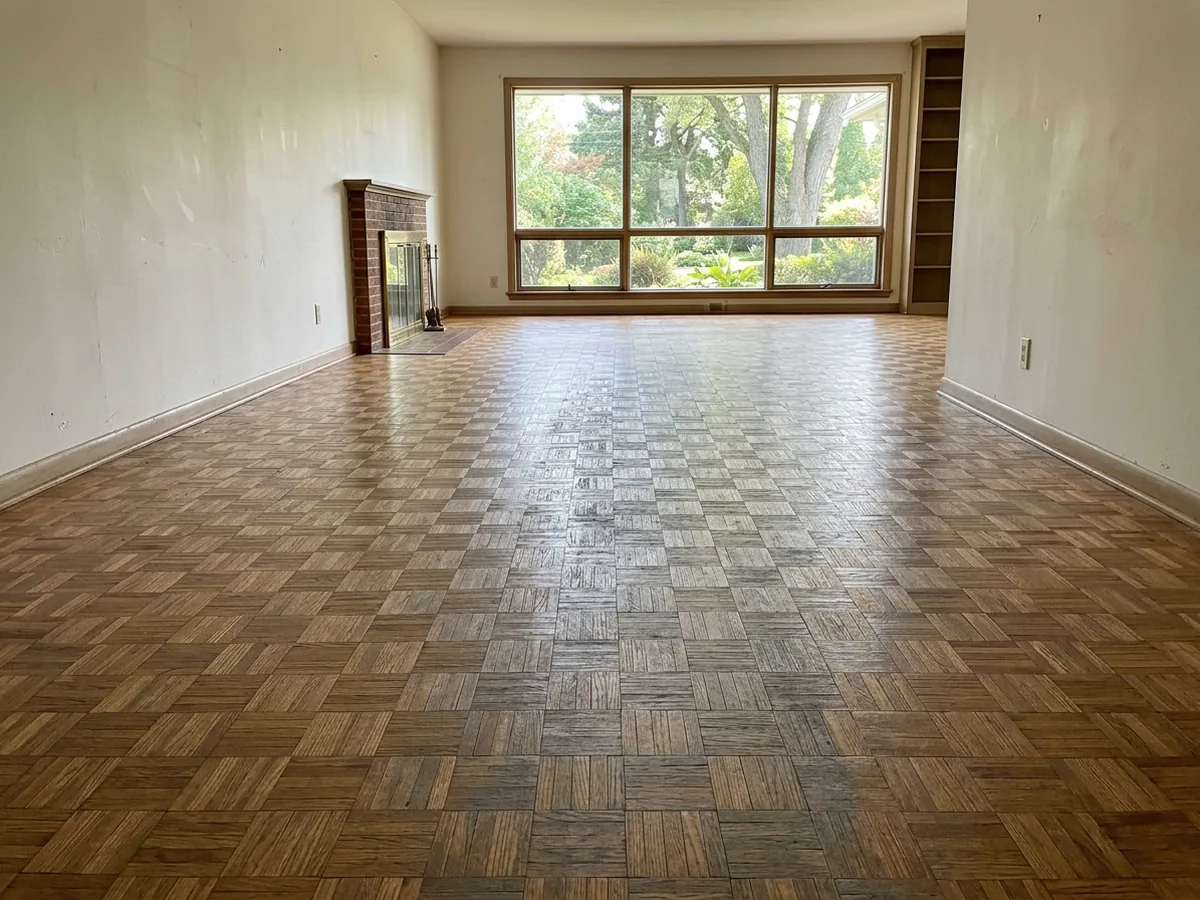
Bob Vila puts parquet's peak in the United States in the 1960s, and plenty of Ann Arbor houses come from around then (more on the local housing stock at hardwood floors in Ann Arbor). The typical floor from that era is square tiles of short oak strips, laid in alternating directions so the room reads as a basket weave. Most of these tiles are strips bonded to a mesh or thin plywood backing. Some have small wires run through the strips, which is why Bob Vila recommends cutting them with a jigsaw instead of a circular saw.
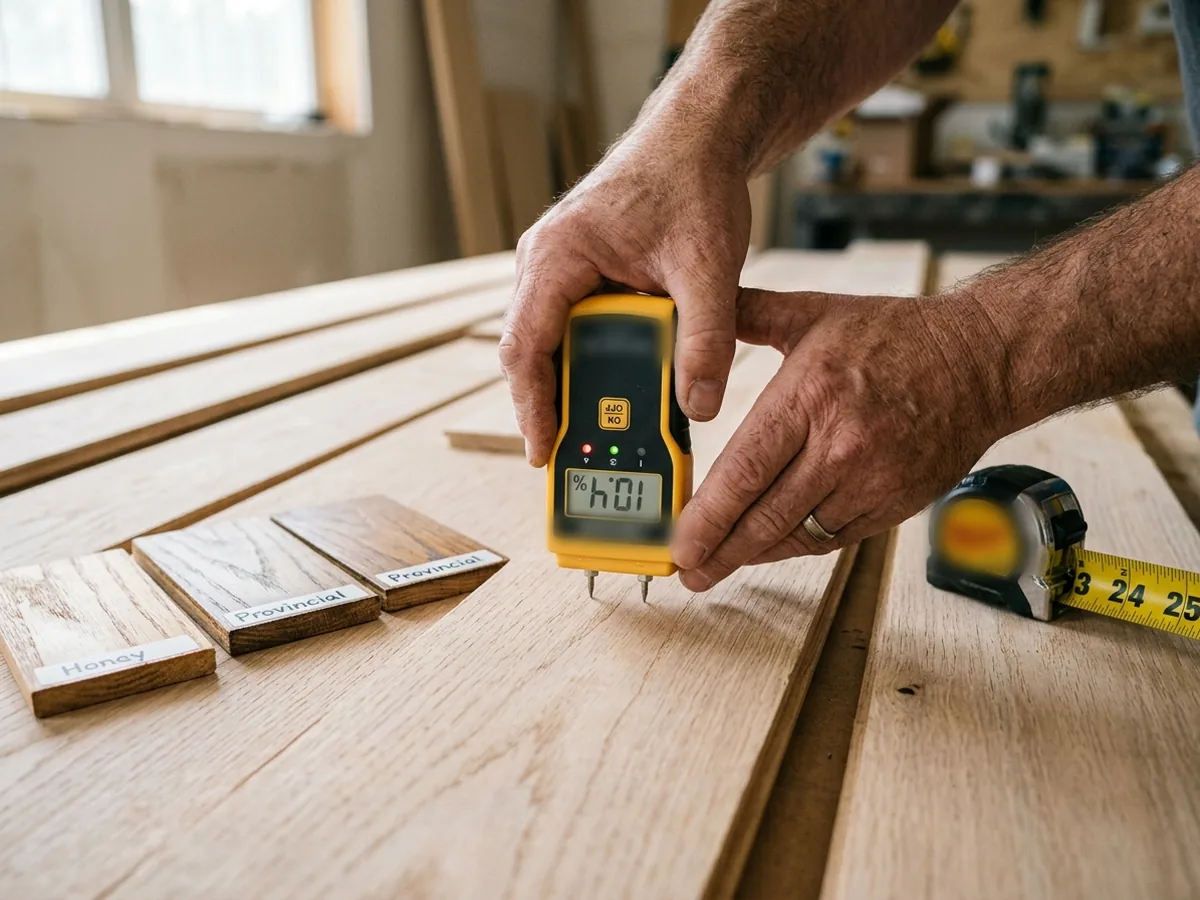
A restoration starts with the honest question of how much is salvageable. Gray traffic lanes, dried-out finish and a few cracked tiles are normal and fixable. Tiles that are lifting across a whole room usually point to a failed adhesive or moisture coming up through a slab, and that needs a diagnosis before the sander comes in. Where the parquet is glued straight to concrete, ask the contractor to take moisture readings where tiles have let go.
Re-Gluing Loose Parquet Tiles
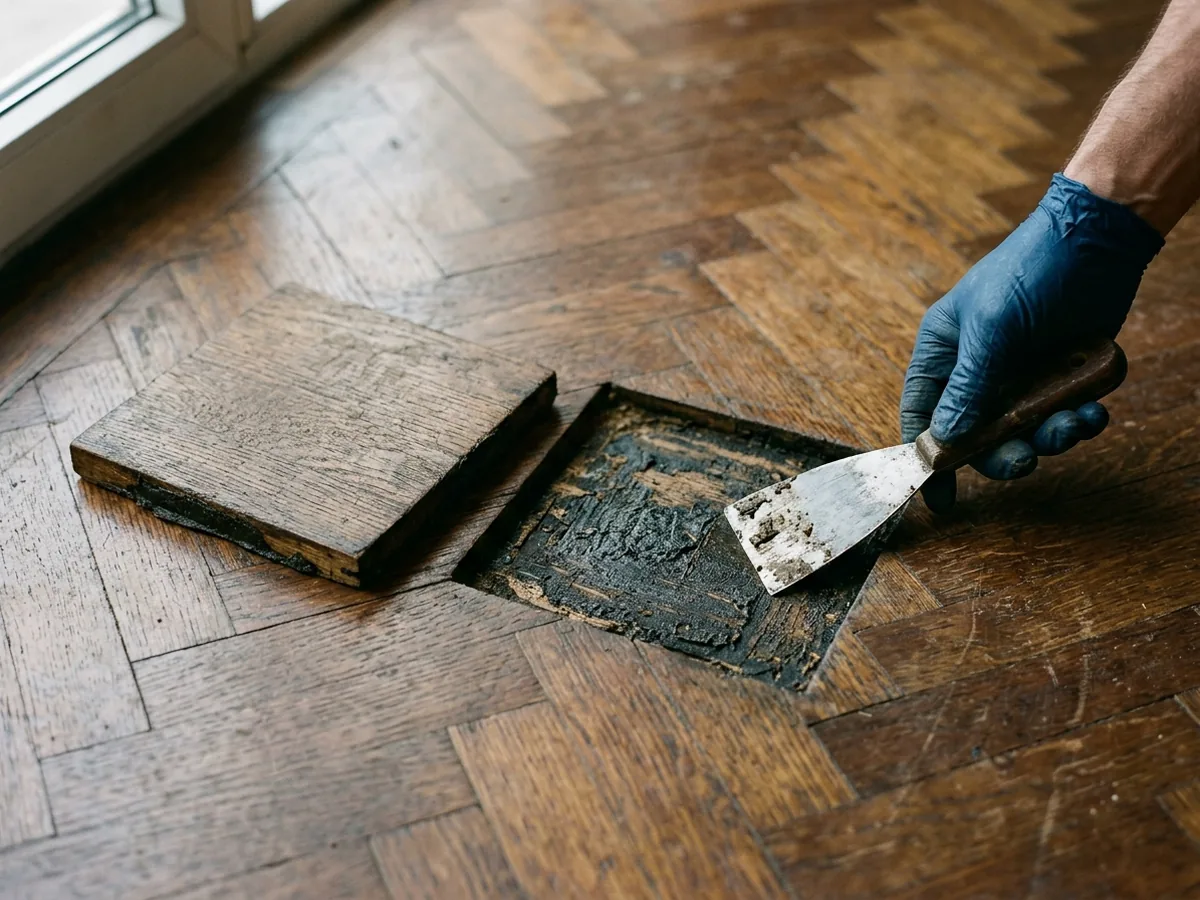
A loose tile clicks underfoot or rocks when you step on a corner. The repair is to lift it, clean the old adhesive off the back of the tile and the subfloor, and set it back in fresh flooring adhesive, weighted until it cures. Tiles that broke on the way out get replaced. Matching a mid-century tile means the same species, strip size and thickness, and salvaged tiles from a closet or from under a built-in can be the closest match.
The cleaning step is where old parquet gets complicated. If the adhesive underneath is black and tar-like, read the next section before anyone scrapes it.
Sanding and Refinishing Parquet
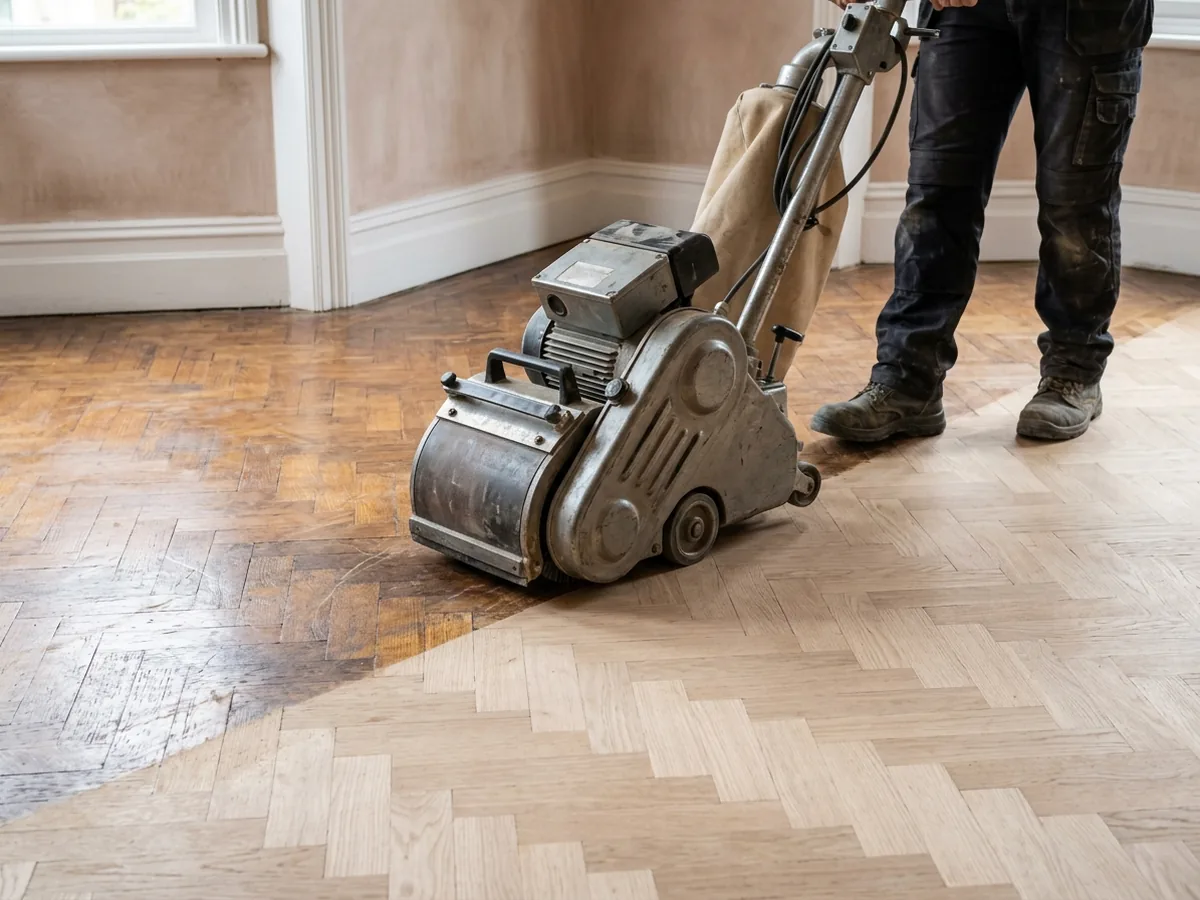
Parquet grain runs in every direction, so there's no "with the grain" pass. Wood Floor Business describes the method: a first pass with a 40-grit belt on the big drum machine at a diagonal, a second at 60 grit on the opposite diagonal, then 80 grit along the longest line of the room. Running straight across parquet with coarse paper, the article explains, dishes out the softer springwood and leaves humps. Some contractors use multi-disc or oscillating sanders instead because direction doesn't matter with them.
Cross-grain scratches are the risk on every parquet job, and they show most under stain and gloss. Our view: a clear finish in satin or matte is the forgiving choice on a parquet floor that's been sanded before. For finish types, coat counts and cure times, see hardwood floor refinishing; for a lighter or darker color, see hardwood floor staining.
Some parquet tiles are thin to begin with. A good contractor will look at a tile edge, at a floor vent or where a tile has come loose, to see how much wood is left before deciding on a full sand.
Installing New Parquet Patterns
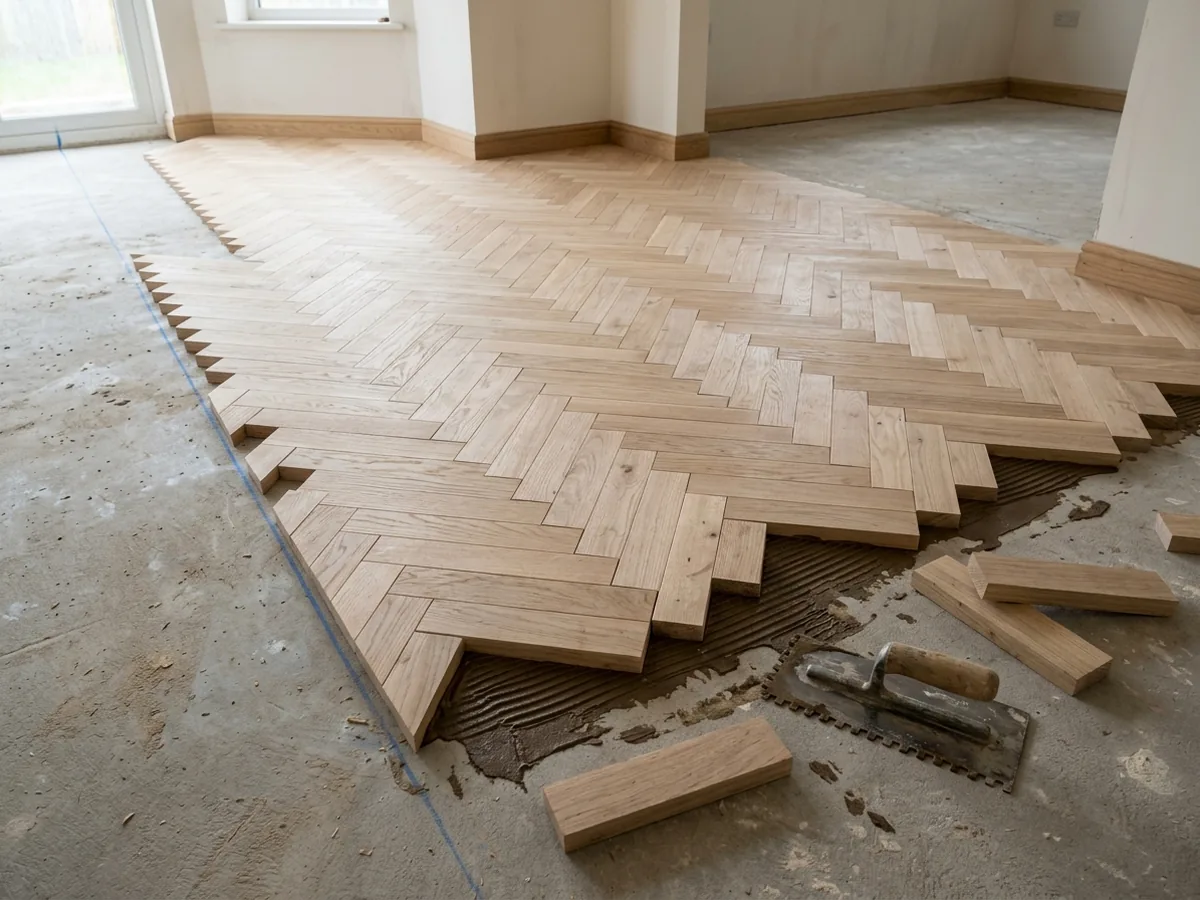
New parquet comes as prefabricated tiles or as individual blocks laid one by one. Blocks allow patterns such as herringbone, basket weave, Versailles-style panels or a plain block grid, laid out from a centerline (the layout method is on herringbone floor installation). Tiles are glued down with the adhesive and trowel the maker specifies, so the slab or subfloor has to be flat first (flatness limits are on subfloor repair).
HomeGuide's 2025 national range for true parquet and herringbone is $13 to $40 a square foot installed, well above a standard strip floor, because of the cutting and layout time. Herringbone and chevron in longer planks are a separate job from block parquet.
Why Ann Arbor homeowners call Ann Arbor Wood Flooring
- Free estimate, and you can ask for it in writing, species and finish named
- One independent local floor contractor gets your request, not a call list
- No fee to homeowners for the referral
- Ask for moisture readings before any new floor goes down
Is the Black Glue Under Old Parquet Asbestos?
It might be, and you can't tell by looking. The EPA lists flooring adhesives among products that may contain asbestos, and says to leave suspect material alone and have a trained, accredited professional take samples. Don't sand, grind or dry-scrape old black adhesive until a lab result says it's clear.
The EPA's own homeowner guidance is blunt: don't sand, scrape or try to level asbestos flooring or its backing, and if asbestos flooring needs replacing, cover it with new flooring if possible. The American Hardwood Information Center, writing about old linoleum adhesive over hardwood, says products made before 1986 may contain asbestos and that a sander should never touch residue that might.
What that means for a parquet job:
- Tiles that are sound can usually be sanded and refinished without touching the adhesive. The sander works on the wood face, not the glue line.
- Loose tiles with black adhesive under them need a test before the old glue is scraped off. Testing is done by an asbestos inspector or lab, not the flooring contractor.
- Tearing out old parquet over black mastic is a job for an asbestos abatement contractor if the test is positive. New flooring can sometimes go over the old floor instead.
Ask the flooring contractor to flag suspect adhesive at the walk-through and price the job with and without abatement, so a positive test doesn't stall the work halfway.
Repair, Refinish or Replace a Parquet Floor?
Refinish when most tiles are tight and there's wood left to sand. Repair first when a few tiles are loose or broken. Replace when tiles are failing across the room, the adhesive has let go over a damp slab, or earlier sandings have worn the tiles thin.
Given HomeGuide's parquet range above, replacing a whole room is rarely the cheap option. A room of loose tiles over sound concrete may only need lifting, cleaning and re-gluing, once any asbestos question is settled. If the reason for the failure is moisture in the slab, though, new tiles glued over the same slab will fail the same way, so that diagnosis comes first.
For contrasting borders around a parquet field or a medallion at its center, see hardwood floor inlays, and for original floors in older houses generally, hardwood floor restoration.