
Water-Damaged Hardwood Floor Repair, Read from the Shape of the Boards
The shape of a wet floor tells you which side of the board took on the water, and that sets the order of the repair.
Cupped Boards
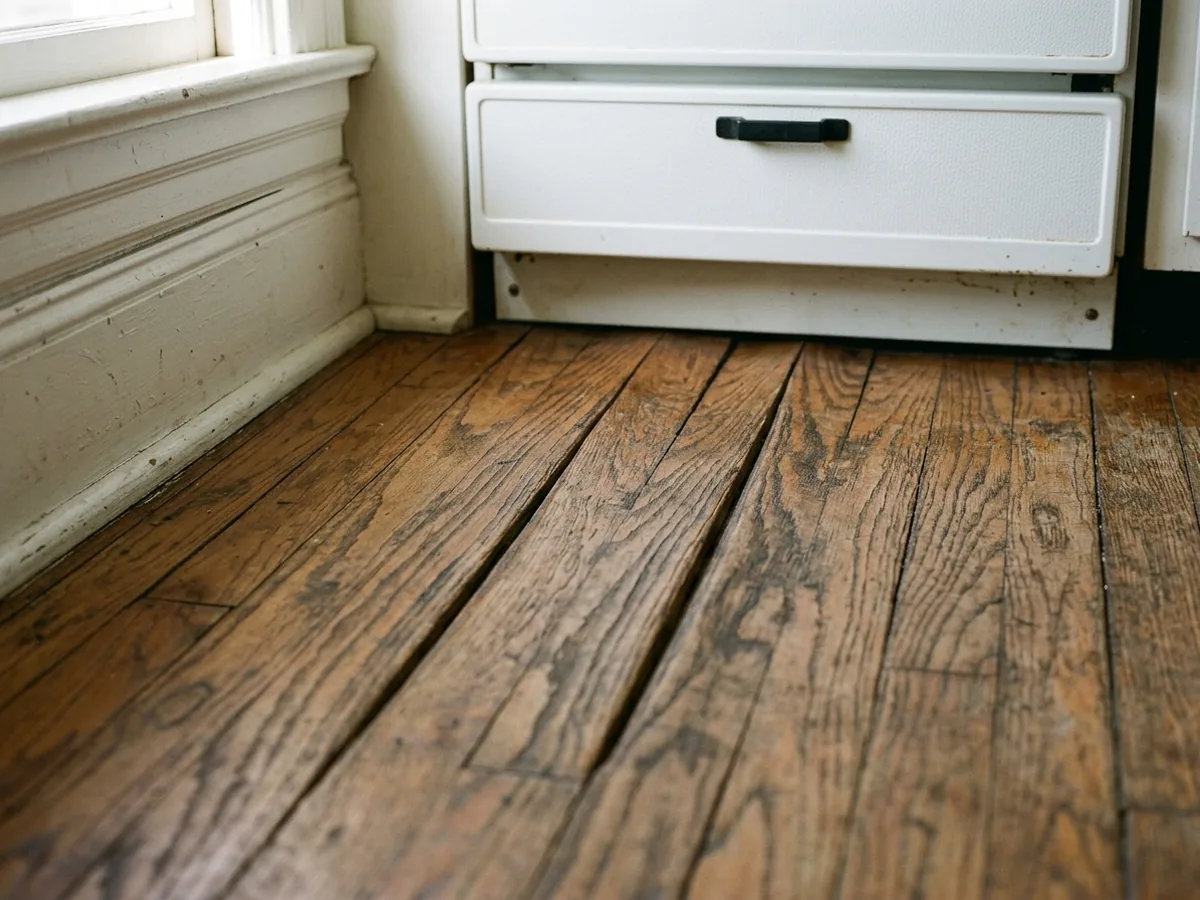
A cupped board has edges higher than its middle. It means the bottom of the board is wetter than the top, so the underside swelled and pushed the edges up. Wagner Meters lists basement plumbing leaks among the causes: moisture climbs into the subfloor and then into the flooring. A slow dishwasher or ice-maker line under a kitchen floor does the same thing from above the joists.
The fix is patience before machinery. Once the leak is stopped, most cupped floors flatten as they dry, and Wagner notes that a badly cupped one may still need a sand and refinish afterward. HomeGuide's 2025 national figure for cupping repair is $2 to $6 a square foot. Mild cupping that comes and goes with humid summers is a house-humidity matter rather than a leak (see hardwood floors in Ann Arbor for indoor humidity).
Crowned Floors
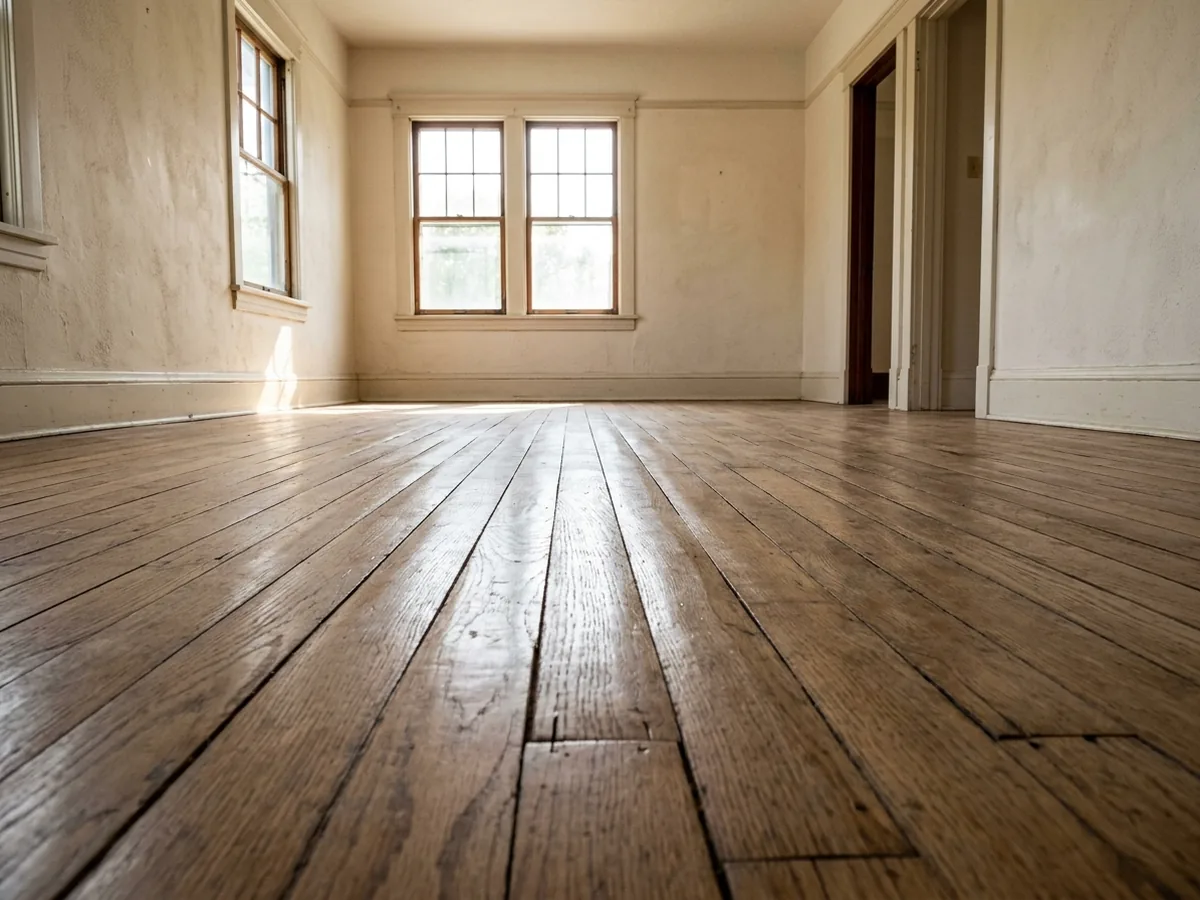
Crowning is the opposite: the middle of each board sits higher than its edges. Water on the surface, or a wet room left that way for a long time, can do it. The more common cause is a cupped floor that was sanded too soon.
Sanding a cupped floor cuts the raised edges flat while the boards are still swollen underneath. When the wood dries, the sanded edges sink below the centers. Hardwood Floors Magazine describes a cupped floor reading 6.5 to 7 percent moisture at the top and past 10 percent deeper down; sanded flat at that point, "the top is going to end up crowning." A crowned floor can sometimes be sanded flat again once it's fully dry, but each extra sanding uses up wood above the tongue.
Buckled Floors Lifting off the Subfloor
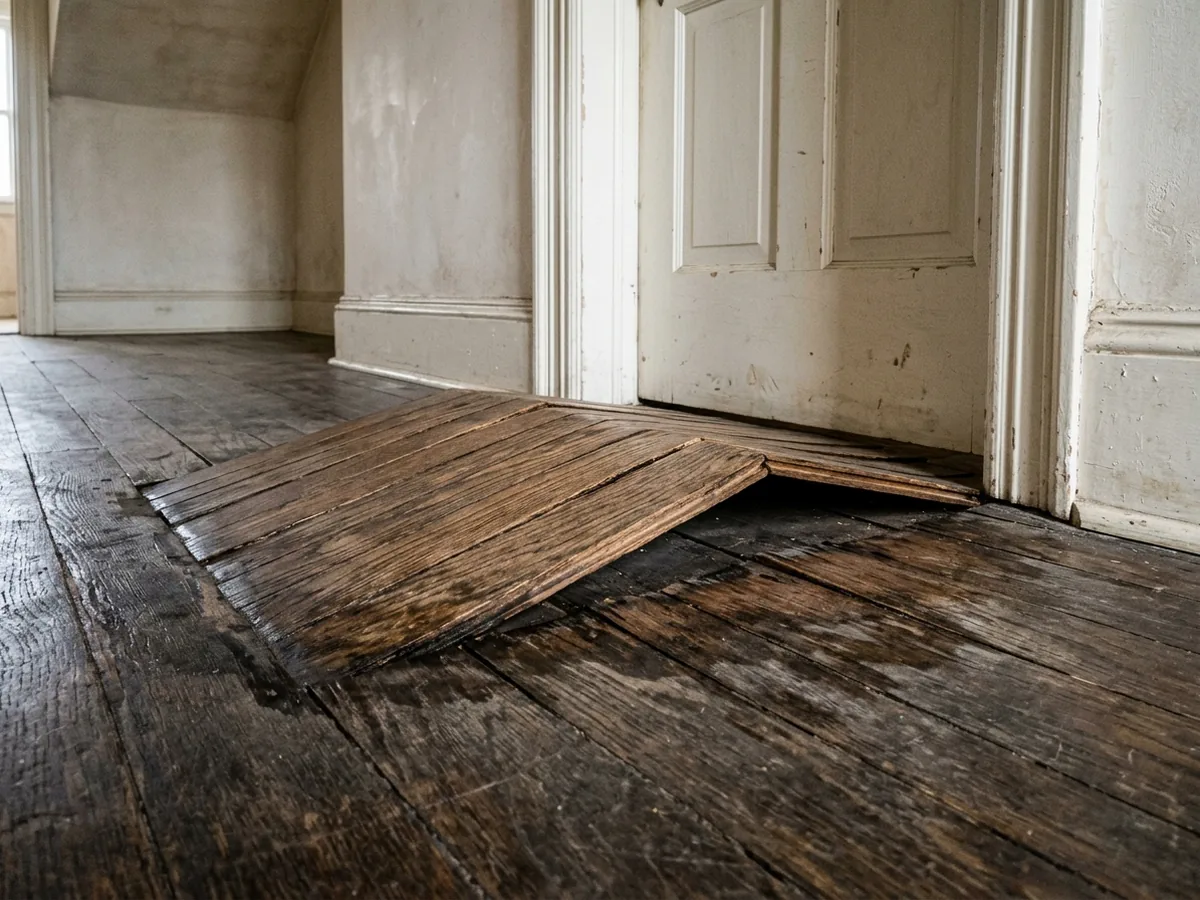
Buckling is the floor pulling off the subfloor, sometimes several inches high in one spot. It usually follows flooding, when boards sit in water long enough to swell against each other and the walls. Wagner also lists insufficient or wrong nails and a missing vapor retarder as causes, and on glue-down floors, the wrong mastic or poor adhesive transfer.
Buckled boards can sometimes be reset rather than replaced. More often the lifted section comes out, the subfloor is checked and dried, and new boards are woven in to match. If the plywood under it has delaminated or rotted, that's a subfloor job first; our subfloor repair page covers panel replacement.
Swollen or Delaminated Engineered Planks
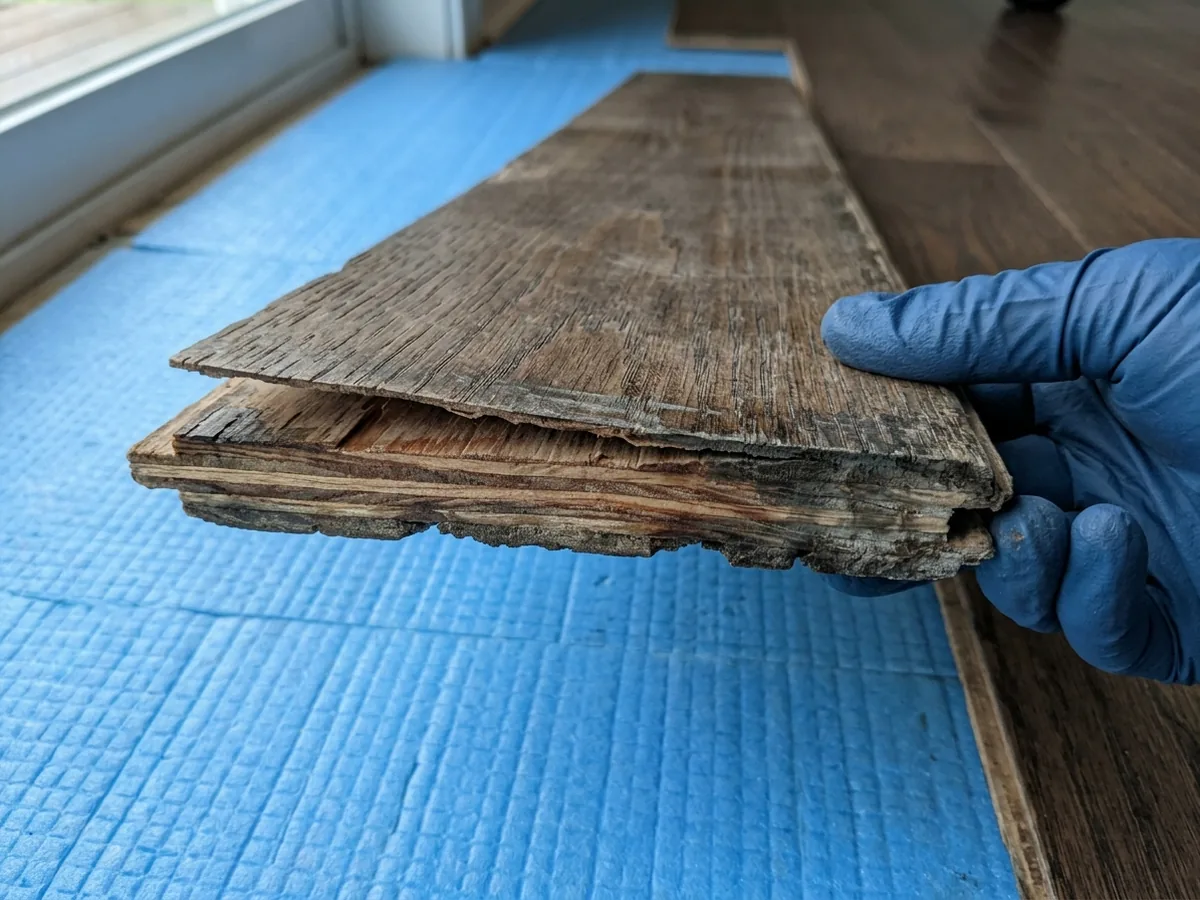
Engineered planks fail differently. The thin wood veneer is glued to a cross-ply core, and water that seeps between the layers can break that bond. Floorsave calls the result delamination: the veneer separates from the substrate, and the usual fix is replacing the board. A swollen edge on a floating floor can't be sanded out, because there may be only a few millimeters of real wood on top.
Our view: on engineered floors, ask the contractor to pull one damaged plank and look at the core and the underlayment before pricing anything. Floating floors trap water under the foam, and it keeps soaking the planks after the surface looks dry. For the wear-layer limits that decide whether an engineered floor can be sanded at all, see engineered hardwood installation.
Why Ann Arbor homeowners call Ann Arbor Wood Flooring
- Free estimate, and you can ask for it in writing, species and finish named
- One independent local floor contractor gets your request, not a call list
- No fee to homeowners for the referral
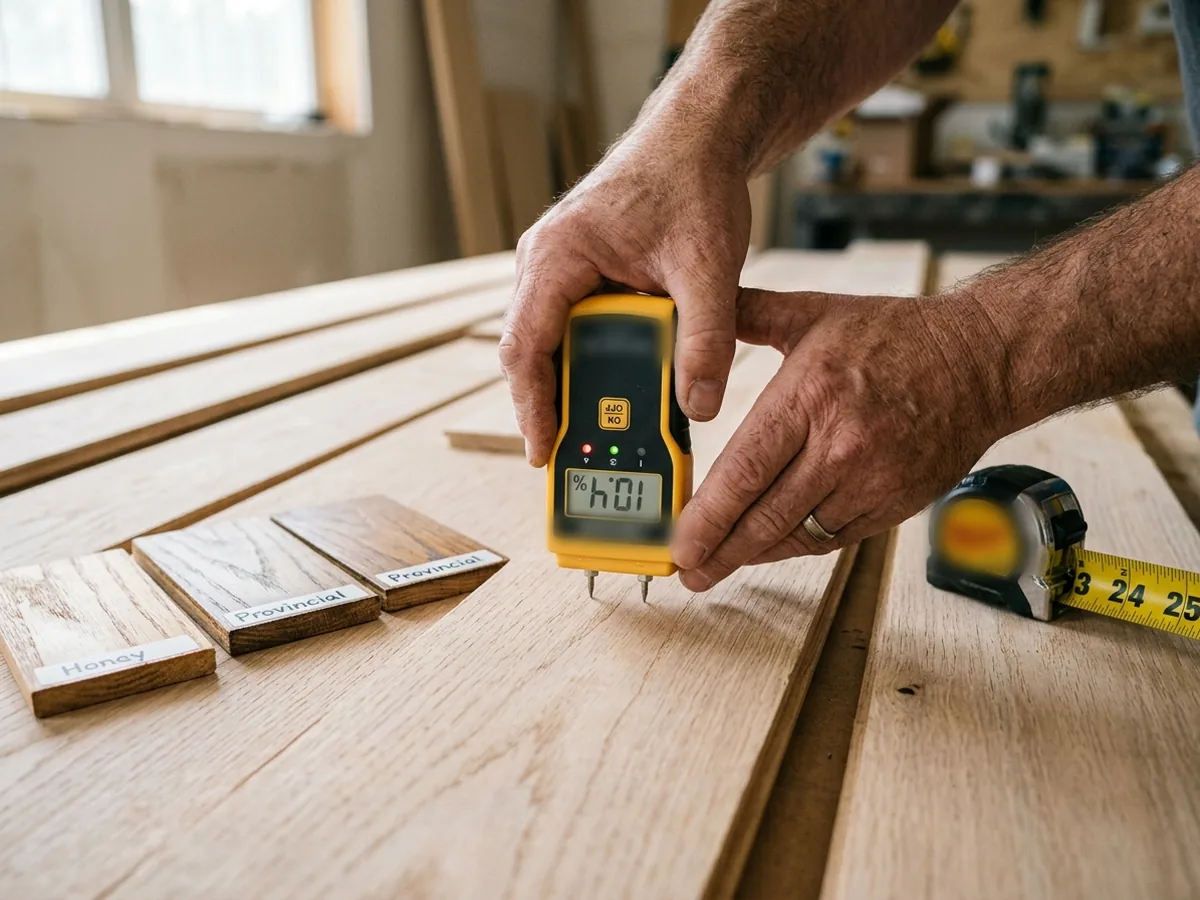
- Ask for moisture readings before any new floor goes down
How Long Should a Wet Hardwood Floor Dry Before Repair?
Until the readings say so, not the calendar. Wet wood needs fans and dehumidifiers right away (the EPA says to dry water-damaged materials within 24 to 48 hours to prevent mold growth), and then repeated moisture readings until the wet area matches a dry part of the same floor. Sanding before that point is how cupped floors turn into crowned ones.
In practice that means the contractor should take readings at the first visit, mark the wet zone on a sketch, and come back to read the same spots again. Ask how they'll compare wet and dry areas, and at what depth. A pinless meter reads the board's surface layer; a pin meter driven into the wood reads at the depth of the pins. The comparison against wood and subfloor targets is covered on our hardwood floor installation page.
Older Ann Arbor houses add one wrinkle. Many have diagonal board subfloors rather than plywood, a type Wood Floor Business notes is common in older homes, and the readings need to come from those boards as well as the flooring. If the water came up from a wet basement, our view is that the floor won't settle until the basement does.
What to Photograph and Record for an Insurance Claim
Photograph and video the damage before anything is torn out, keep the damaged material until the insurer says it can go, and keep receipts for fans, tarps and emergency work. That is the Michigan Department of Insurance and Financial Services' advice after storm and water losses.
DIFS also warns that "flood" can have a specialized meaning in a policy, while losses such as a sewer backup or a failed sump pump may be covered differently. Describe the loss as water damage and ask what your policy covers. It also says to contact your insurer before hiring a contractor.
For the floor itself, ask the contractor for:
- dated moisture readings with locations marked on a floor sketch, from the first visit and from each follow-up;
- photos of cupping or buckling with a straightedge or level laid across the boards;
- the species, width, thickness and finish of the existing floor, so replacement boards can be matched and priced;
- a written estimate that separates drying time, board replacement, subfloor work and refinishing.
HomeGuide's 2025 national range for water-damage repair runs $10 to $80 a square foot. That spread is mostly the difference between drying and refinishing a floor and tearing it out down to the joists.
Fixing the leak itself is a plumber's or roofer's job, and large wet-outs usually need a water-damage drying company before a flooring contractor sets foot in the room. Isolated damage that isn't moisture-related, such as a burn or deep gouges, belongs on our hardwood floor repair page. For full sanding once the floor is dry, see hardwood floor refinishing, and for refinishing prices, hardwood floor refinishing cost.