
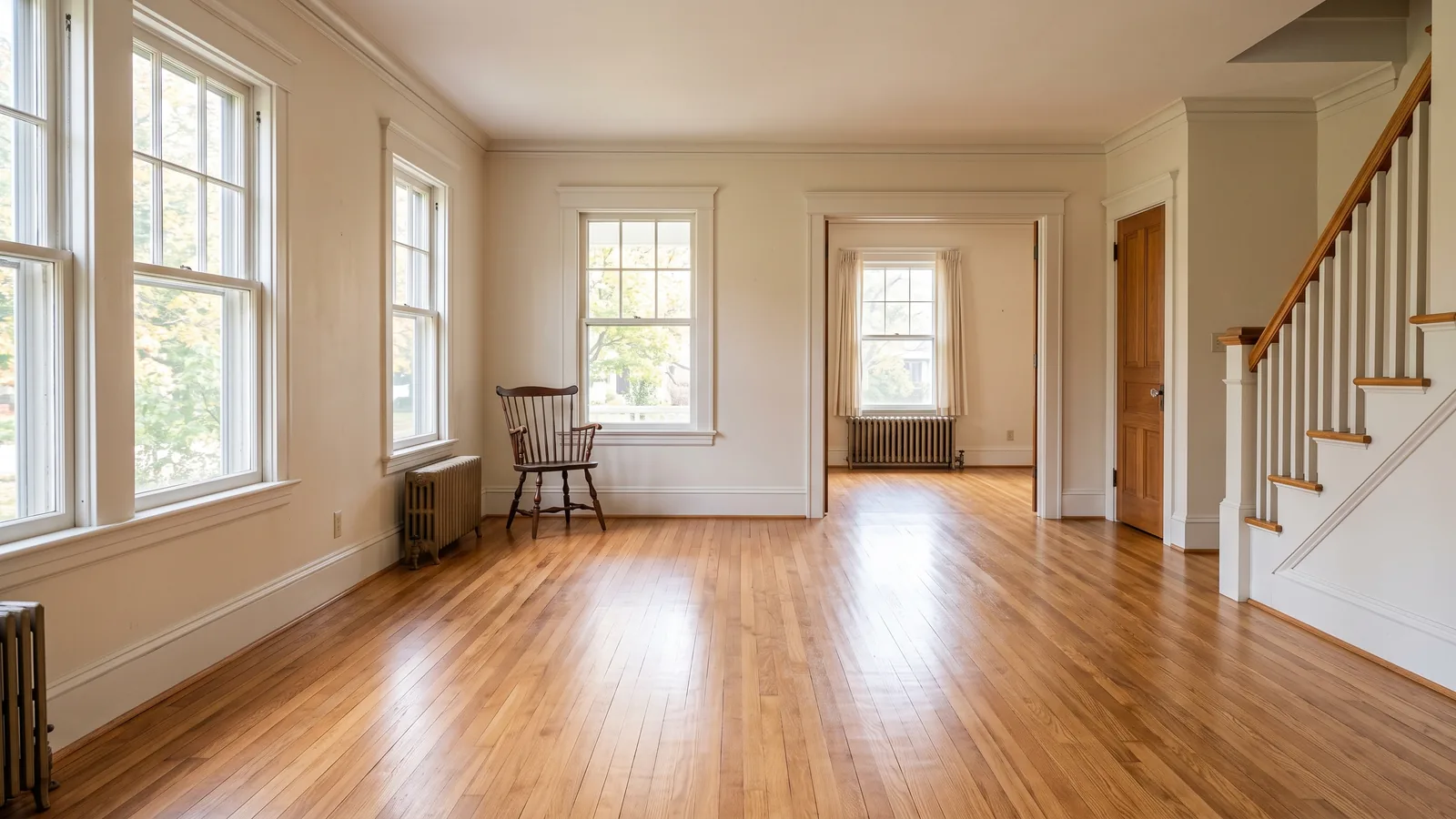
Reclaimed Wood Flooring, From Barn Boards to Heart Pine
The NWFA's guidelines define antique reclaimed wood as wood recovered from an end user after it served its original purpose. Salvaged wood is a separate category: logs never meant for harvest, such as orchard trees, street trees and logs raised from river and lake bottoms. Hardwood Floors Magazine lists where it comes from: barns, textile factories and warehouses, boxcars, snow fences, trestle bridges and railroad ties. It names the species that show up most, including American chestnut, oak, elm, maple, longleaf heart pine, Douglas fir, cypress and walnut. There's no grading standard for reclaimed wood, so each lot is judged on its own.
Reclaimed Barn Oak and Chestnut
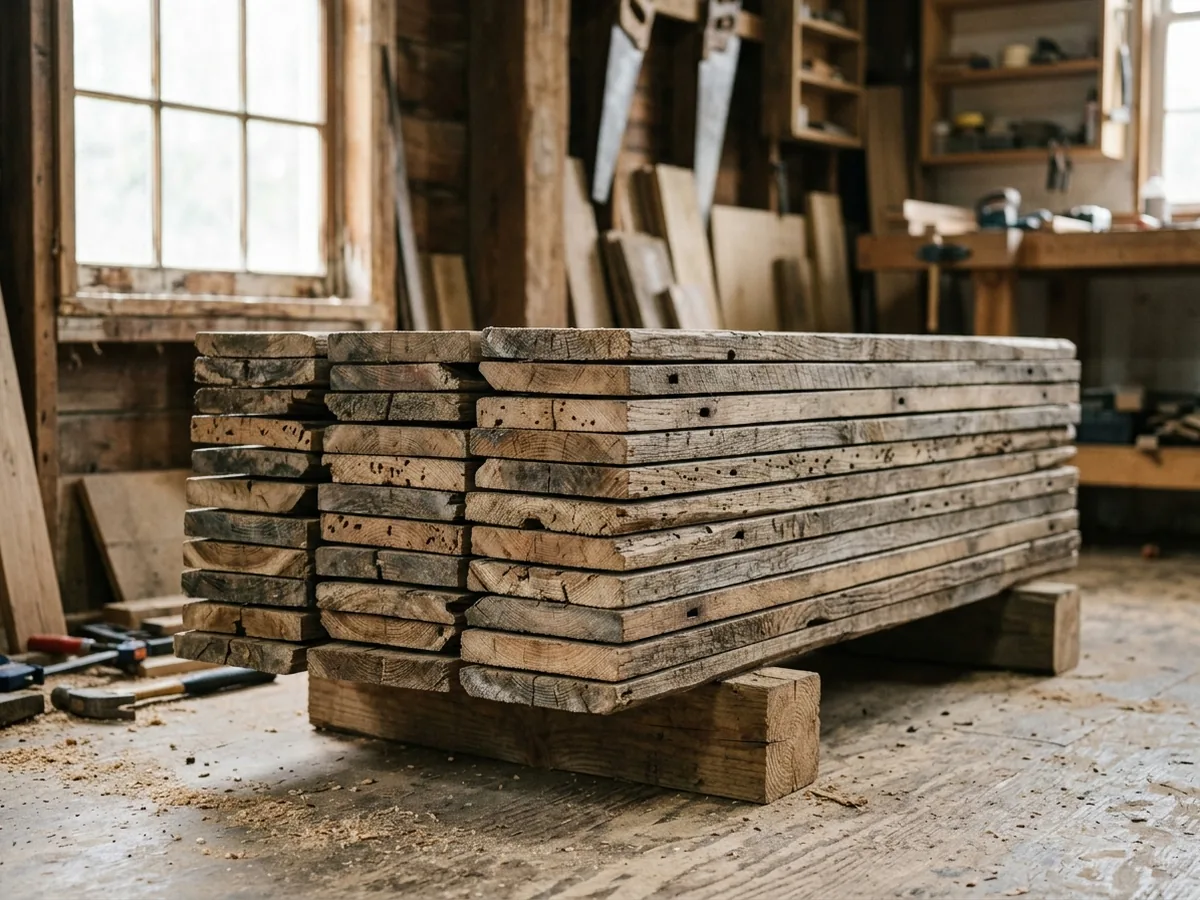
Barn oak comes out with nail holes, saw marks and the patina that a century or more of wind, rain and cold leaves on old barn wood. Chestnut is rarer. The Wood Database records that the chestnut blight of the early 1900s killed over three billion American chestnut trees, which made the lumber scarce. "Wormy" chestnut, with insect holes from the dead standing trees, usually comes out of old barns.
Know what you're getting with each. Chestnut is stable (6.7 percent tangential shrinkage, lower than oak's) but soft at 540 lbf on the Janka scale, so it dents. Barn wood carries risks of its own. Hardwood Floors Magazine warns that old red barn paint was commonly lead-based, and that sellers who skip testing put that lead back into houses. Sanding painted wood in a pre-1978 setting falls under the EPA's lead rules (see hardwood floor restoration).
Reclaimed Heart Pine
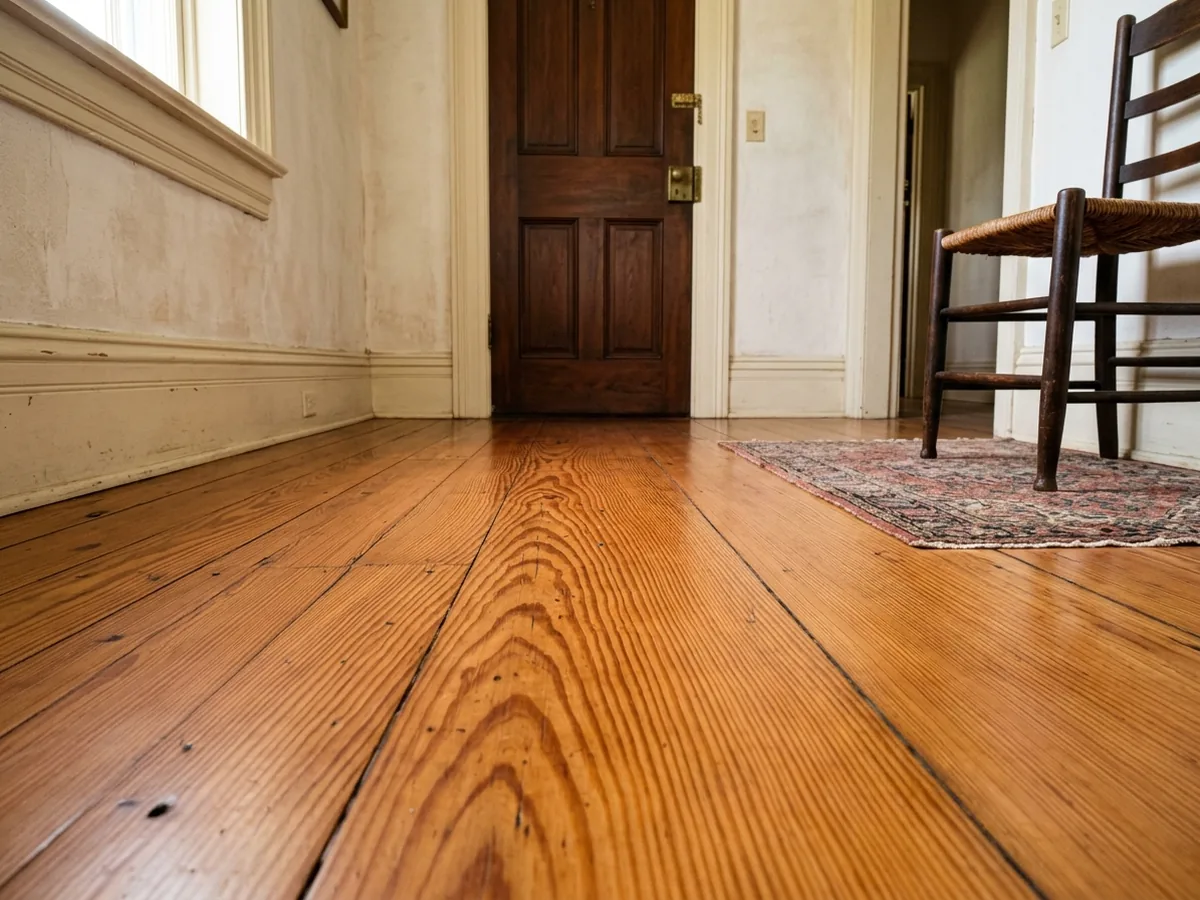
Heart pine is the heartwood of longleaf pine, milled from the beams and floors of old factories and warehouses. The Wood Database says salvaged longleaf heartwood "is in strong demand as premium flooring," and it rates the wood at 870 lbf on the Janka scale, well short of oak. Its tangential shrinkage is 7.5 percent, a bit less than red oak.
Expect dents from dropped pans and dog claws. Some timbers had other lives first. Railroad ties and bridge timbers were often soaked in creosote or pentachlorophenol, which Hardwood Floors Magazine calls known carcinogens, so ask what the source structure was. Factory and warehouse wood can also hold chemicals from what the building was used for.
Remilled vs Surface-Only Reclaimed Boards
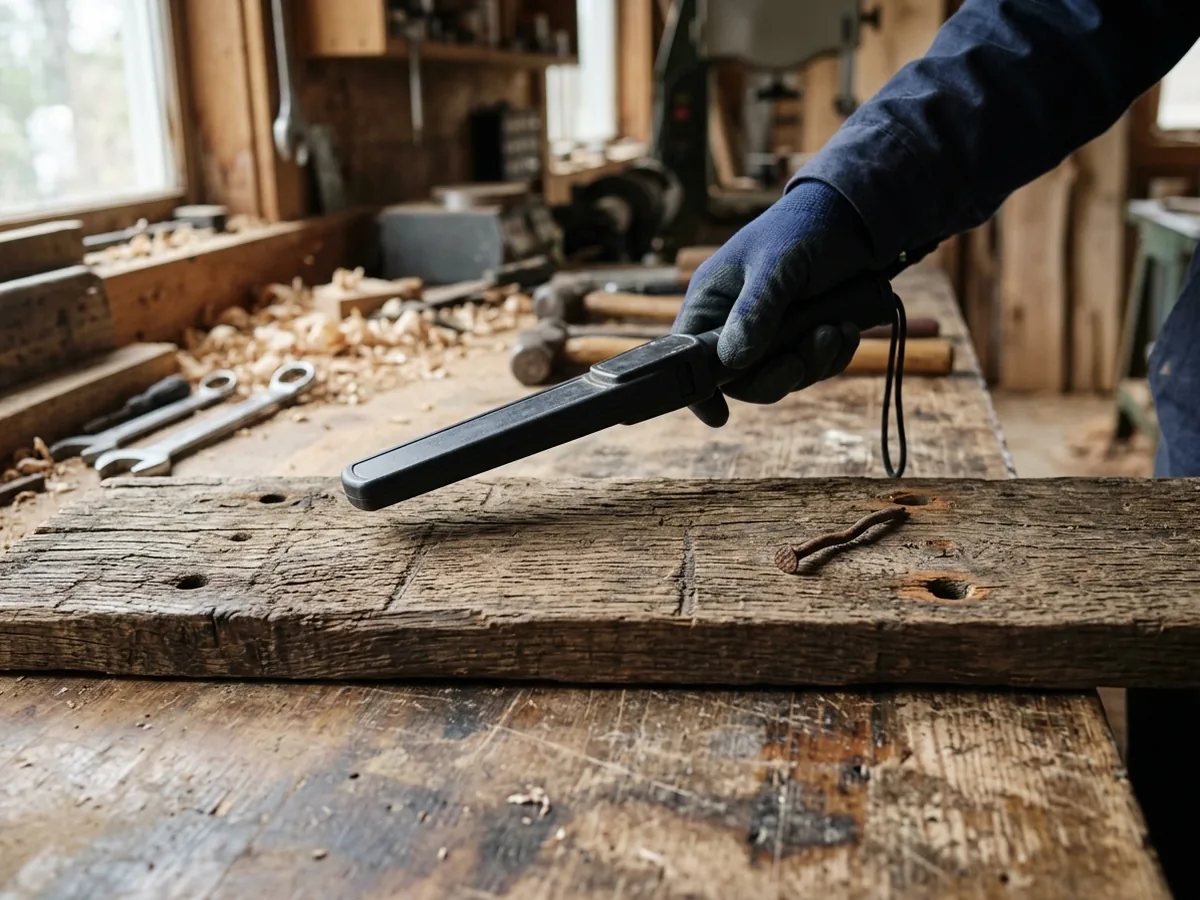
Remilled boards are resawn, planed and given new tongue-and-groove, so they install like ordinary flooring with an old-wood face. Before any blade touches them, a responsible mill checks each piece by hand for metal and pulls it, since a buried nail can ruin a saw blade. Wood Floor Business says reclaimed lumber should be kiln-dried to 6 to 9 percent moisture before milling, which also kills wood-boring insects. All that sorting and cutting is why a Hardwood Floors Magazine writer puts the loss at 40 to 65 percent from raw plank to finished floor. A well-milled product should then install with an ordinary 5 to 7 percent waste.
Surface-only boards keep the original face: saw marks, patina, even old paint ghosts. They aren't sanded flat after install. One reclaimed specialist in Wood Floor Business notes that makes subfloor prep "extremely important." Some contractors just buff and finish them, and the NWFA's technical staff suggests going over the floor with a Tampico brush on a buffer to remove loose splinters. Some old boards are too hard and brittle to nail without splitting, and some lack end-matching. Ask how the installer plans to fasten the lot you've picked.
Matching Reclaimed Boards into an Old Floor
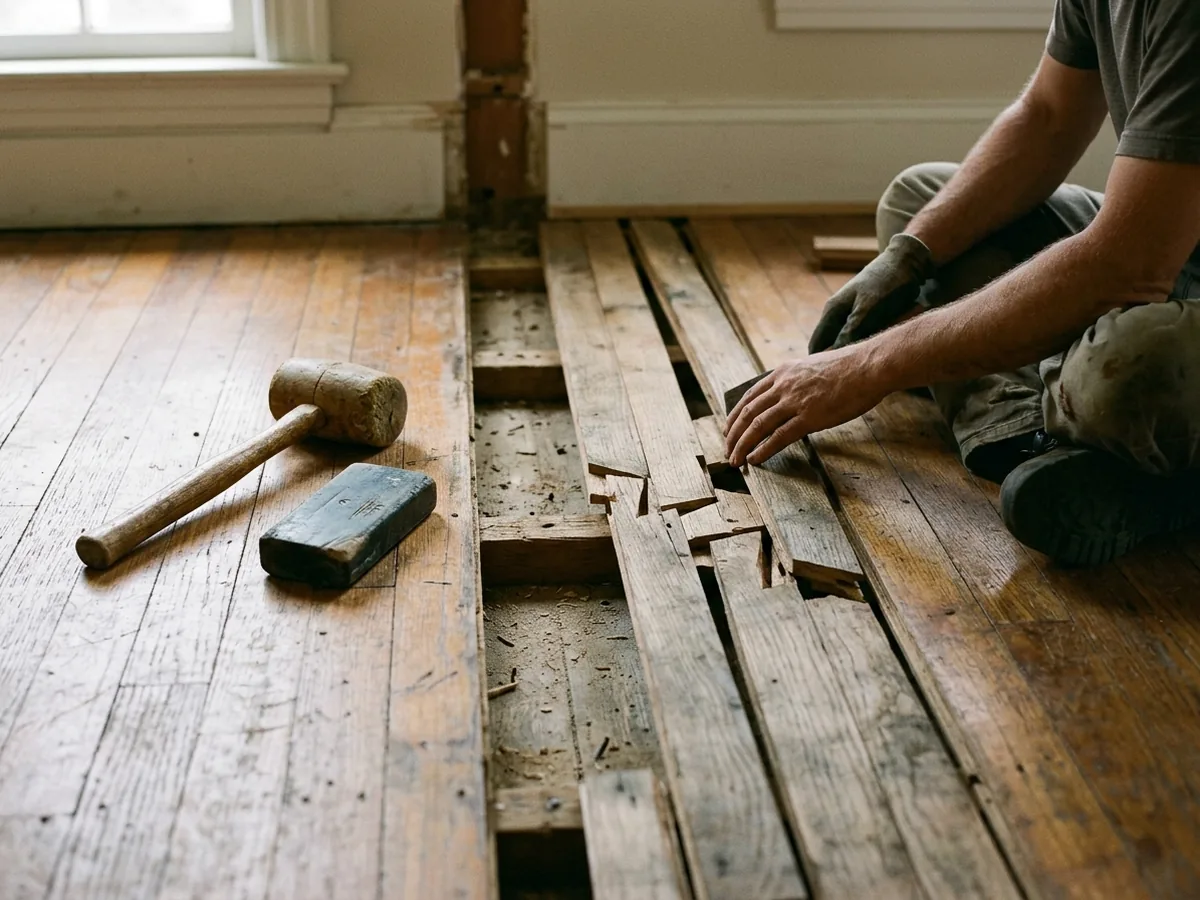
Reclaimed boards are also the best match when an old floor needs patching, such as a wall that's come out or a floor register that's moved. In our view, salvaged boards of the same species and width blend better than fresh-cut stock, because they've already aged. The new pieces get woven in with staggered joints, then the whole floor is sanded and finished together. That blending work is covered on our hardwood floor repair page.
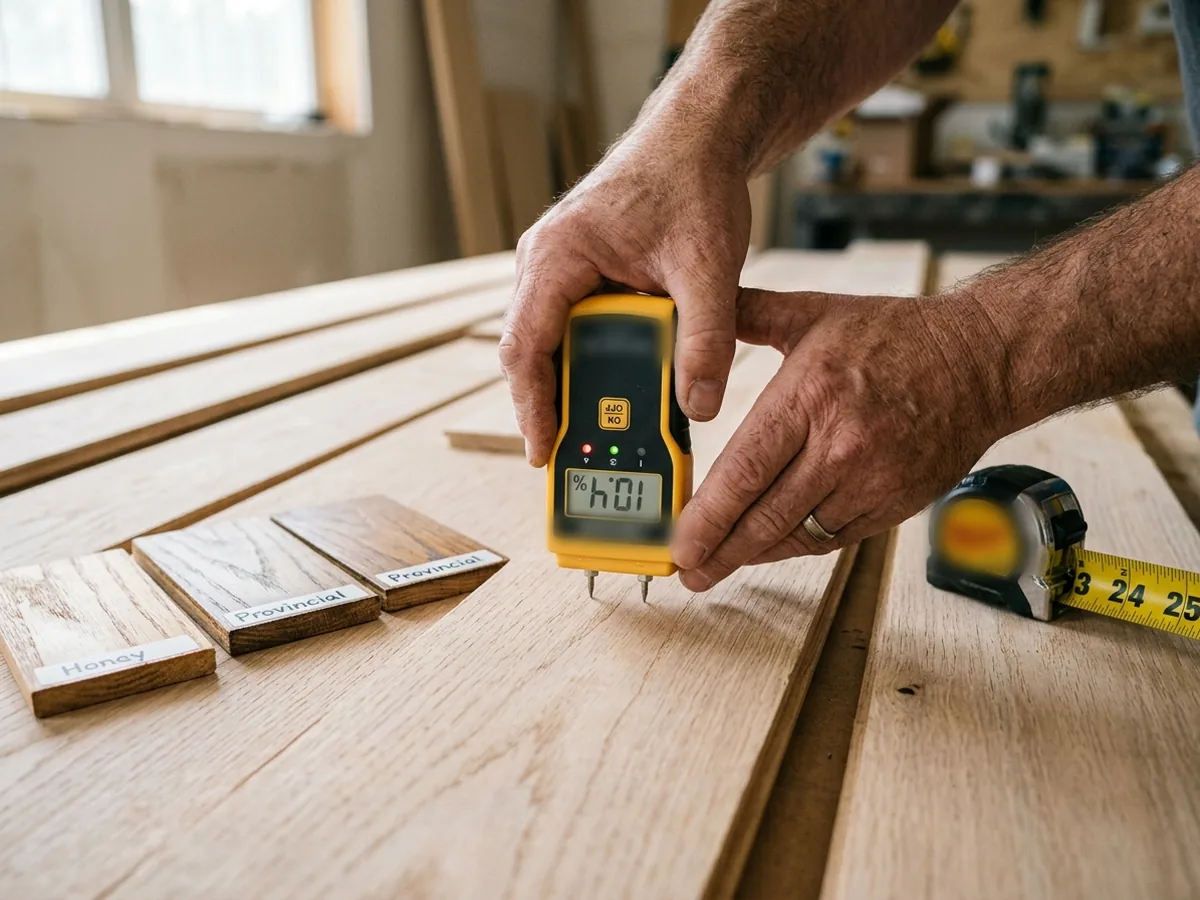
The salvaged boards still need to read close to the old floor on a moisture meter before they go in (the limits are on our hardwood floor installation page). Watch the finish too. Tannin-rich oak next to old iron nails and water can stain bluish-gray, which matters when a waterborne finish goes over boards full of old nail holes.
Why Ann Arbor homeowners call Ann Arbor Wood Flooring
- Free estimate, and you can ask for it in writing, species and finish named
- One independent local floor contractor gets your request, not a call list
- No fee to homeowners for the referral
- Ask for moisture readings before any new floor goes down
How Can You Tell Reclaimed Flooring Was Processed Properly?
Ask the supplier where the wood came from, whether it was kiln-dried and to what moisture, how metal was found and removed, and whether it was checked for lead paint and chemical treatments. Then lay a few boards on a flat surface and see whether they fit together tightly. A seller who can't explain the process is a reason to walk away.
Wood Floor Business reports floors sold as barn wood that turned out to be recycled pallet lumber, and material sold straight off a barn wall with no kiln drying or bug treatment, sometimes holding powderpost beetles. Mold can grow on wood above 15 percent moisture. On delivery, the NWFA asks installers to record the room's temperature and humidity, the subfloor moisture, and readings from boards across several bundles. Ask to see those numbers.
What Should a Reclaimed Floor Estimate Cover?
The source and species, remilled or surface-only, board widths and lengths, the waste allowance, how the boards will be fastened, and how holes and checks get filled. Also the finish and how it's maintained. Hardwood Floors Magazine notes that reclaimed floors can splinter, so the care routine matters more than on new wood.
Wide reclaimed boards follow the fastening rules on our wide plank hardwood flooring page. For prices on installation and extras, see hardwood floor installation cost. Our homepage covers hardwood floors in Ann Arbor more broadly, including how to decide between refinishing and replacing.