
Carpet to Hardwood, Sorted by What's Under the Pad
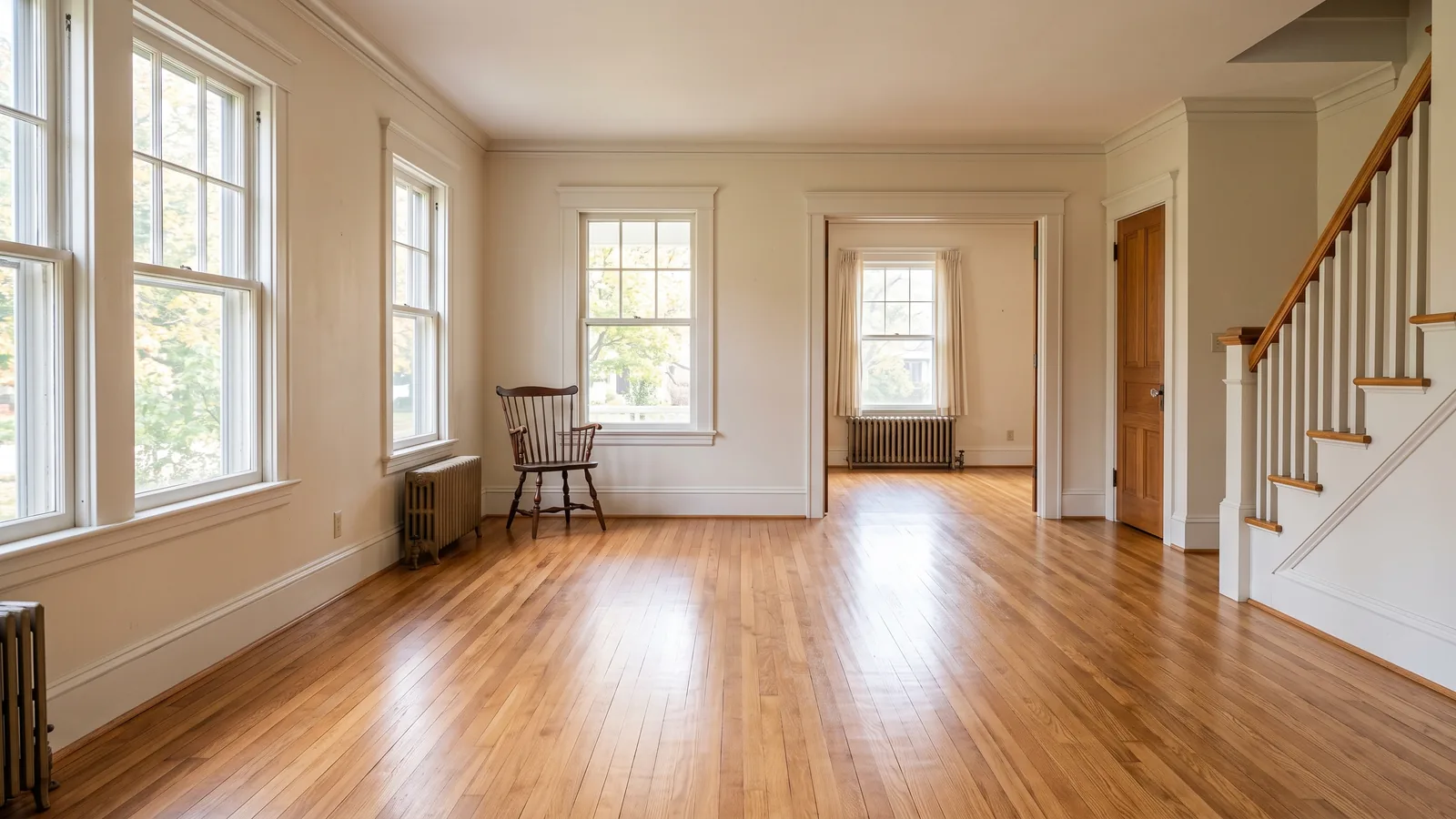
The NWFA's installation guidelines are blunt on one point: never install a wood floor over any type of carpet or carpet pad. So every one of these jobs starts the same way, with the carpet out and the floor beneath it bare. What happens next depends on what that floor turns out to be.
Carpet over Original Hardwood
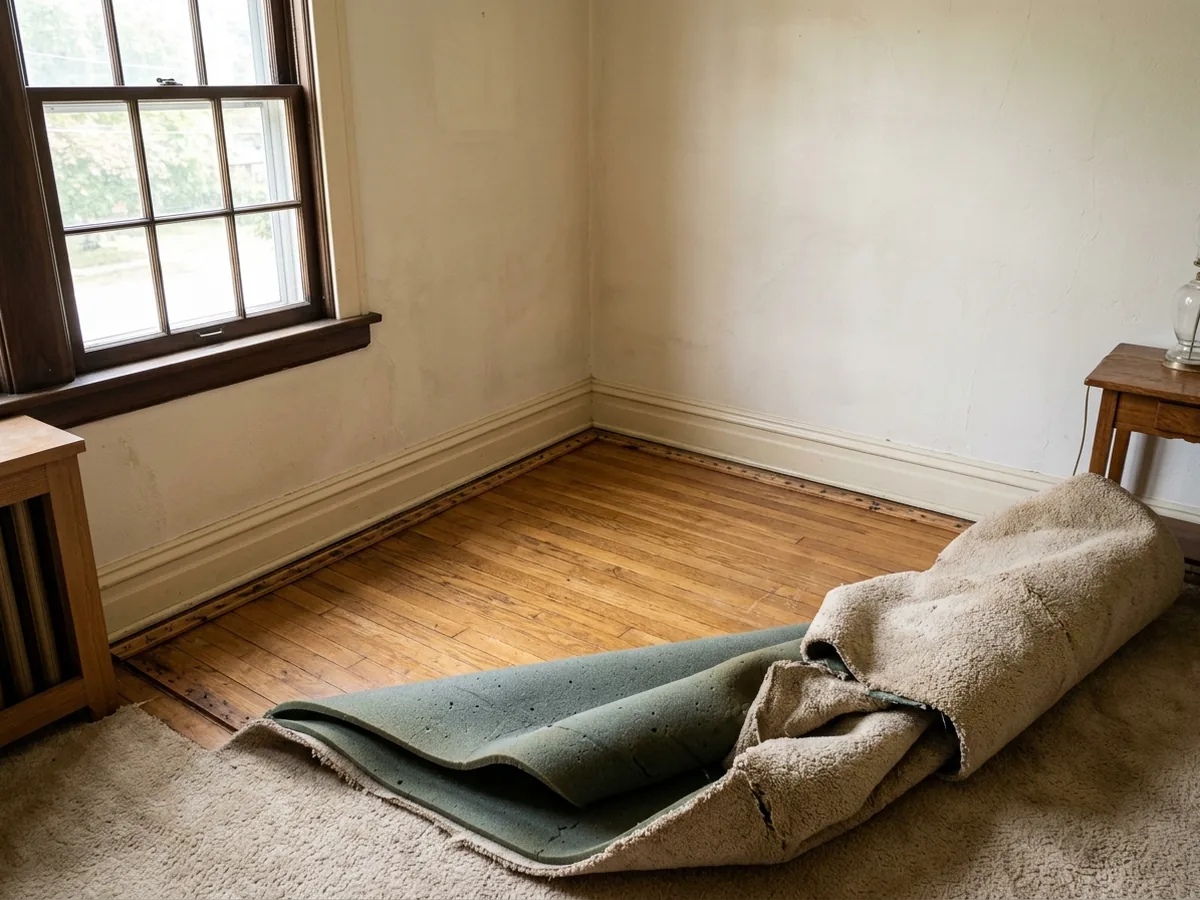
This is the good outcome, and in older Ann Arbor houses it's a real possibility. Plenty of oak floors went under carpet in the 1970s, and our view is that the carpet usually saved the middle of the room from wear. Along each wall there's a row of tack strip nailed through the oak, and across the field the pad was stapled down.
How those come out matters. This Old House suggests a painter's 5-in-1 tool or a small flat screwdriver for pad staples when you want to keep the wood underneath, and a careful crew pries tack strip up without gouging the boards. The tack strip nail holes along the walls stay behind. Ask whether filling them is included when the floor is refinished. Carpet also hides pet accidents, and dark urine stains in oak are a hardwood floor repair job before the sanding starts.
Carpet over a Plywood Subfloor
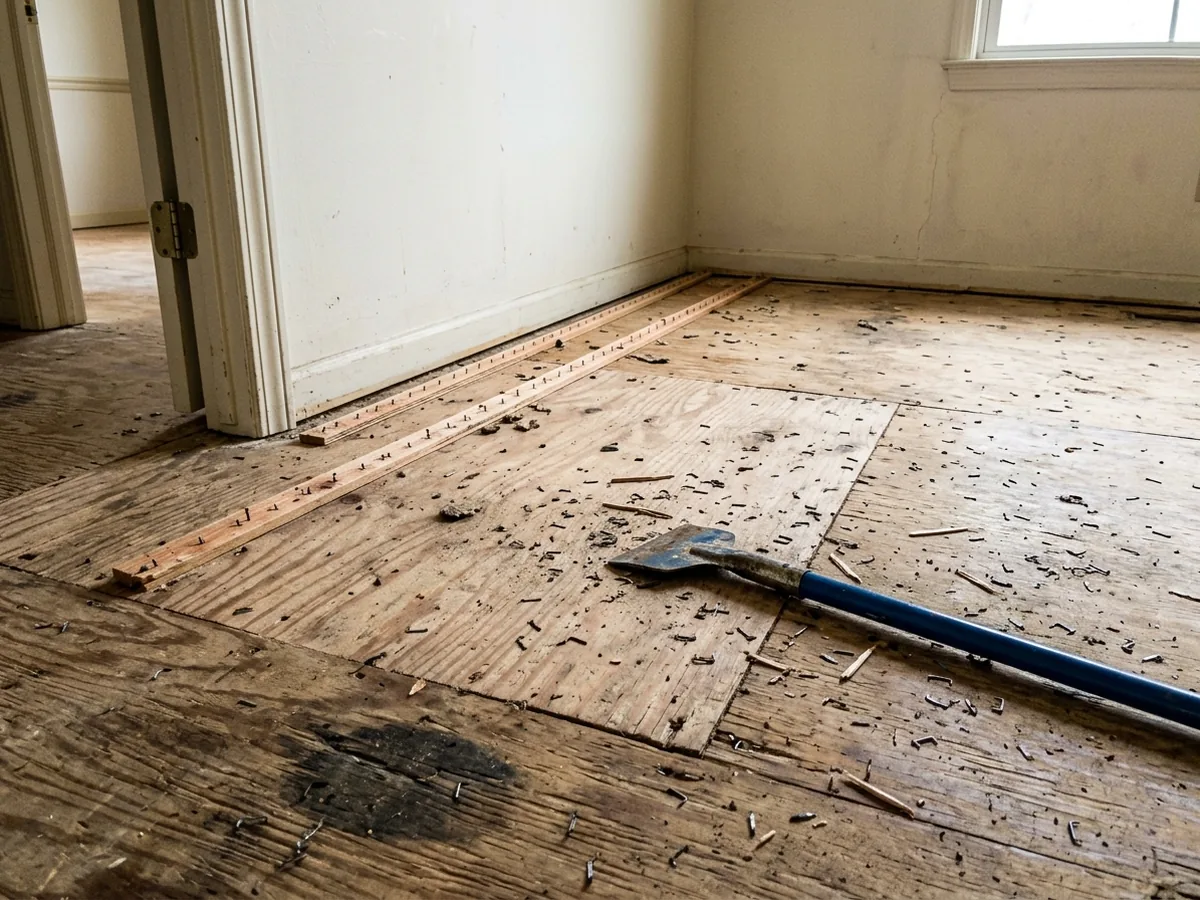
Under newer carpet you'll usually find plywood or OSB, and new 3/4 inch solid hardwood can be nailed straight to it once it's clean. Clean means scraped. One installer writing in Wood Floor Business runs a scraper over every inch: tack strip nails get set below the surface or pulled with side cutters, pad staples get scraped up or pulled, and any framing nail sticking up gets driven down. A nail head left proud makes the boards above it ride up, and that high spot shows after sanding.
Watch for particleboard. Carpet installers often laid it as underlayment, and the NWFA says particleboard is not an acceptable base for nailing down any wood floor, because it won't hold fasteners. The fix is to tear it out or overlay it with subfloor panels at least 19/32 inch thick. Subfloor thickness and flatness are covered on our subfloor repair page. Moisture readings on the subfloor and the new boards come before any nailing (see hardwood floor installation).
Carpet over a Concrete Slab
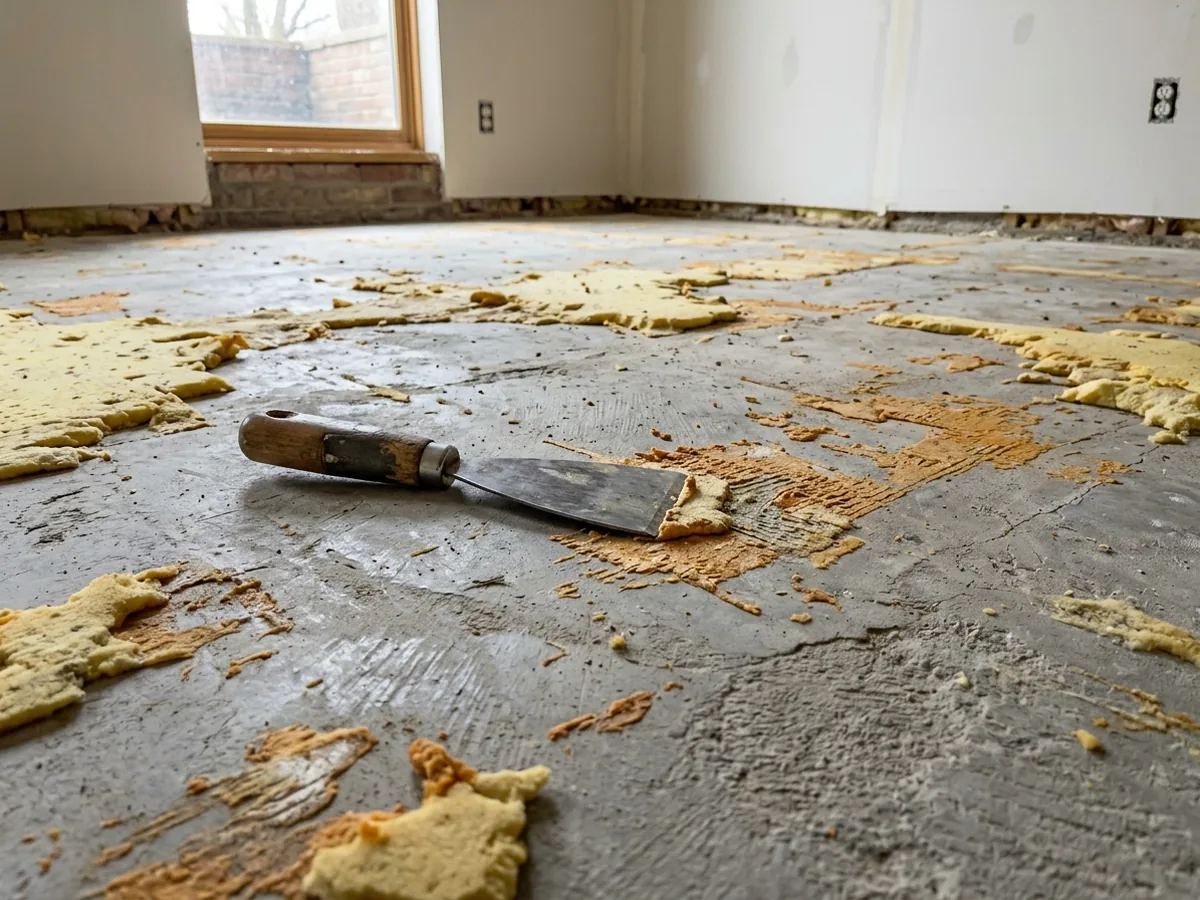
On a slab, the pad is usually glued, and chunks of it stay stuck after the carpet comes up. They have to be scraped off before anything new goes down.
Over a slab, the usual choice is engineered hardwood, glued down or floated on underlayment, because it moves less than solid wood when moisture changes. Solid boards on concrete need extra steps, such as a moisture-control system under a glue-down plank, so expect them to cost more. Before either, ask for a moisture test of the slab itself. The test methods and vapor retarders are on our engineered hardwood installation page. Old black adhesive under carpet or tile in an older building can contain asbestos, so don't sand or grind it (see parquet flooring).
Door Undercuts, Transitions and Floor Height Changes
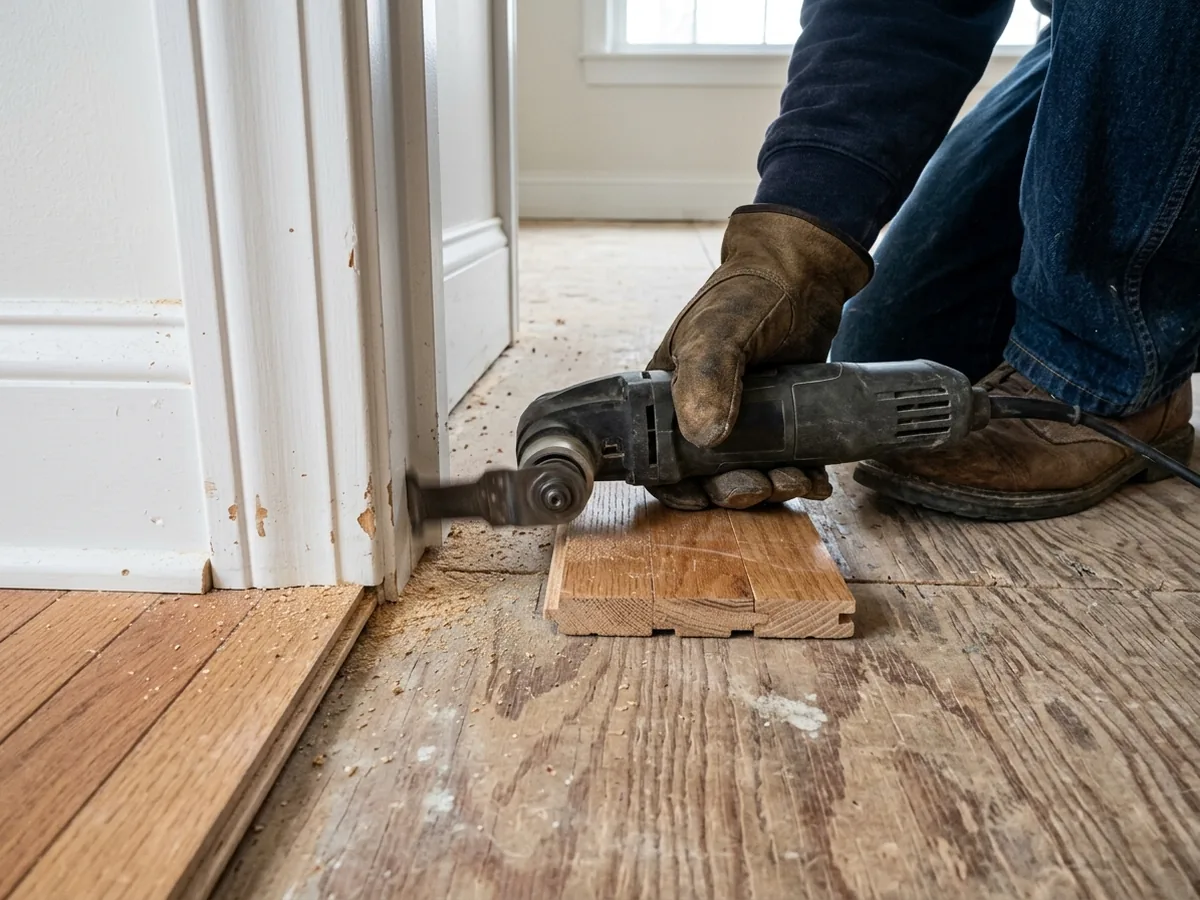
Hardwood sits differently from carpet, and the doorways show it first. The NWFA's nail-down steps include undercutting door casings and jambs, so the boards slide under the trim instead of being scribed around it. A neat way to do it is to lay a flooring scrap upside down on the subfloor as a guide and cut the jamb with an oscillating saw resting on top. Doors that swung over carpet may need trimming too, and that's worth asking about at the estimate.
Where the new floor meets a thinner one, a reducer or threshold closes the gap. The NWFA lists both at 5/16 to 3/4 inch thick. Between two floors of the same height, a T-molding is used, and it's fastened to the subfloor, never to the wood. At the top or bottom of a staircase, a new floor changes the height of the first or last riser. Michigan's code limits how much risers can differ, and our hardwood stairs page explains the rule and what to do when the carpet comes off the steps as well.
Why Ann Arbor homeowners call Ann Arbor Wood Flooring
- Free estimate, and you can ask for it in writing, species and finish named
- One independent local floor contractor gets your request, not a call list
- No fee to homeowners for the referral
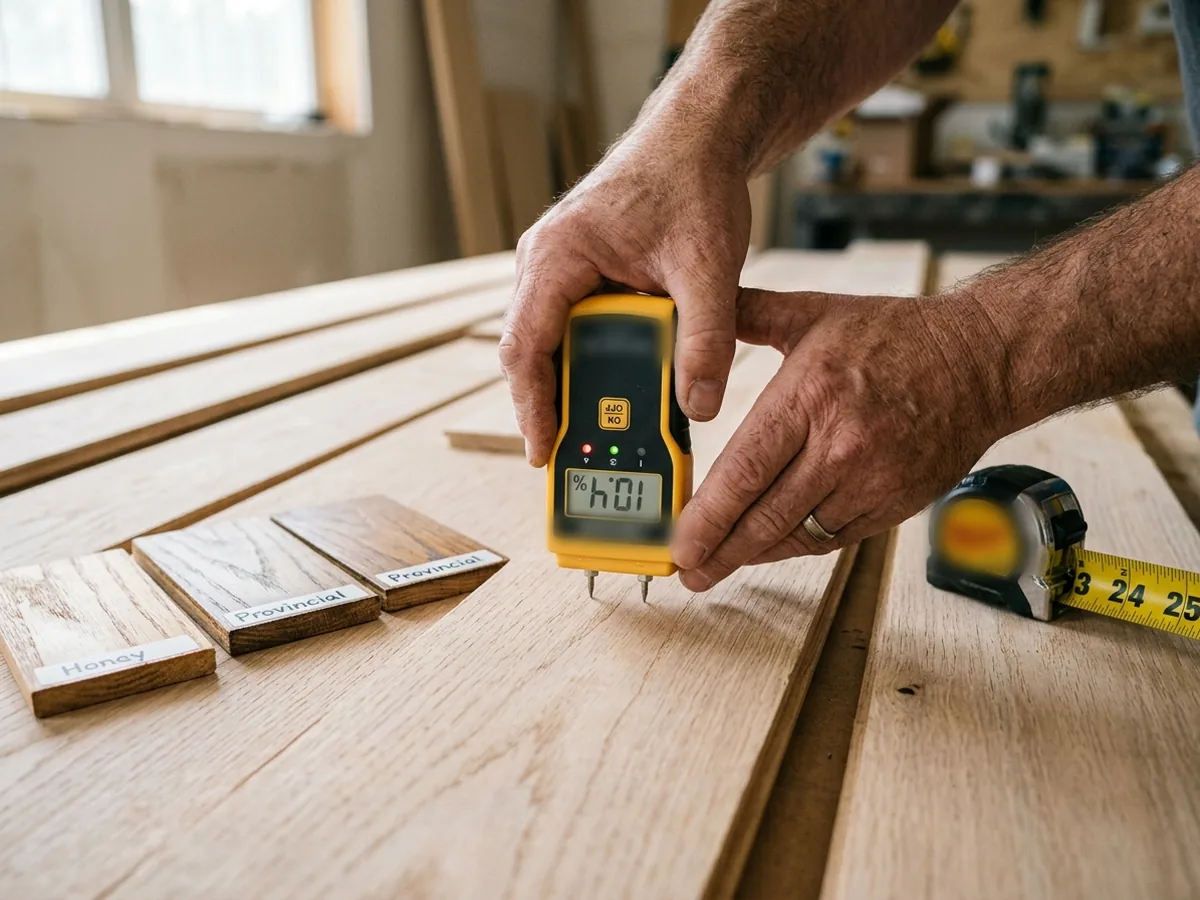
- Ask for moisture readings before any new floor goes down
How Can You Tell What's Under the Carpet Before the Quote?
Lift a corner of carpet inside a closet with pliers and peel back the pad. If you see narrow tongue-and-groove boards, it's likely original hardwood. Plywood, particleboard and concrete are easy to tell apart. A floor register cutout shows the layers in cross-section, and from an unfinished basement you can see the subfloor from below. It takes five minutes and changes the whole quote.
A few things worth noting while you're down there:
- Board width and direction in each room, since hallways and bedrooms were sometimes floored differently.
- Dark stains or soft spots near doors, radiators and bathrooms.
- How the carpet meets tile or vinyl at each doorway. Each of those spots needs a transition.
- Whether the stairs are carpeted too.
Tell the contractor what you found when you call. "I peeked in the closet and it's oak" saves everyone a lot of guessing.
What Order Does the Work Go In?
Furniture and doors come out, then the baseboard comes off (numbered, so it goes back where it came from), then the carpet is cut into strips and rolled, the pad and staples come up, and the tack strip is pried off. After scraping and moisture readings, the jambs get undercut and the new floor goes in or the old one gets sanded. Trim and doors go back last.
The steps follow This Old House's carpet removal sequence and the NWFA nail-down steps (remove base and thresholds, undercut, then lay out). Two things push the schedule around. New site-finished boards need time to acclimate before nailing and then several finish coats. Original oak goes straight to sanding but may need repairs first. If you're weighing new boards against what you uncovered, the refinish-or-replace checks on our homepage for hardwood floors in Ann Arbor will help.
For prices on carpet removal and new flooring, see hardwood floor installation cost.