
Staircase Refinishing, Tread by Tread
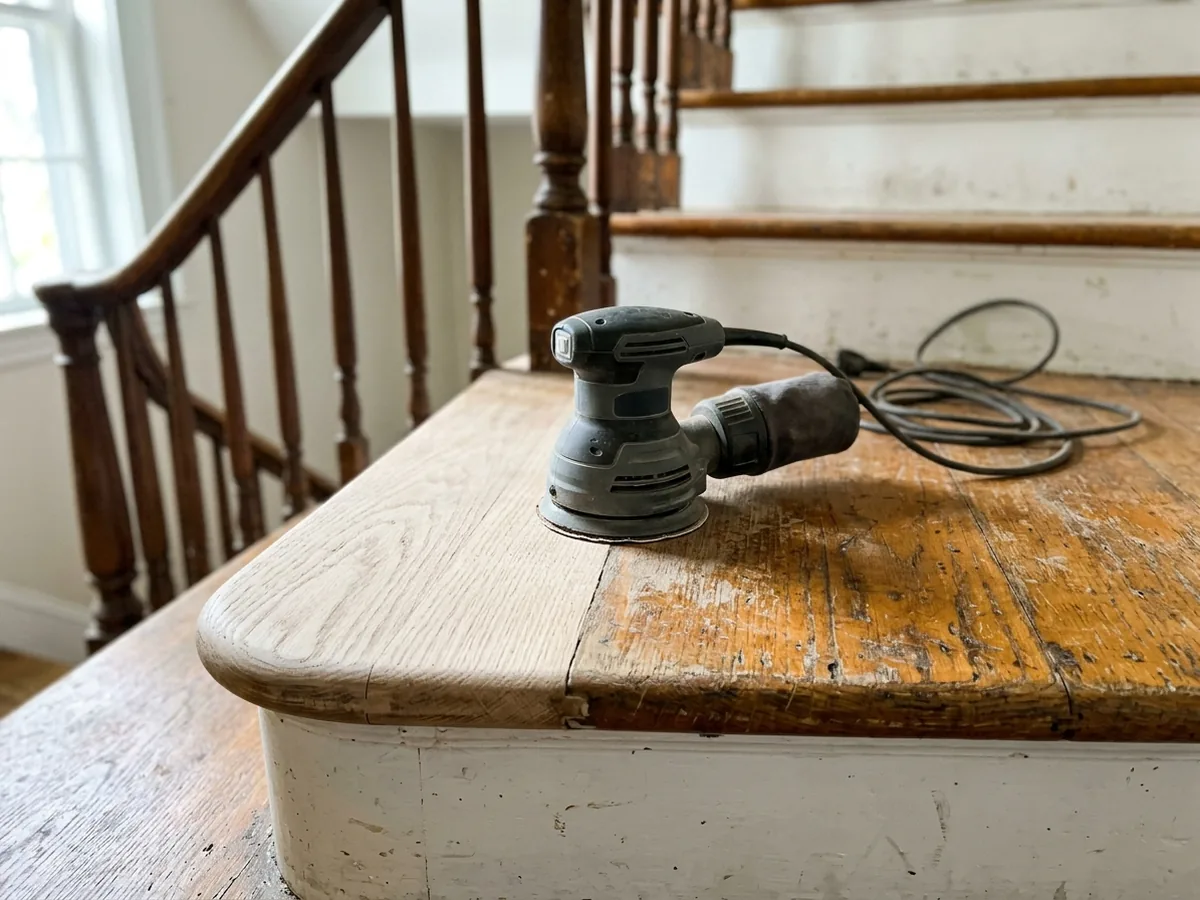
Sanding and Refinishing Oak Treads
Treads take the hardest wear in the house. Every trip up and down lands on the same strip of each step, and the finish usually wears through at the front edge and the center first. The big drum sander that does a living room can't work on a stair, so the refinisher sands each tread with a random-orbit or belt sander, gets into the corners against the stringers and risers with a detail sander or a hand scraper, and rounds the nosing by hand so its profile stays even.
After sanding, the treads get stain if you want it, then two or three coats of finish. On stairs, the sheen matters more than on a floor: This Old House notes that satin finishes are more slip-resistant than glossy ones. Our view: pick satin or matte for treads even if the hall floor is semi-gloss, because a shiny stair in socks is a hazard.
Ask how the refinisher plans to keep the stairs usable. A common approach is doing every other tread on day one and the rest on day two, so there's always a way up. Finish dry times and when you can walk on them depend on the product; the comparison is on hardwood floor refinishing.
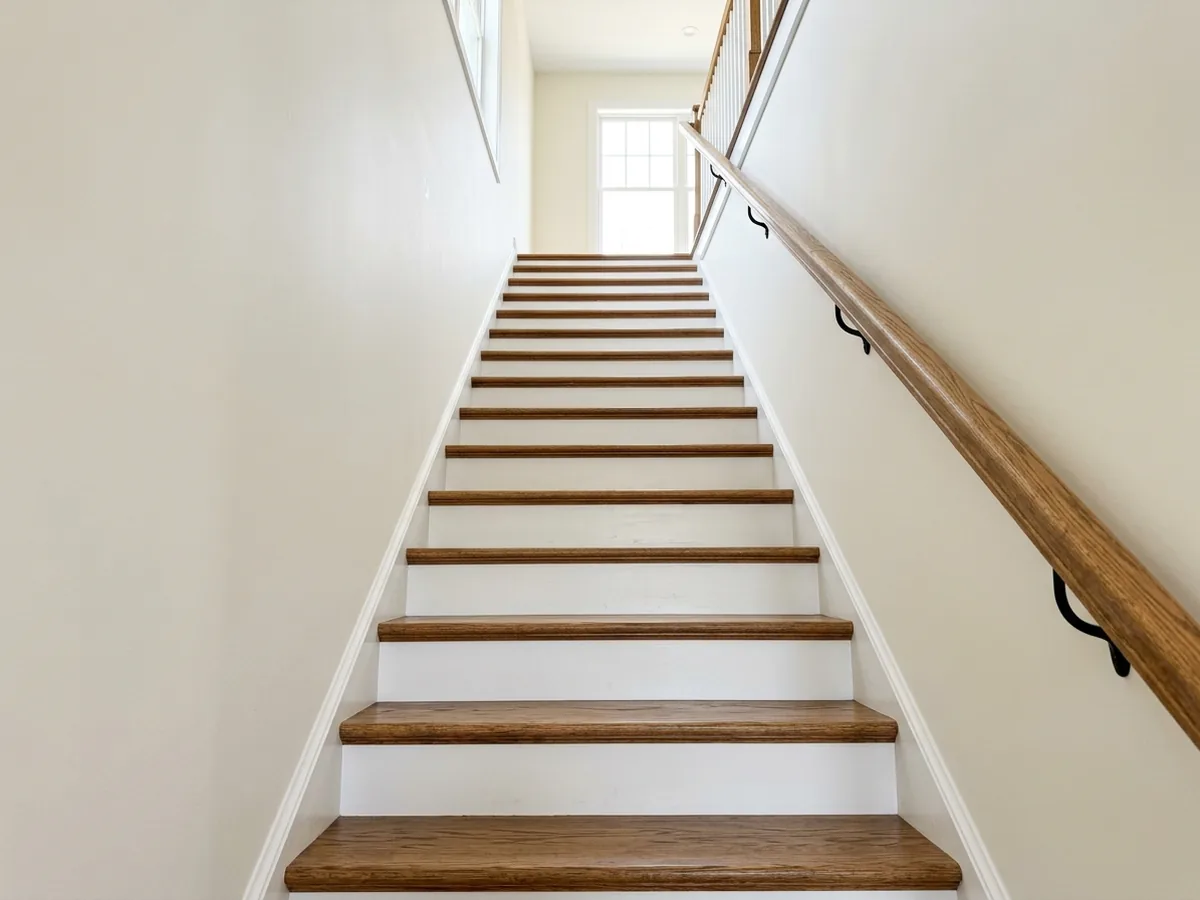
Painted Risers with Stained Treads
Stained treads over white risers is a common look on older staircases, and a practical one: risers get scuffed by toes, and paint touches up easily where wood finish doesn't. The order of work matters. The usual sequence is to sand and finish the treads first, then mask them and paint the risers, so the paint line sits clean along the back edge of each tread.
If the risers are already painted and the house was built before 1978, that paint may contain lead. Sanding or scraping it counts as covered work under the EPA's lead-safe rule when someone is paid to do it, and the hardwood floor restoration page explains what that means. Ask whether the refinisher is lead-safe certified before they sand any painted riser or stringer.
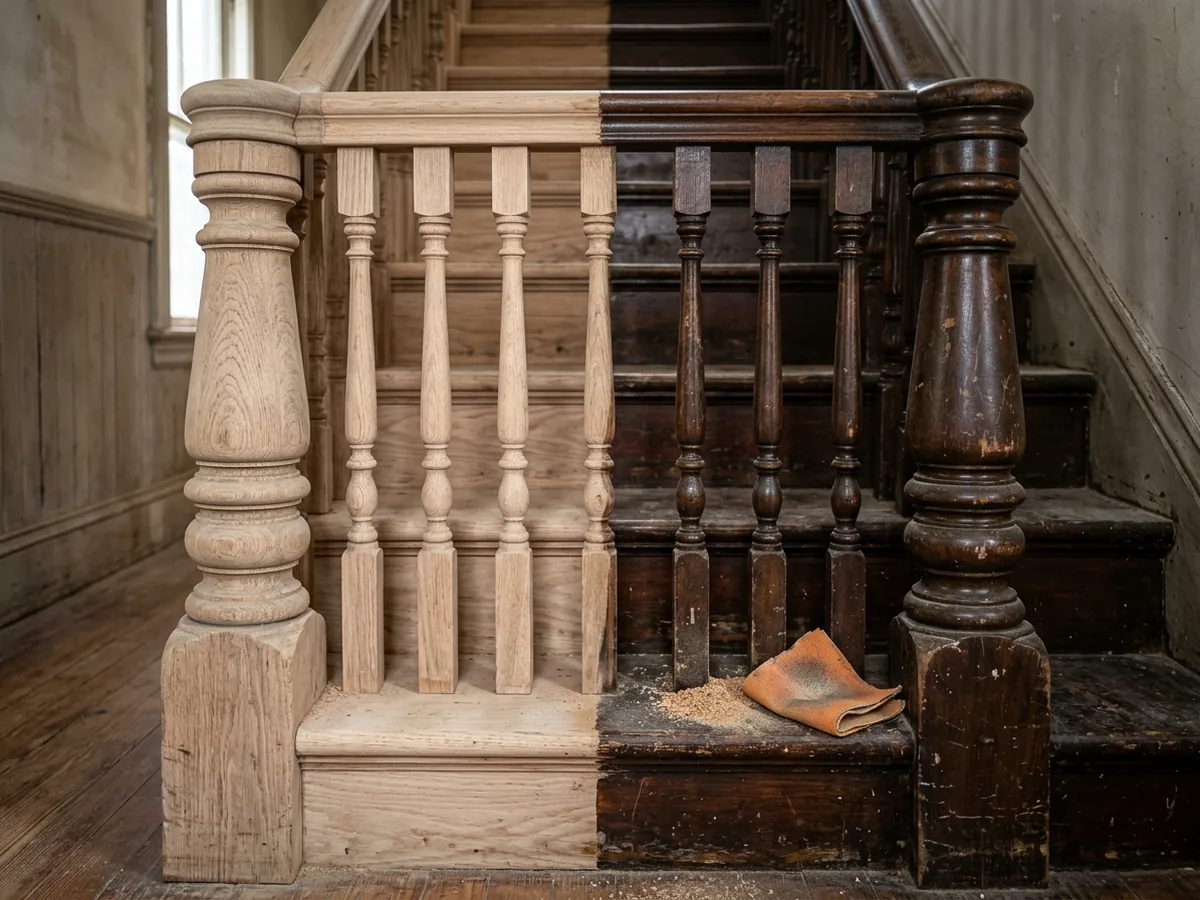
Handrails, Balusters and Newel Posts
Rails and balusters are where staircase refinishing gets slow. A turned baluster has beads, coves and flats that no machine follows, so they're hand-sanded with abrasive cord and sponges or stripped chemically and scuffed. A handrail gets hand oils on top of normal wear, and it may need cleaning before a new finish will stick.
Angi says curved stairs or carved banisters can double the budget, mostly in labor. Ask whether rails and balusters are in the quote or priced separately, and whether loose balusters will be re-glued while they're bare. One way to cut the hand-sanding is to stain the treads and handrail and paint the balusters white. Anything structural, such as a wobbly newel post or a rail that needs new brackets, comes before finishing; step dimensions and the code side of stairs are covered under hardwood stairs.
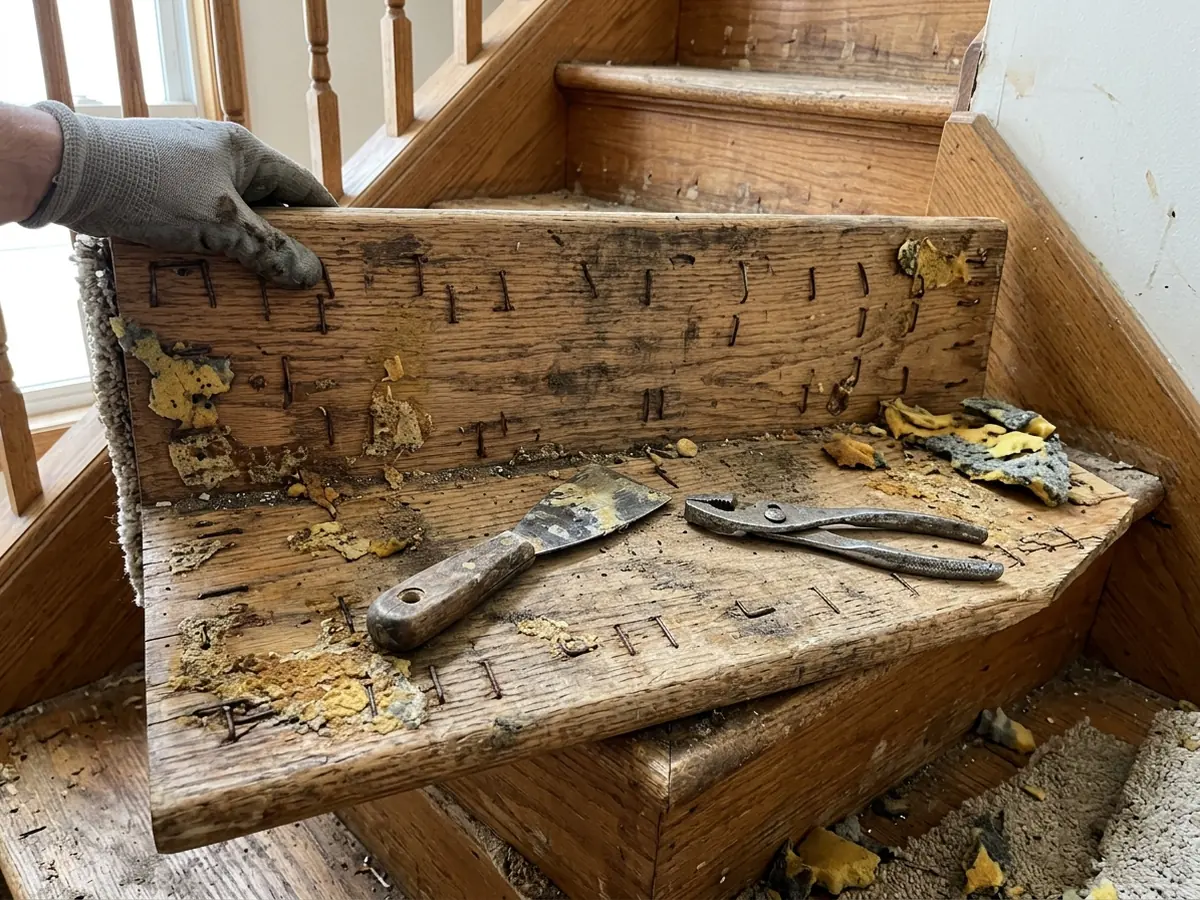
Stripping Paint and Carpet Adhesive from Stairs
Stairs that were carpeted for decades come out of it with tack strips, hundreds of staples, pad glue and sometimes paint along the edges where the carpet stopped. All of that has to come off before sanding, or it tears the sandpaper and gouges the wood. The staples are pulled one by one; glue and paint are scraped, softened with a stripper, or both.
Strippers have changed. The EPA banned methylene chloride paint removers for consumers in 2019, and its 2024 rule prohibits most commercial uses too, including paint and coating removal. Expect the refinisher to use other strippers and to scrape more by hand. If the paint might contain lead, how it's removed matters even more; the lead-safe rules linked above apply.
What's under the carpet isn't always oak. Angi notes that people are often surprised by good wood under stair carpet. In our view it's just as common to find construction-grade treads that were never meant to show. Those get new treads, not a refinish; see hardwood stairs.
Why Ann Arbor homeowners call Ann Arbor Wood Flooring
- Free estimate, and you can ask for it in writing, species and finish named
- One independent local floor contractor gets your request, not a call list
- No fee to homeowners for the referral
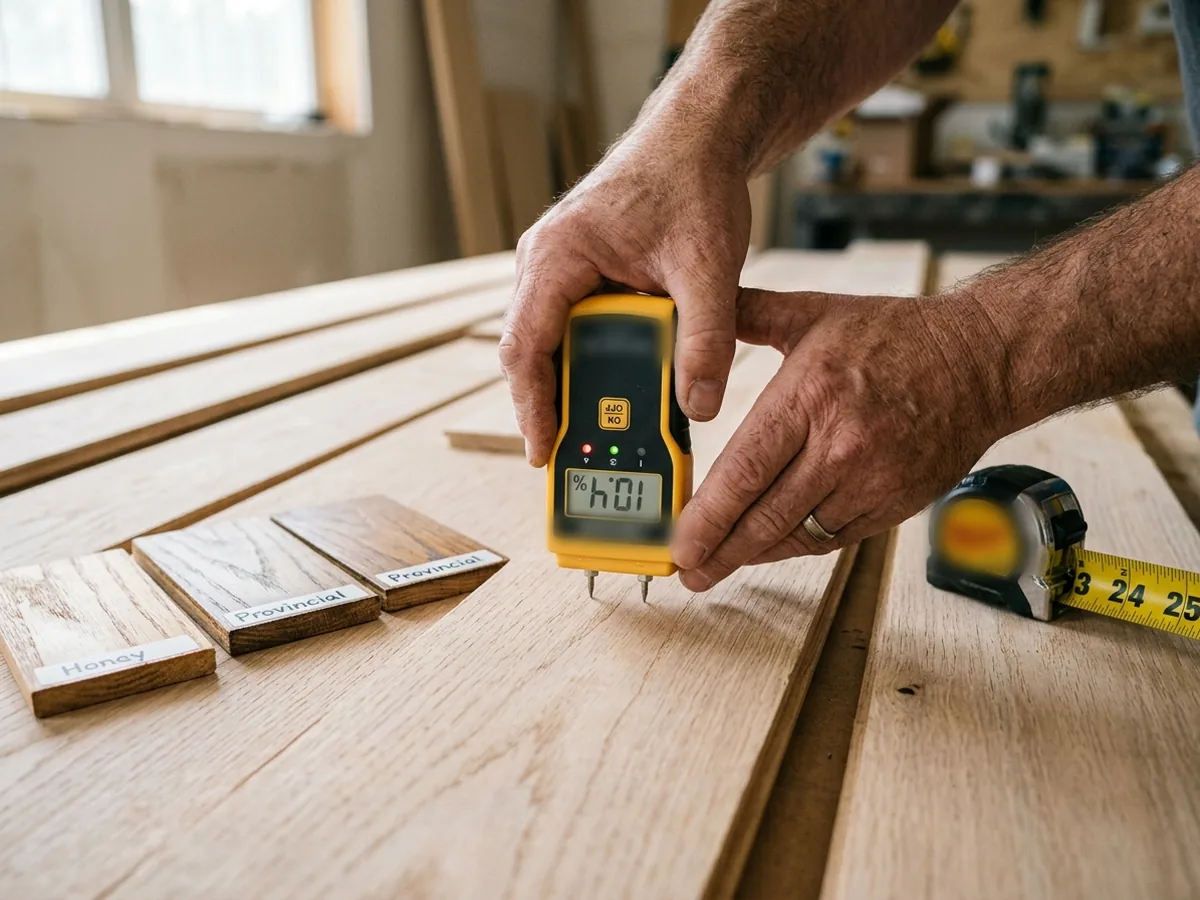
- Ask for moisture readings before any new floor goes down
How Much Does Staircase Refinishing Cost?
Angi's 2026 figures put a standard staircase of 12 to 17 steps at $345 to $1,324, with an average around $801. HomeGuide prices stair refinishing at $25 to $85 per step. Rails, balusters, stripping and repairs are extra, and Angi adds 15 to 20 percent for stairs wider than normal (36 to 48 inches).
Angi's step table shows how quickly it scales: 14 steps at $900 to $1,500, and 19 steps at $1,200 to $1,800. Repairs run $40 to $150 an hour. Refinishing doesn't need a permit unless the structure of the stairs changes. When stairs are part of a whole-floor job, the per-step price sits alongside the floor rate on the refinishing cost page.
What Should the Stair Estimate List?
The estimate should list the number of treads, risers and landings, what happens to risers (stain, paint or new), whether rails, balusters and the newel post are included, the stripping method, the stain and finish with its sheen, and how the stairs stay usable during the work. It should also say whether lead-safe practices apply.
Matching the stairs to the floor at the top and bottom is worth settling at the same time. If the hall floor is being refinished too, doing both together means one stain mix and one sheen. For the floor itself, start at hardwood floors in Ann Arbor.