
Hardwood Floor Inlay Work: Borders, Medallions and Feature Strips
Contrasting Borders and Feature Strips
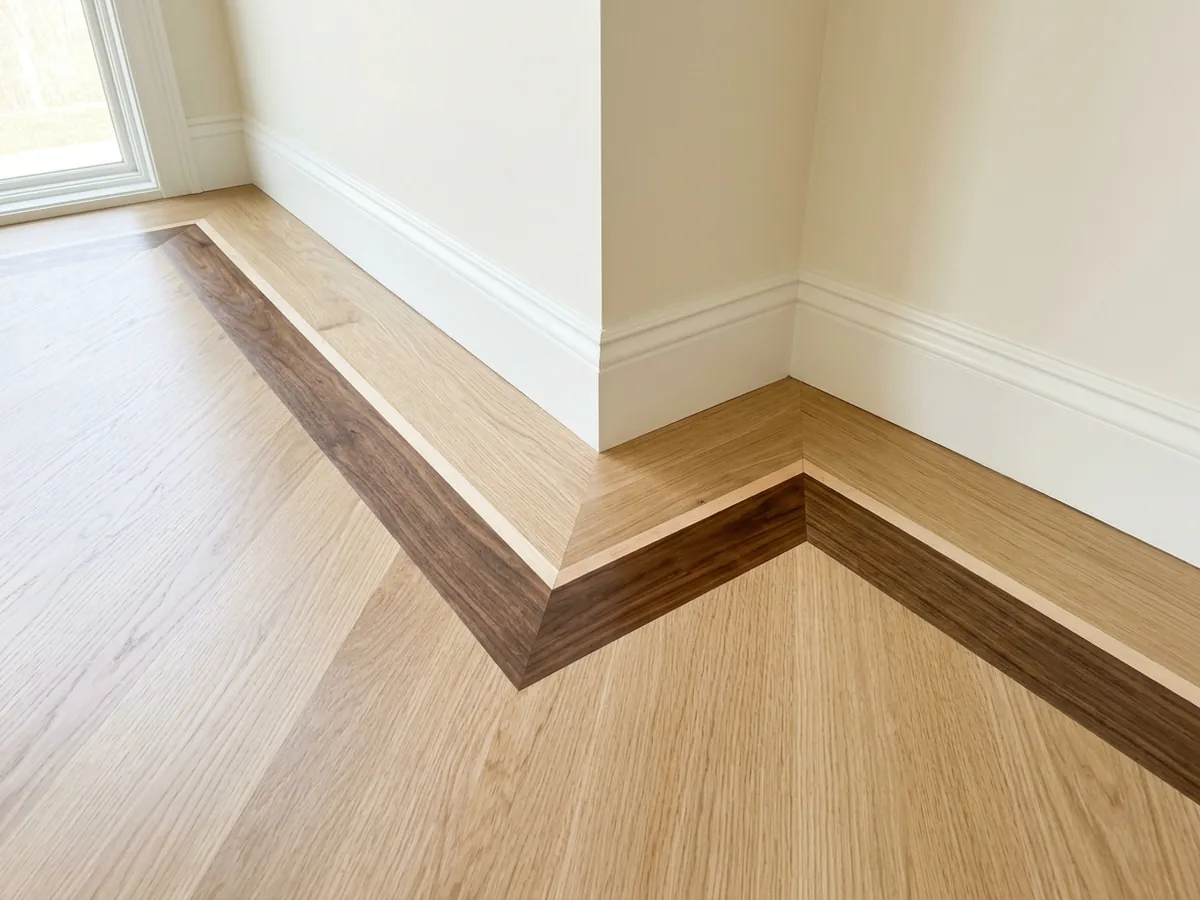
A border is a band of contrasting wood around the field of a room. A feature strip is a single narrow line of it, set a few inches in from the border or on its own. Walnut around white oak is a common pairing; the Journal of Light Construction describes bird's-eye maple strips inside a cherry border.
Wood Floor Business suggests starting with a simple feature strip for anyone new to border work, which tells you something about how fussy the rest is. The usual method, described by both Wood Floor Business and the Journal of Light Construction: install the field first with its ends left long, keep nails out of the border zone, snap the border lines, cut the field edges clean with a track saw, then rout a groove so every border piece locks in by tongue and groove or slip tongue. Corners are mitered at 45 degrees or stepped. The border gets glued to the subfloor as well as nailed.
Layout starts from the room's center, not the walls, since walls are rarely straight. That centerline method is the same one used for pattern floors and is explained on herringbone floor installation.
Medallions and Compass Roses
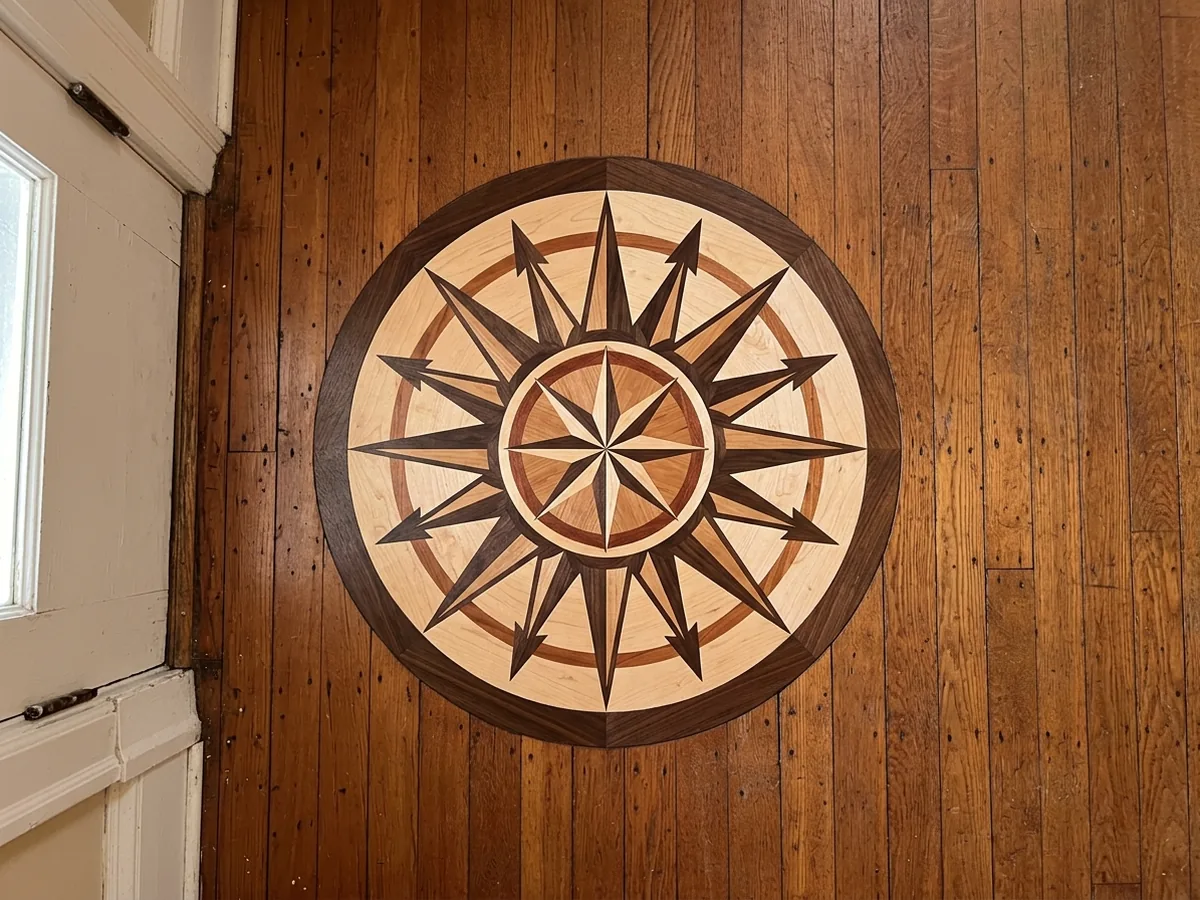
Medallions are made to order: small pieces of hardwood cut precisely and mounted on a plywood backing, according to This Old House. The better ones are at least 5/16 inch thick so they can be sanded more than once. They're made to match your floor's thickness, so the maker usually asks for a sample, cut out from the spot where the medallion will go.
Installation follows the router template that comes with the medallion. The contractor marks the outline, checks it with a magnetic nail finder and shifts it off any flooring nails, then routes down to the subfloor in several shallow passes. The medallion is bedded in flooring adhesive and tapped flush. This Old House warns that a routed cutout can change shape slightly if it sits for more than a few hours, so routing and setting happen in one go.
Inlays at Entries and Fireplace Hearths
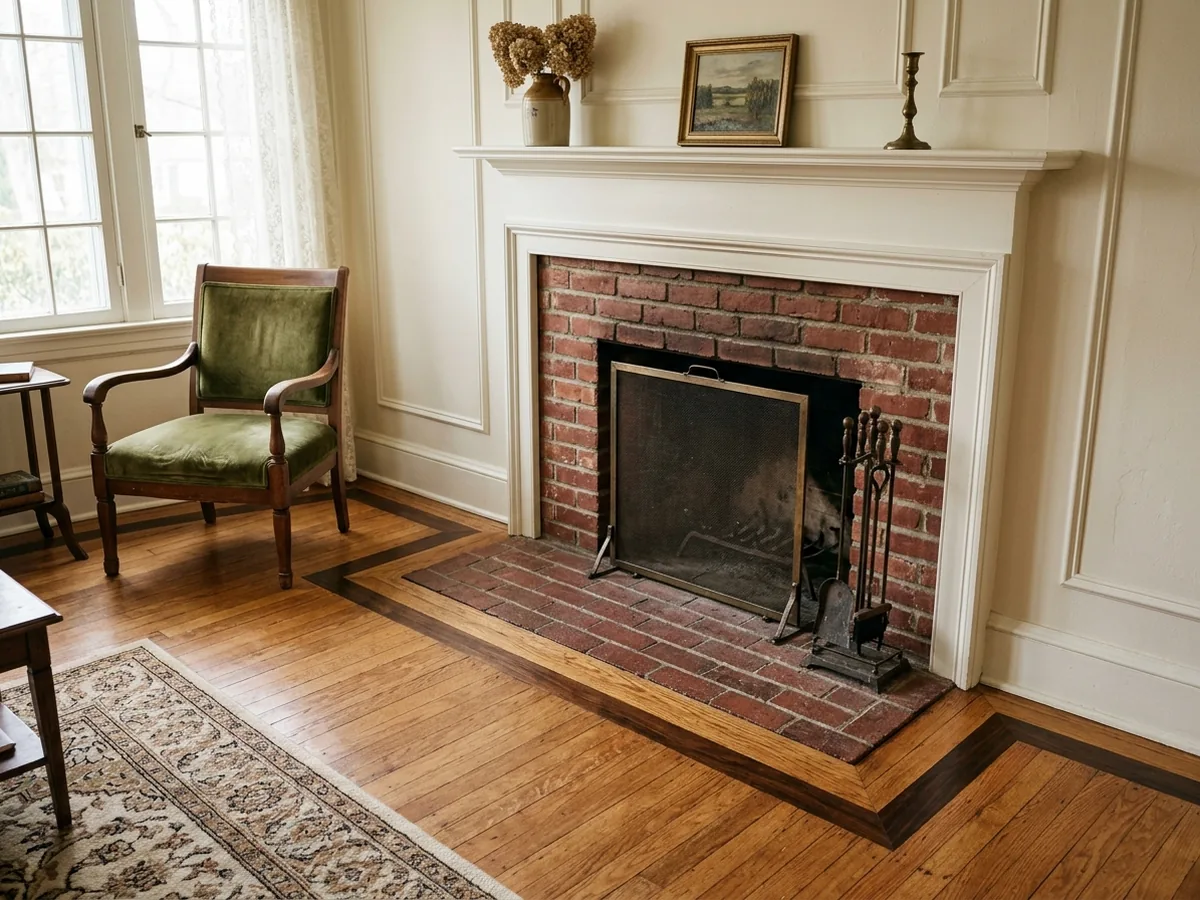
Entries and hearths are where an inlay earns its keep, because they're the two places a room has a natural frame. In an entry hall, a medallion or a border rectangle marks the threshold. The Journal of Light Construction describes a 4-foot compass rose in an entry hall that came with its own routing template and bit; the crew kept nails out of the whole inlay area during the field install.
At a fireplace, the border wraps the hearth. Wood Floor Business shows the field following the shape of the hearth, grooved and fitted with slip tongue just like the rest of the border, with the inside corners cleaned with a chisel. Our view: a hearth surround is the best first inlay for most houses. It's one wall, it frames something that's already there, and it doesn't ask the room to have perfectly square corners.
Restoring Old Borders in Original Floors
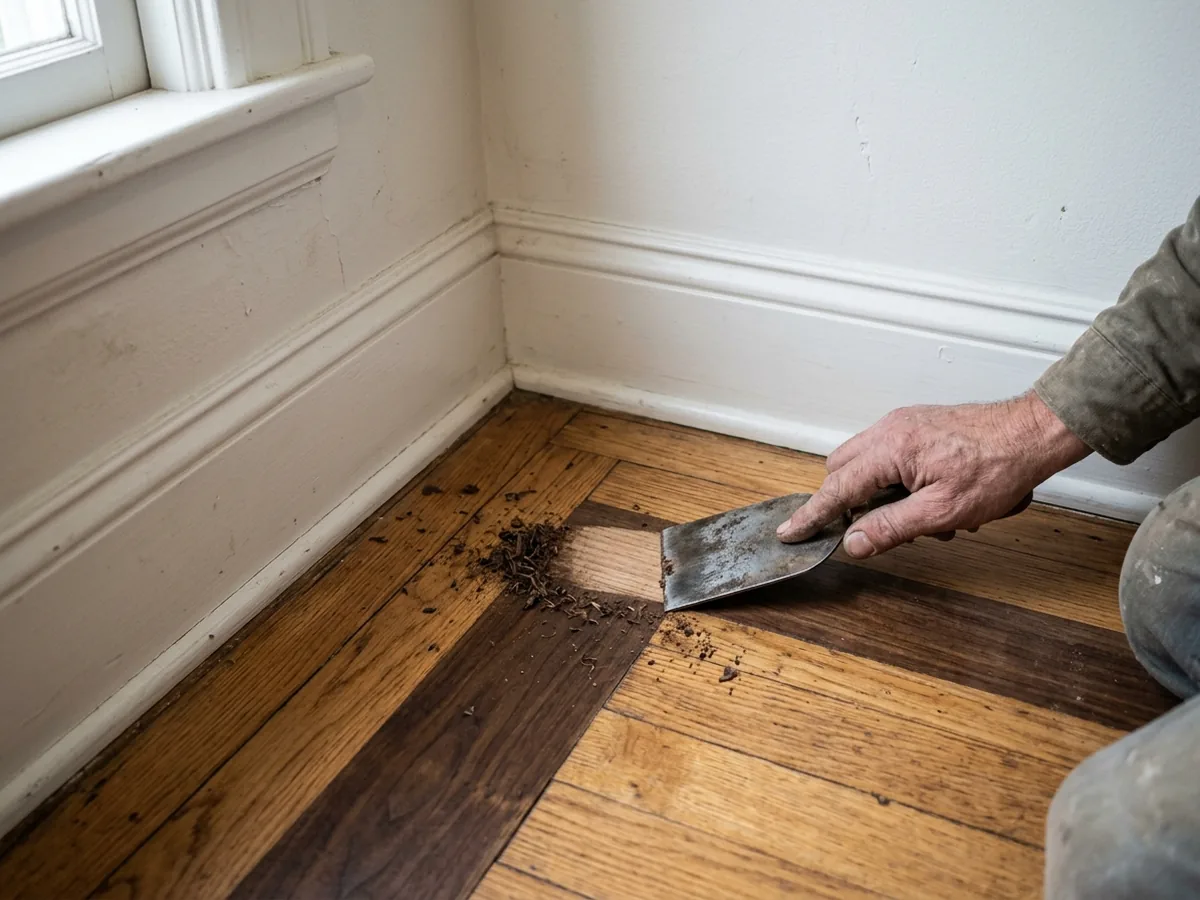
Older houses sometimes still have their original borders: a Greek key, a band of walnut or mahogany strips, or a simple contrasting stripe near the walls. When pieces are missing or burned, the repair is new strips milled to the old ones' width and thickness in the same species, fitted into the pattern and sanded flush.
Sanding is the risky part. Border strips run at right angles to each other at every turn of the pattern, so a drum sander crosses the grain somewhere. A good contractor will slow down at the border with the edger and hand tools and check for cross-grain scratches before any finish goes on. Thin, much-sanded borders need the same check for remaining wood as the rest of an old floor; that's on hardwood floor restoration.
Why Ann Arbor homeowners call Ann Arbor Wood Flooring
- Free estimate, and you can ask for it in writing, species and finish named
- One independent local floor contractor gets your request, not a call list
- No fee to homeowners for the referral
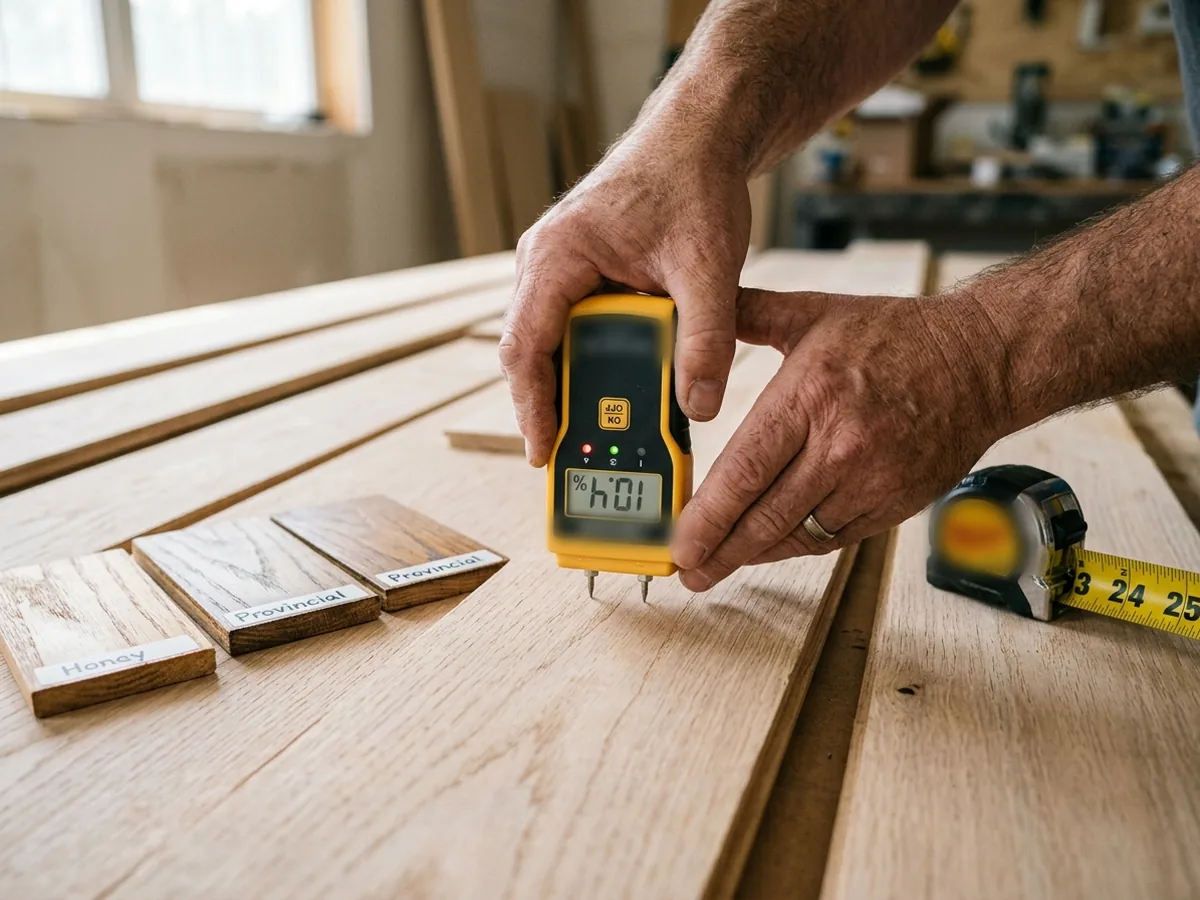
- Ask for moisture readings before any new floor goes down
Can a Medallion Go into an Existing Hardwood Floor?
Yes, if the floor is thick enough. A medallion is routed into an existing floor using the maker's template, set in adhesive and sanded flush. This Old House says flooring thinner than 3/8 inch can't take a solid-wood medallion. Because the medallion is sanded flush with the floor around it, plan on refinishing at least that room afterward.
This Old House's sequence ends with sanding the whole floor, medallion edges included, once the adhesive cures, then applying finish. On a prefinished floor that means the field around the medallion loses its factory coat. Ask the contractor how far the sanding and refinishing will extend, and whether stopping at a doorway or threshold will leave a visible change in sheen. Prices for sanding and refinishing are on hardwood floor refinishing cost.
What a Border or Inlay Adds to the Job
Time, layout and a flat subfloor. In the Journal of Light Construction's example, borders added about a day and a half to the field installation. The subfloor has to be flat before anything goes down, because routed grooves and glued borders show every dip.
Things to settle in the written estimate:
- who supplies the border strips and medallion, and which species;
- whether the border is site-made from flooring stock or bought prefabricated;
- the thickness match between field, border and medallion;
- whether the field is installed first and trimmed (the usual method) or the border goes in first;
- how sanding dust and stain will be kept from tinting the lighter wood next to a dark border.
Flatness limits for the subfloor are on subfloor repair. For block patterns and basket weaves, see parquet flooring, and for overall installed prices, hardwood floor installation cost. More on hardwood floors in Ann Arbor is on our homepage.