
Hardwood Floor Restoration for Original Floors
Old-Growth Oak and Heart Pine Strip Floors
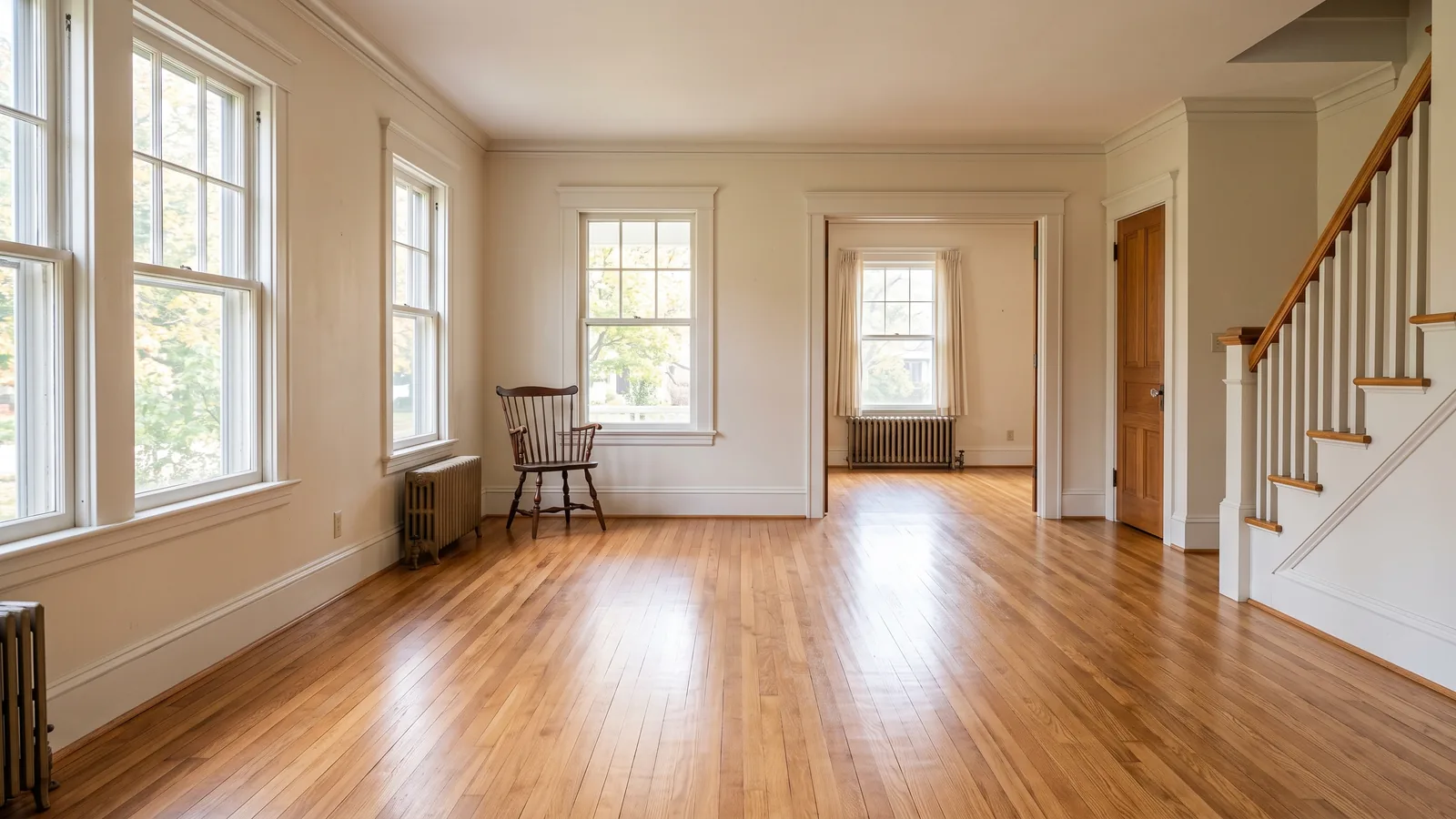
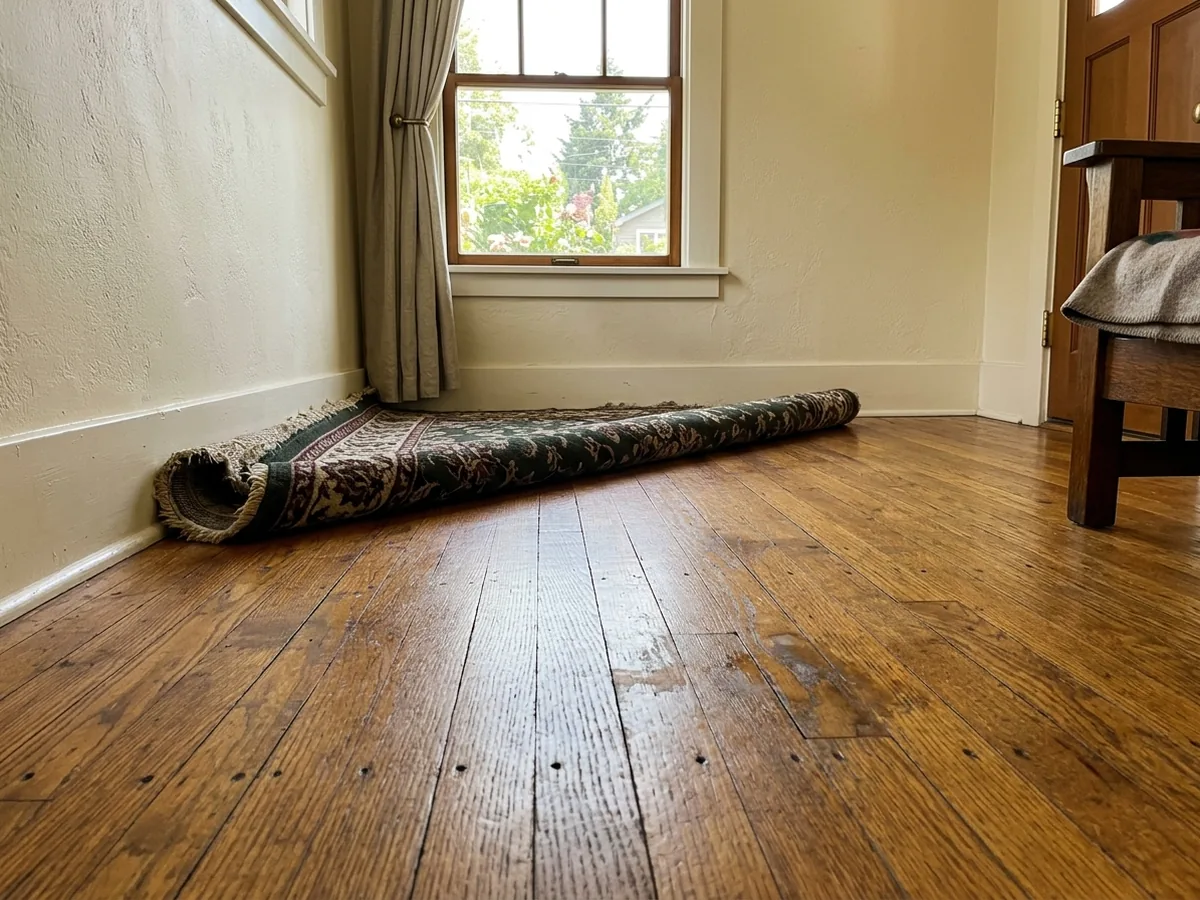
Many of the older houses in Ann Arbor (the age figures are on the Ann Arbor hardwood floors page) still have their first floors under carpet or linoleum: narrow oak strip, sometimes with a darker border, and now and then southern heart pine. They're often worth keeping even when they look rough. Dents, gray traffic paths and old stain usually sand out. Splits, rot and boards that have lost their groove edge are the ones that come out.
Heart pine is the heartwood of longleaf pine. The Wood Database describes the heartwood as reddish brown and warns that the resin "can gum up tools and clog sandpaper", so expect a pine floor to go through more sandpaper than oak. Matching a century of color on a new pine board is hard, which is one more reason to fix the old ones.
Our view: if you pull up carpet and find an old floor with cracked finish and stains, don't judge it by the surface. Judge it by the wood left above the tongue, which is the third section below.
Shellac, Varnish and Wax Finishes
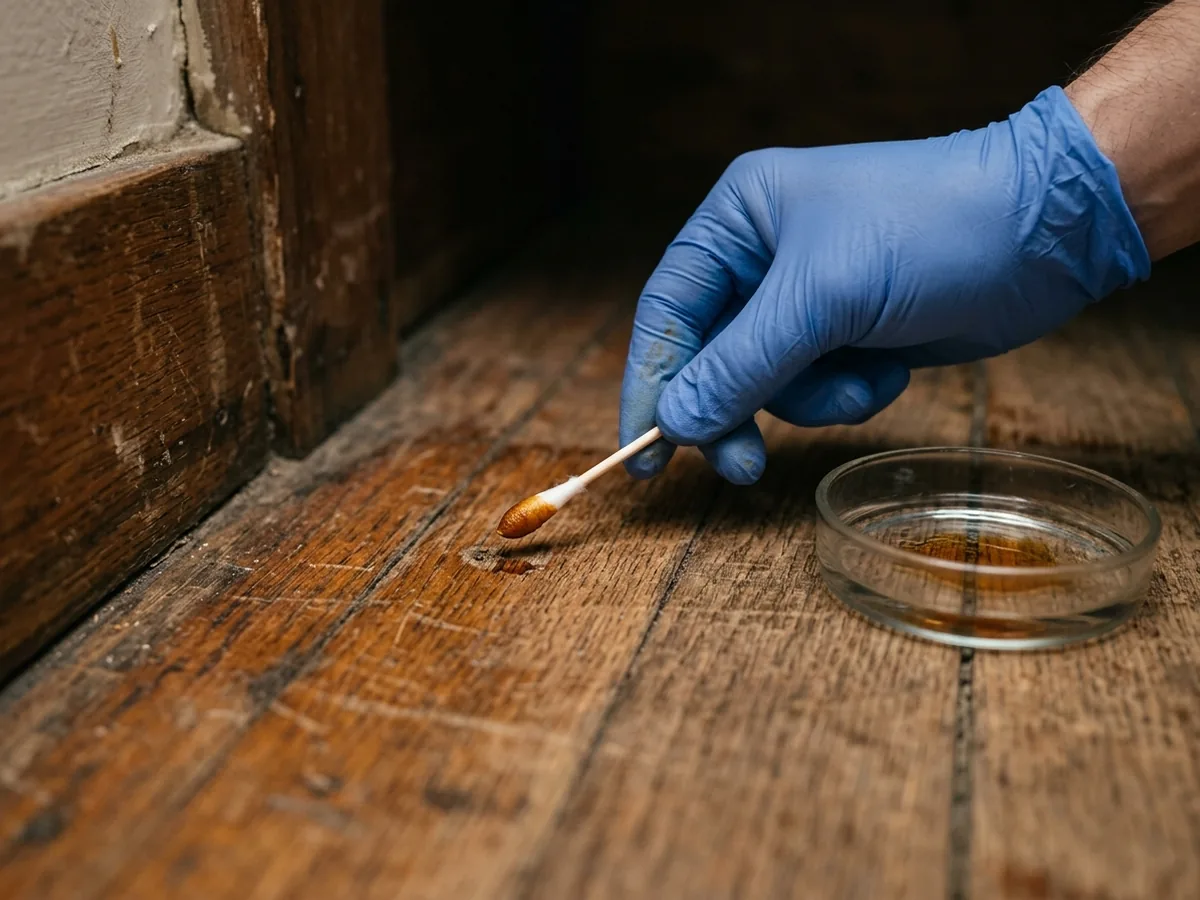
Floors finished before polyurethane became common usually carry shellac, varnish, or paste wax over one of them, and each one changes the job. Fine Woodworking gives the test order, done in a closet corner:
- Rub with mineral spirits on a cotton cloth. Wax comes off this way, so check the cloth.
- Put a drop of denatured alcohol on the bare finish, wait a few minutes, and rub with a tissue. Shellac softens and rubs off.
- If it stays hard, try lacquer thinner. Sticky means lacquer or a water-based finish.
- If nothing touches it, it's a reactive finish such as varnish.
This matters because wax blocks almost everything. A urethane coat over a waxed floor peels, Wood Floor Business warns, so a waxed floor can't simply be recoated. The choice is a full sand to bare wood or staying with wax. The JLC article on no-sand renewal adds that oil "renovator" products meant for oiled and waxed floors shouldn't go over a hard coat like shellac or urethane. Ask the restorer which finish they found and how they tested it. The answer decides whether you're paying for a screen and recoat, a cleaning-and-wax job, or a full sand.
Thin Floors with Little Wood Left
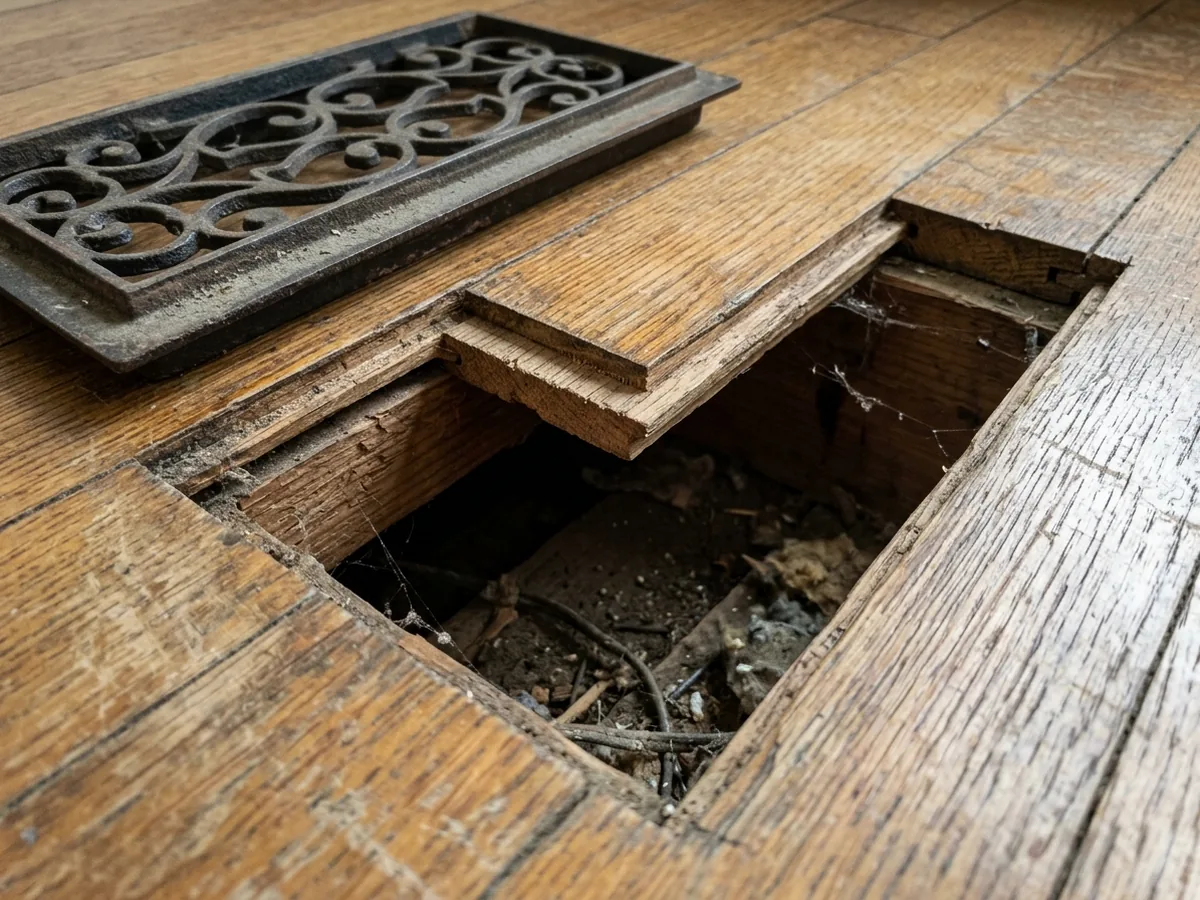
Every full sand takes some wood off the top. On a solid tongue-and-groove floor, the usable wear layer is the wood above the tongue. Wood Floor Business puts that at about 1/4 inch on a standard 3/4-inch strip floor. Once the top of the groove is down to about 1/8 inch, it splits and splinters under the sander.
The check is simple, and it's the first thing a good restorer will do. Lift a floor register and look at the cut edge of a board: you can see the tongue, the groove and how much wood sits above them. Away from registers, a thin putty knife or feeler gauge slipped between boards in several spots does the same job. Two warning signs show up without any tools: "shiners", the heads of blind nails exposed by earlier sandings, and splintered or missing groove edges with the tongue of the next board showing.
A thin floor isn't automatically finished. Wood Floor Business advises starting with the finest grit that does the job, and says a water-based finish on an over-thinned floor can curl the groove edges, so an oil-modified finish may be safer. Where a full sand is too risky, a recoat may buy years. How many sandings a healthy floor can take is explained under hardwood floor refinishing.
Patching Original Boards and Borders
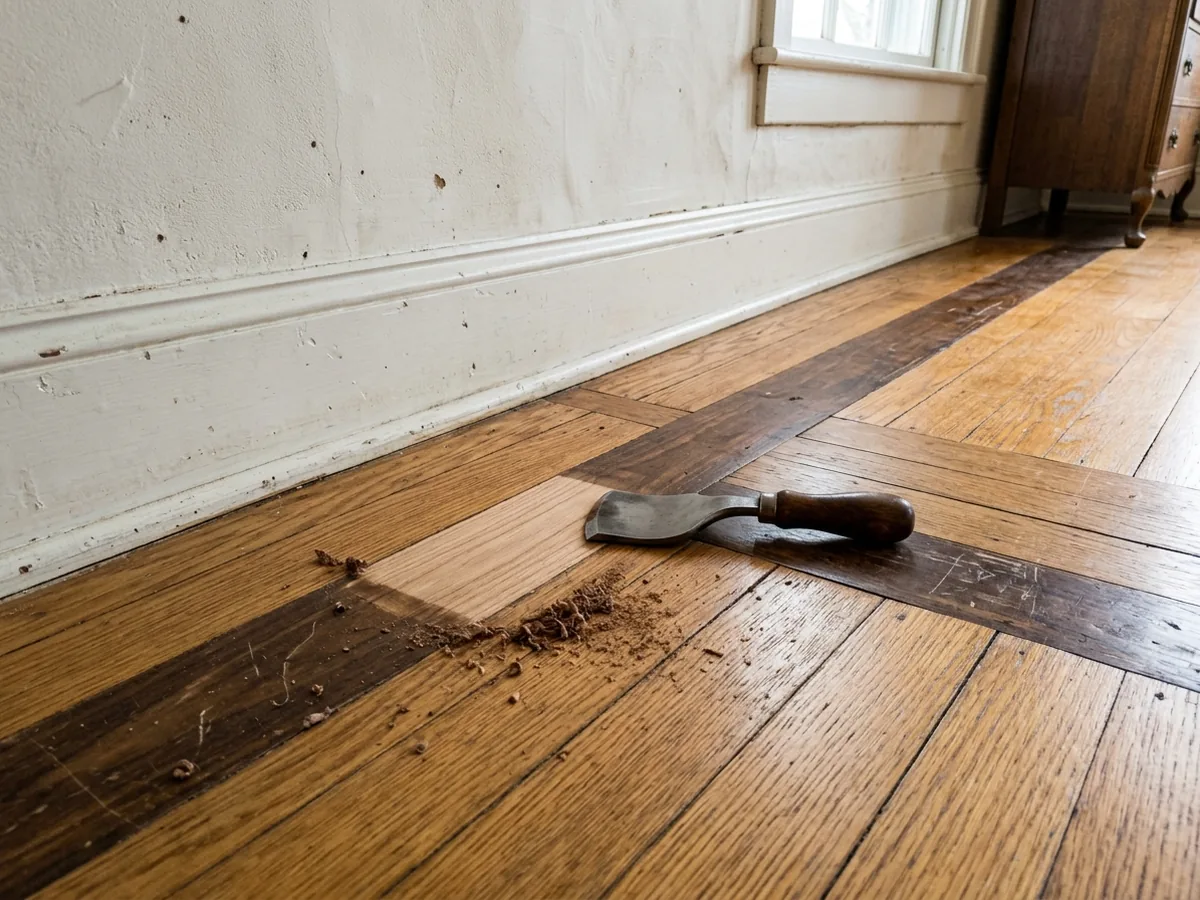
Restoration patches use old wood where possible. A floor register that's moving, a radiator that's coming out, or a wall that used to divide two rooms each leaves a gap, and new boards stand out next to a century of oxidized oak. The best source of matching boards is often inside the house: a closet floor or a hidden spot under built-ins, with new wood used out of sight. Ask the restorer where the patch boards will come from.
Borders and feature strips need hand work. Where the grain turns at a border corner, a careful restorer will scrape and hand-sand the edges so the pattern keeps its crisp lines. Ask, too, that loose boards be re-fastened before any sanding starts.
Isolated damage, such as a burn, a split plank or pet stains, falls under hardwood floor repair. Restoration is the whole-floor job.
Why Ann Arbor homeowners call Ann Arbor Wood Flooring
- Free estimate, and you can ask for it in writing, species and finish named
- One independent local floor contractor gets your request, not a call list
- No fee to homeowners for the referral
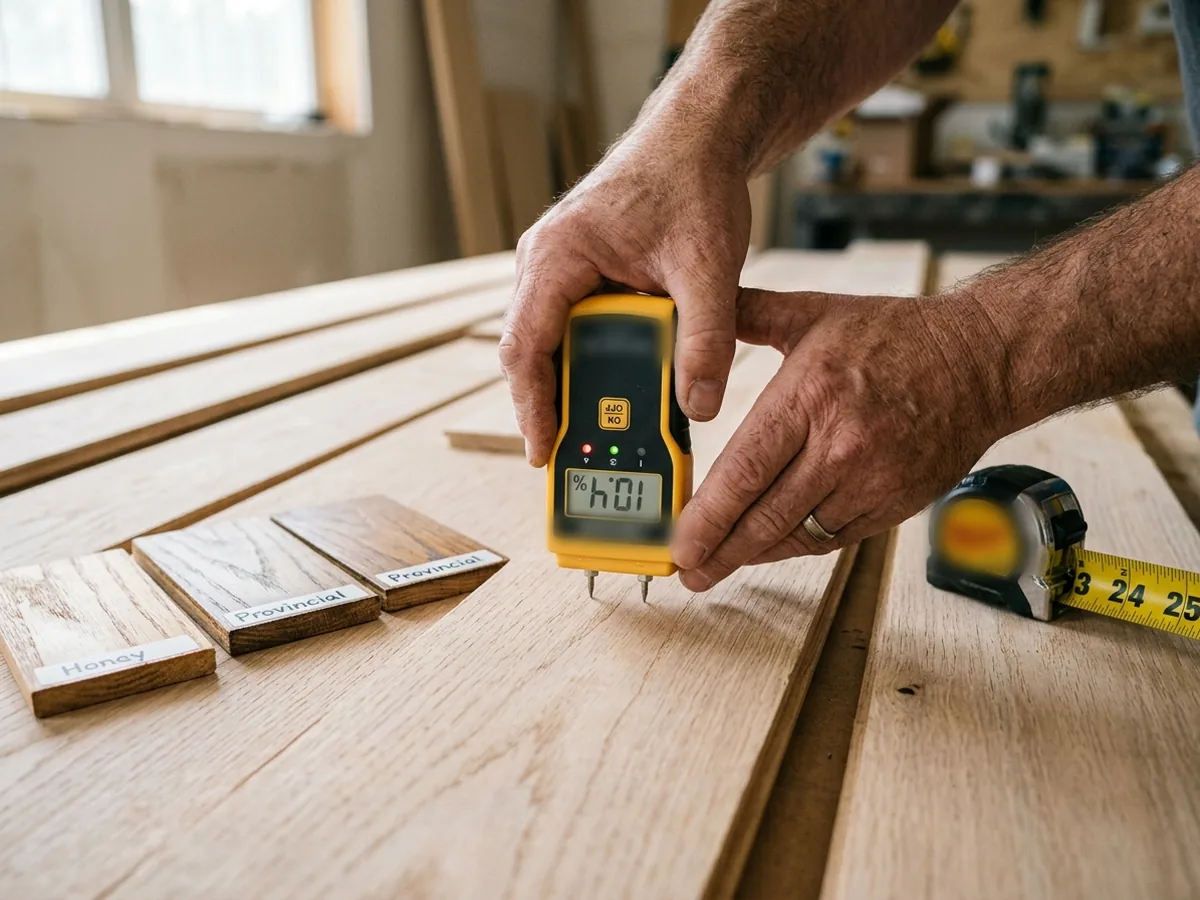
- Ask for moisture readings before any new floor goes down
Does Lead-Safe Work Apply When Restoring an Old Floor?
Yes, if the house was built before 1978 and the work disturbs painted surfaces. The EPA's Renovation, Repair and Painting rule requires anyone paid to do that work to be certified, with trained workers. Around a floor, the paint is usually on baseboards, shoe molding, thresholds and stair risers. Michigan isn't one of the states running its own program, so EPA certification is what applies here.
Some details worth knowing:
The size threshold
The rule exempts minor repair work that disturbs six square feet of paint or less per room inside. Pulling and resetting the baseboards around a whole room can easily pass that.Your own house versus a rental
The rule doesn't cover homeowners working on their own pre-1978 homes, but it does cover anyone paid to do the work, and it applies to rental property.Sanding counts
The EPA lists sanding and scraping that may generate paint dust as covered work.
The EPA estimates that about three-quarters of U.S. homes built before 1978 still have some lead-based paint. Ask the restorer for their lead-safe certification and how they plan to contain dust; HEPA-filtered collection is covered on dustless hardwood floor refinishing. Old black adhesive under parquet or floor tile is a separate hazard, covered on parquet flooring.
Restore or Replace an Original Floor?
Restore when the boards are sound and there's at least about 1/8 inch of wood left above the tongue in most places. Replace sections where boards have rotted, split or been sanded down to the nails. Most older floors end up as a mix: restored in the main rooms, patched where walls moved, and refinished together so the colors blend.
If you'd like the old floor in a new color, see hardwood floor staining.