
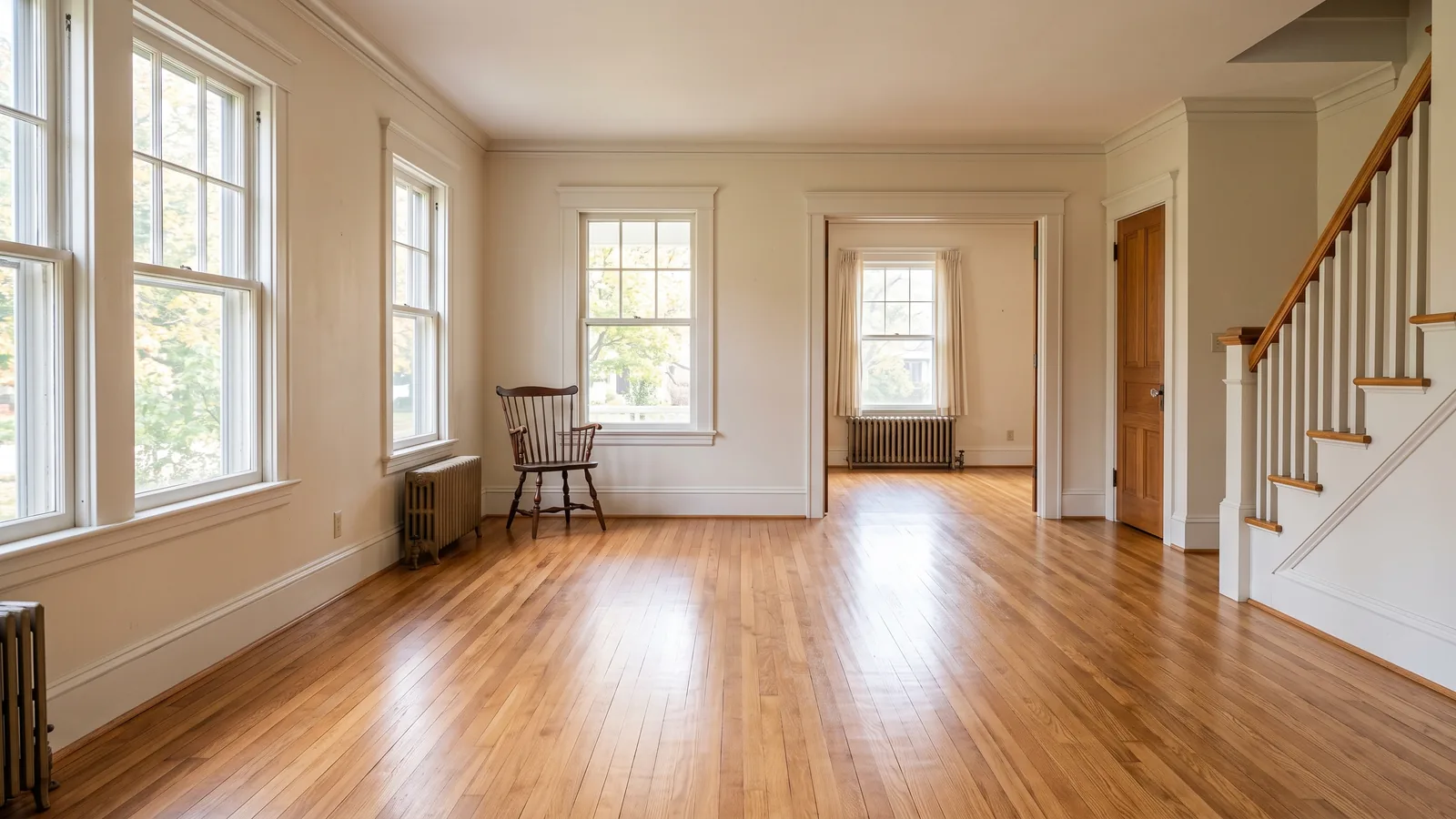
White Oak Flooring by the Cut of the Board
How a log is sawn decides both what a white oak floor looks like and how much it moves. The Wood Database lists white oak's shrinkage from green to oven-dry at 5.6 percent across the growth rings and 10.5 percent around them, and calls its stability mediocre, "especially in flat sawn boards." White oak rates 1,350 lbf on the Janka scale. The four types below follow the NWFA's definitions of each cut.
Plain-Sawn White Oak
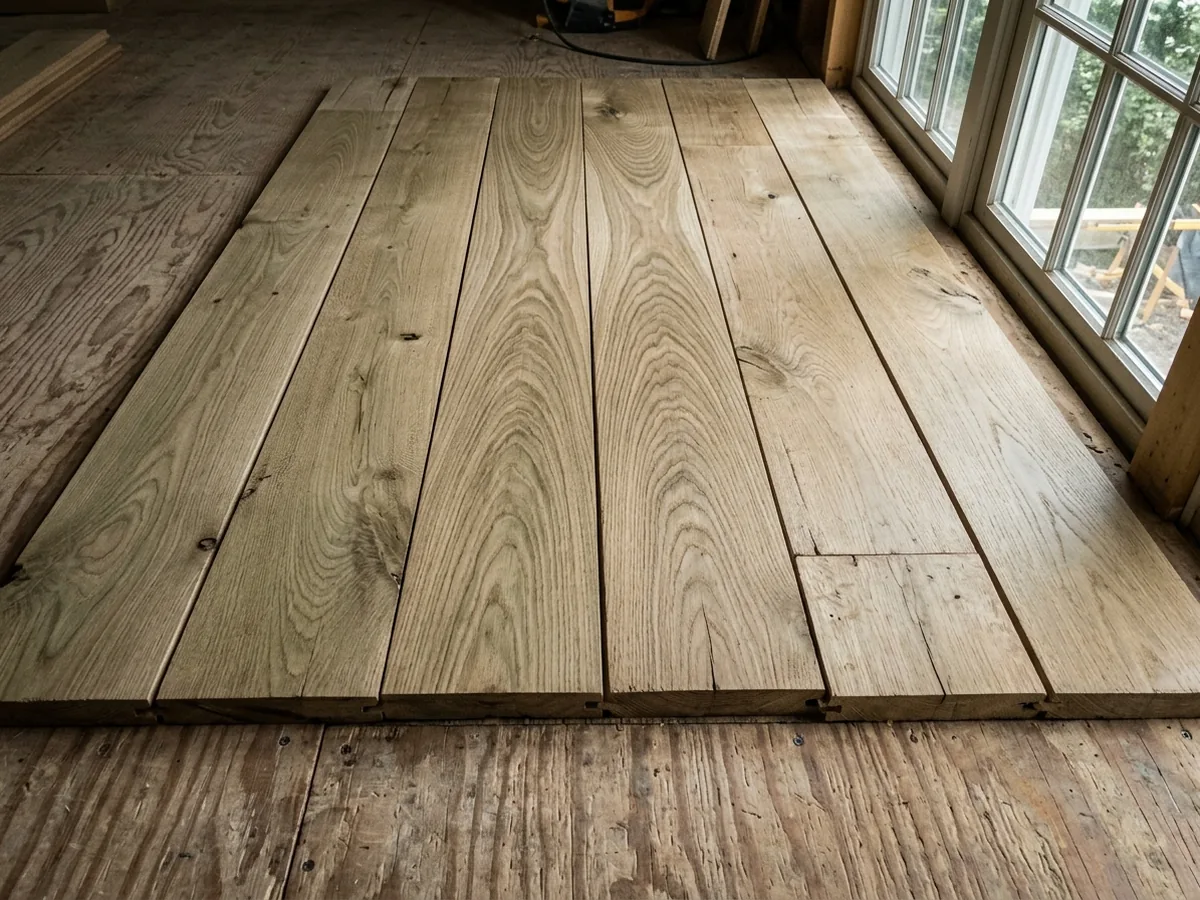
Plain-sawn boards are cut parallel to the growth rings, so the rings meet the face at a low angle (0 to 45 degrees in the NWFA's definition). On the face you see the arched "cathedral" pattern most people picture when they think of an oak floor. It's the most common cut and the cheapest to mill.
The tradeoff is movement. Wood shrinks and swells about twice as much around the rings as across them, and a plain-sawn board puts that direction across its width. Plain-sawn white oak in a 2 1/4 or 3 1/4 inch strip is easy to live with. In a 7 inch solid plank it will show seasonal gaps more, which our wide plank hardwood flooring page explains with numbers.
Rift and Quartersawn White Oak
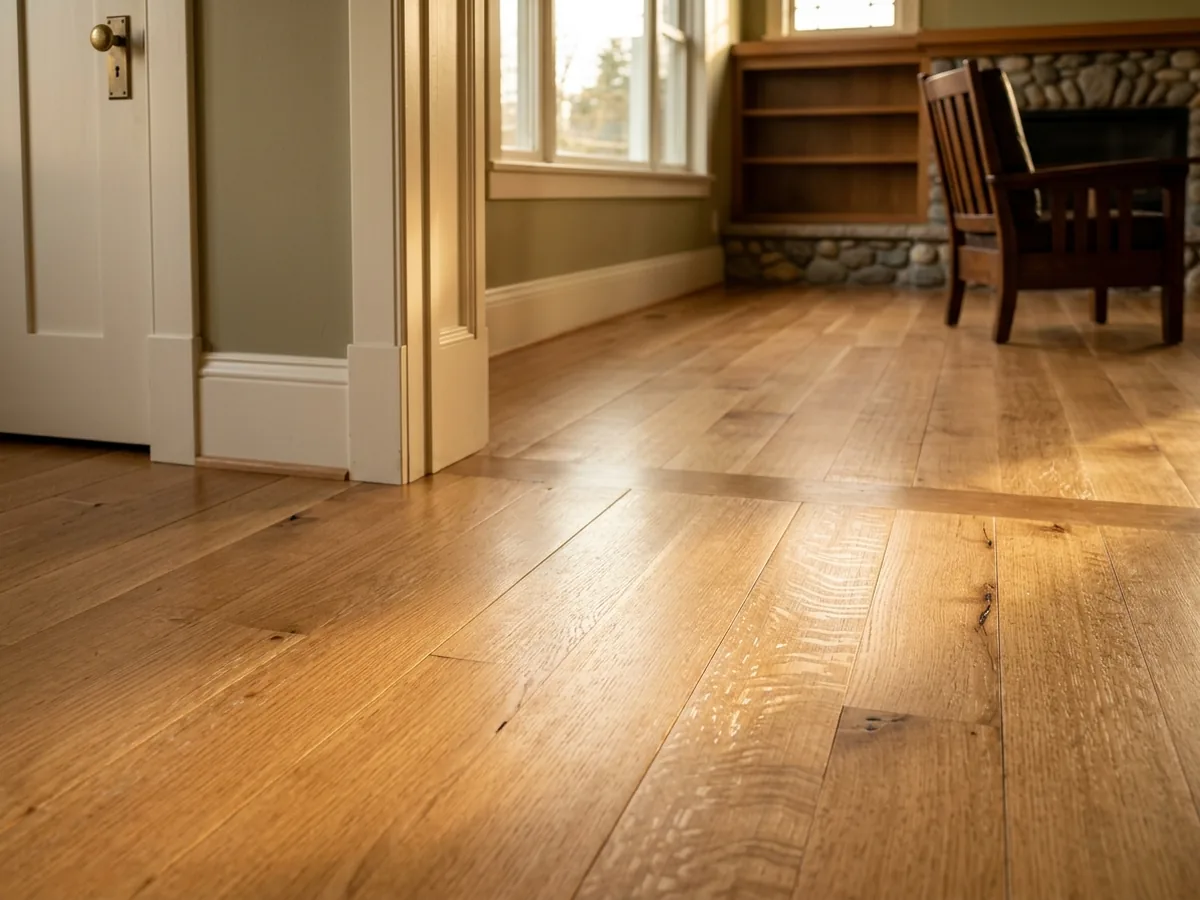
Quartersawn boards have growth rings at 45 to 90 degrees to the face. That exposes white oak's medullary rays as flake-like ray fleck, which The Wood Database calls prominent on quartersawn white oak. Rift-sawn boards have rings at 30 to 60 degrees, so they show tight, straight lines with little fleck. Mills often sell the two together as "rift and quartered," or R&Q.
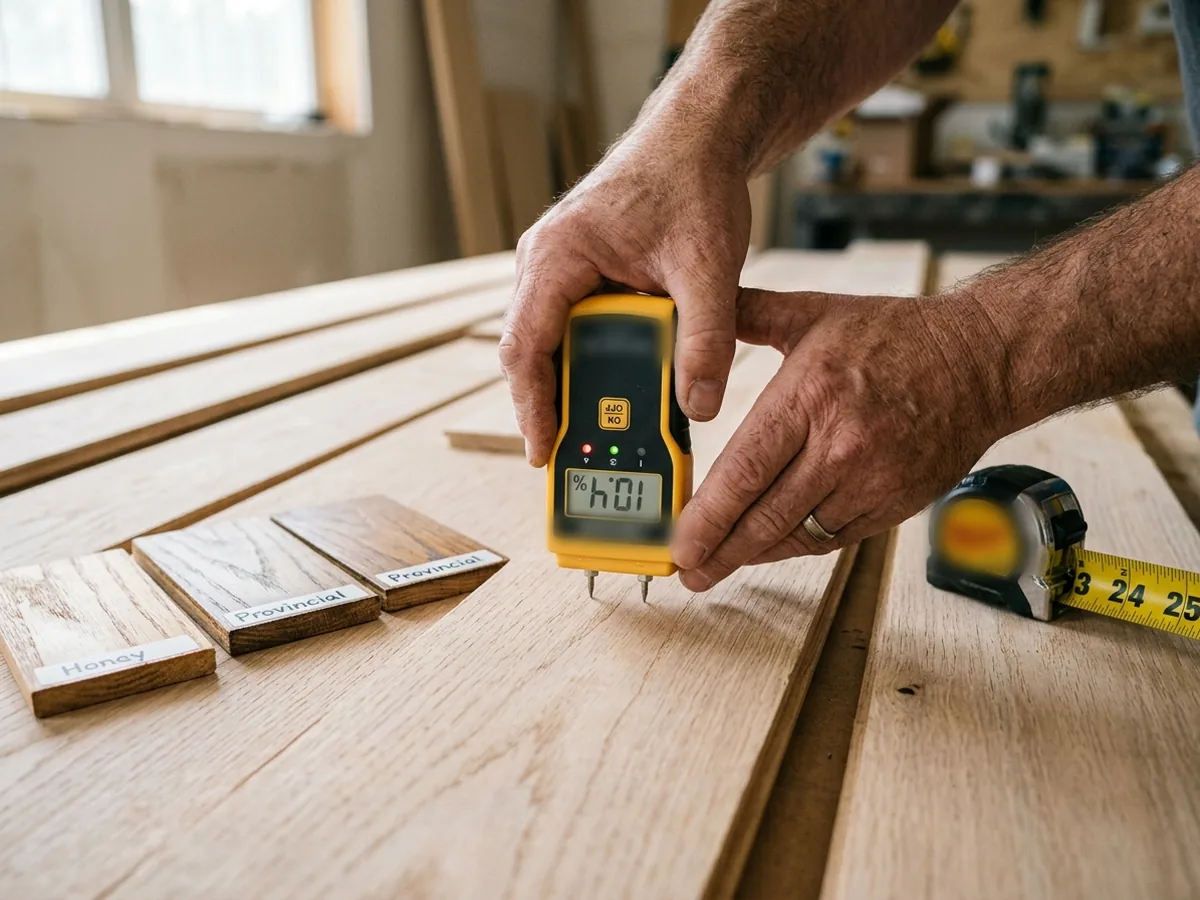
R&Q is more stable in width than plain-sawn, because most of its movement goes into the thickness of the board. It's also harder underfoot, by Hardwood Floors Magazine's ranking of cuts. It costs more, since quartering takes longer at the saw. Drying matters more with R&Q. Moisture has farther to travel out of a quartersawn board, so it dries slower, and Wood Floor Business warns that plain-sawn and R&Q boards dried in one kiln load can end up at different core moisture levels. Ask for moisture readings of the delivered boards. Also, don't count on wide rift-only boards. Wood Floor Business ran a sawmill's account of an installer watching R&Q white oak being cut for an hour without one rift board coming through wider than 4 inches.
Live-Sawn White Oak
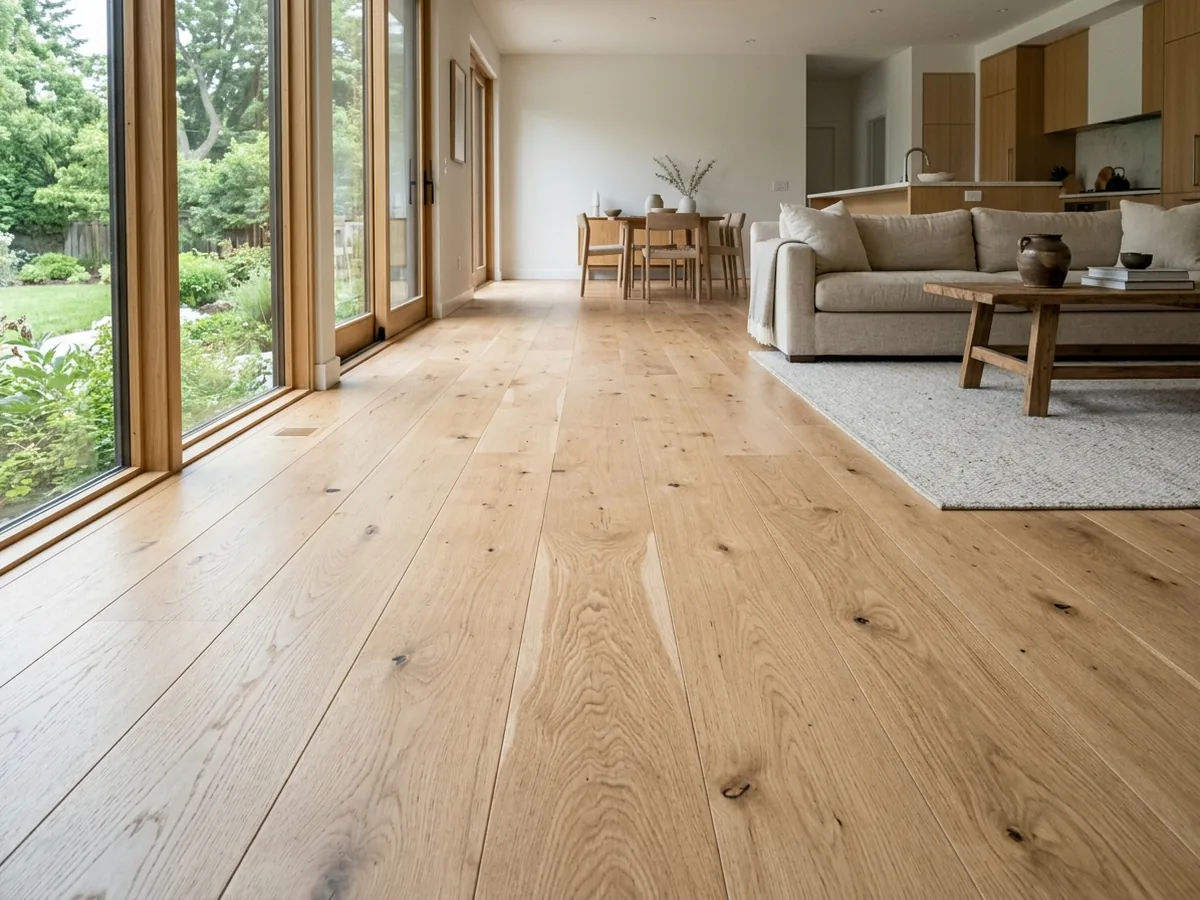
Live-sawn boards are cut straight through the log, from the outside through the heartwood, so a single board can carry plain, rift and quartered grain at once. Wood Floor Business notes that live-sawn ends up with a high share of rift and quartered grain, which keeps it fairly stable, and that the cut wastes little of the log. The same article says that mix of grain makes drying trickier, so the moisture check on delivery counts here too.
Live-sawn is popular in wide planks, where each board shows more fleck and bigger knots. In our view it's the best match if you like the movement of a wide plank but find full R&Q too uniform.
Finishing White Oak Without Yellowing
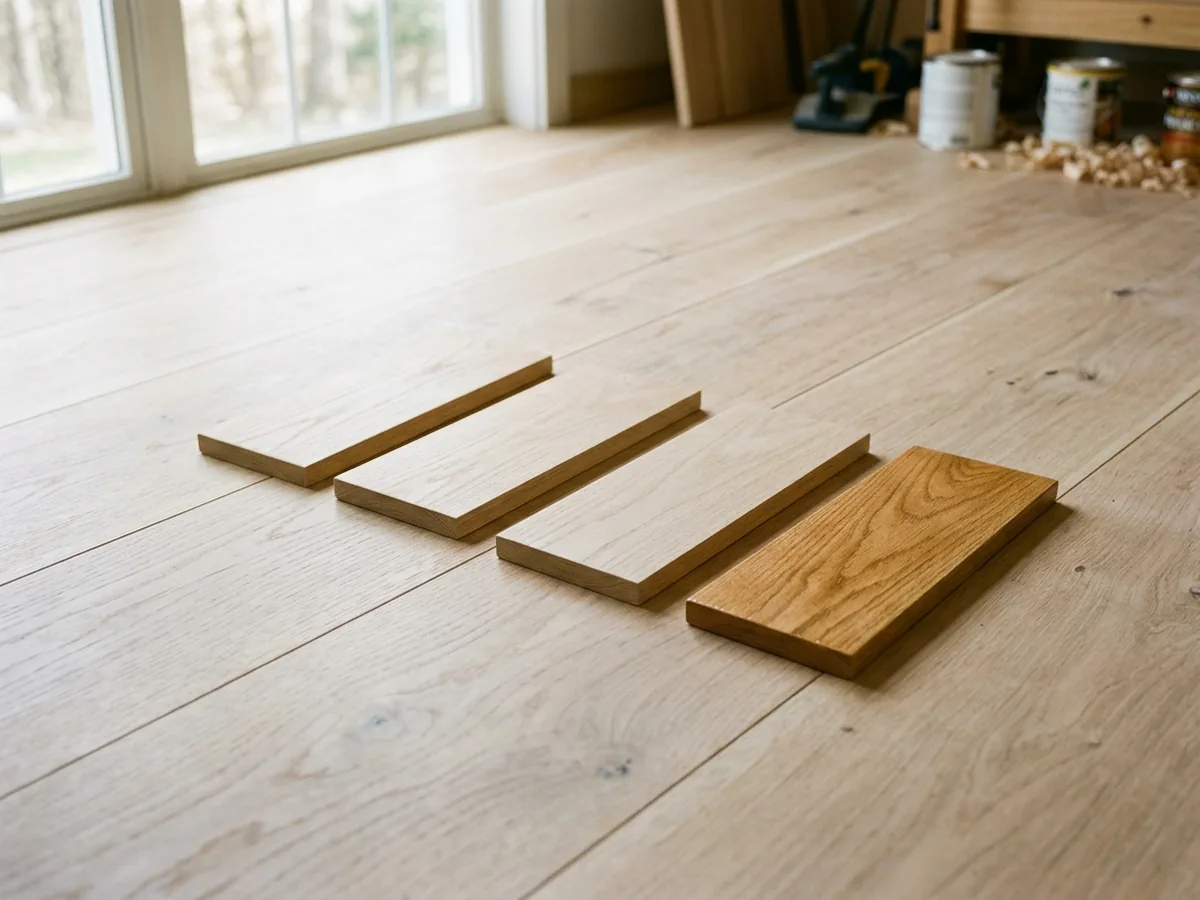
Most people choose white oak for its cool, pale color, and the wrong finish undoes that. An oil-modified polyurethane ambers, which flatters red oak but pushes white oak toward yellow. Waterborne finishes stay clearer (dry times and the full comparison are on our hardwood floor refinishing page).
White oak's tannins add a catch. Hardwood Floors Magazine explains that most water-based finishes contain pH adjusters such as ammonia, and on tannin-rich wood that can cause a green or brown discoloration. Tannins plus water plus iron leave bluish-gray stains, from scraper filings left on the floor or from fasteners that get wet. Ask the contractor how they guard against tannin pull on white oak, and ask for finished samples on your own boards. Stain samples are covered on our hardwood floor staining page, and penetrating oils on hardwax oil floor finishing.
Fuming takes the same reaction and uses it on purpose. Anhydrous ammonia, iron acetate or commercial fuming products react with the tannins and darken the wood without any pigment. Rubio Monocoat USA's technical manager, writing in Hardwood Floors Magazine, warns that reactive colors often fade in light, are hard to reproduce for later repairs, and that most finish makers won't endorse a finish over them. We'd treat fuming as a test-board-first job.
Why Ann Arbor homeowners call Ann Arbor Wood Flooring
- Free estimate, and you can ask for it in writing, species and finish named
- One independent local floor contractor gets your request, not a call list
- No fee to homeowners for the referral
- Ask for moisture readings before any new floor goes down
How Do You Tell White Oak from Red Oak in an Old Floor?
Look at the end grain at a floor register or a cut board. White oak's large pores are plugged with tiny bubble-like tyloses, while red oak's pores are open. On the face, white oak's rays run taller, sometimes past an inch. White oak tends toward olive-brown, red oak toward pink. This matters when you're patching an old floor.
Wood Floor Business notes that most homes built in the early and middle 1900s got 2 to 3 inch plain-sawn red oak, so an older Ann Arbor house is likely to have red oak strip. If you add white oak next to it, the color and grain won't match, even under the same stain. A border or a change of direction at a doorway hides the switch better than a straight butt joint. Our hardwood floor repair page covers weaving new boards into old.
What Should a White Oak Quote Specify?
The cut by name (plain-sawn, rift, quartered, R&Q or live-sawn), the grade, width and length, solid or engineered, and the finish system by product name, including any sealer, stain or reactive treatment. Ask for finished sample boards on site before the floor is coated. White oak costs a little more than red oak, and quartersawn more again. The ranges are on our hardwood floor installation cost page.
For herringbone in white oak, see herringbone floor installation. Species hardness and grading rules for hardwood floors in Ann Arbor are on our homepage.