
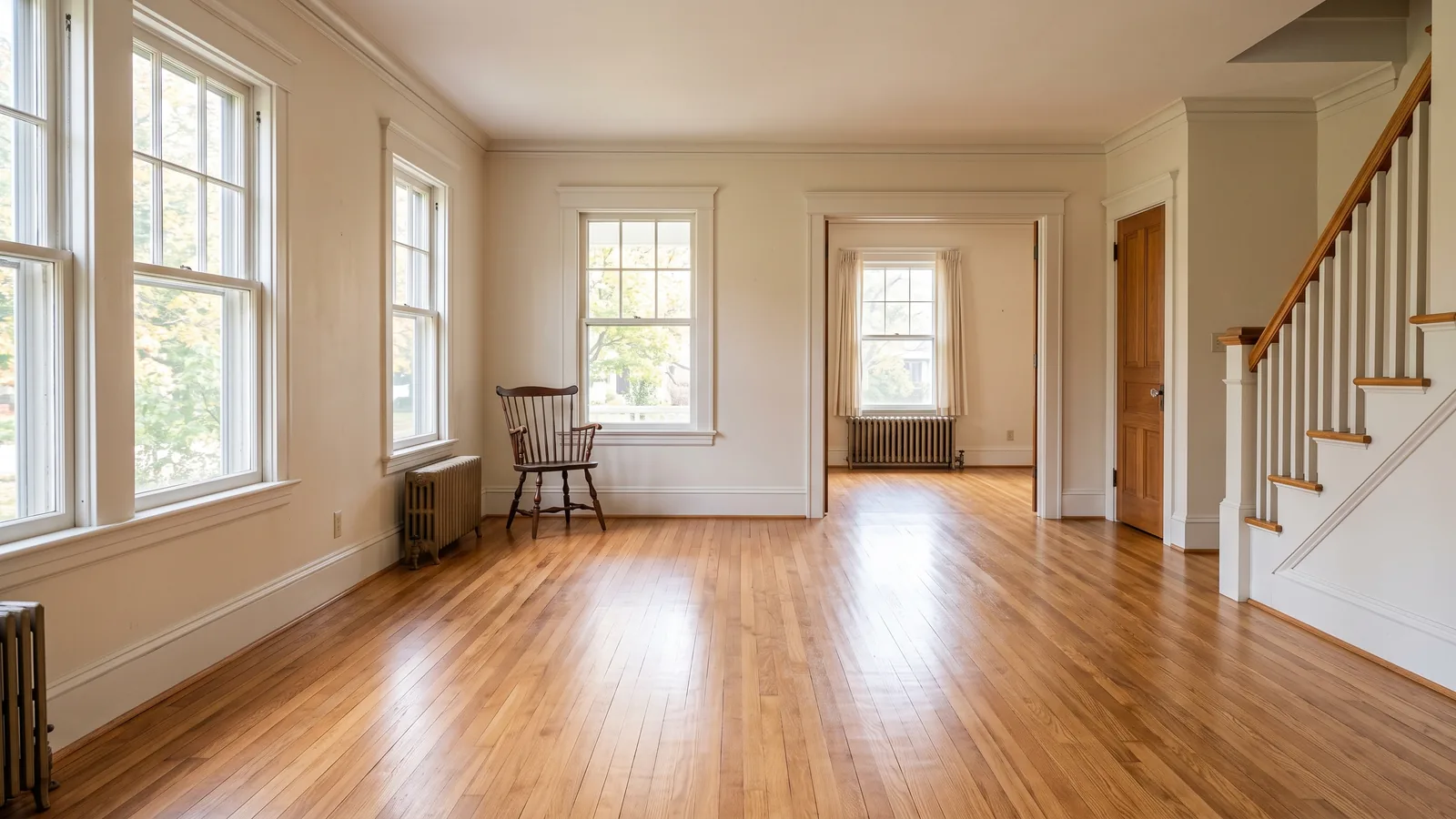
Hardwax Oil Floor Finishes, Applied and Maintained
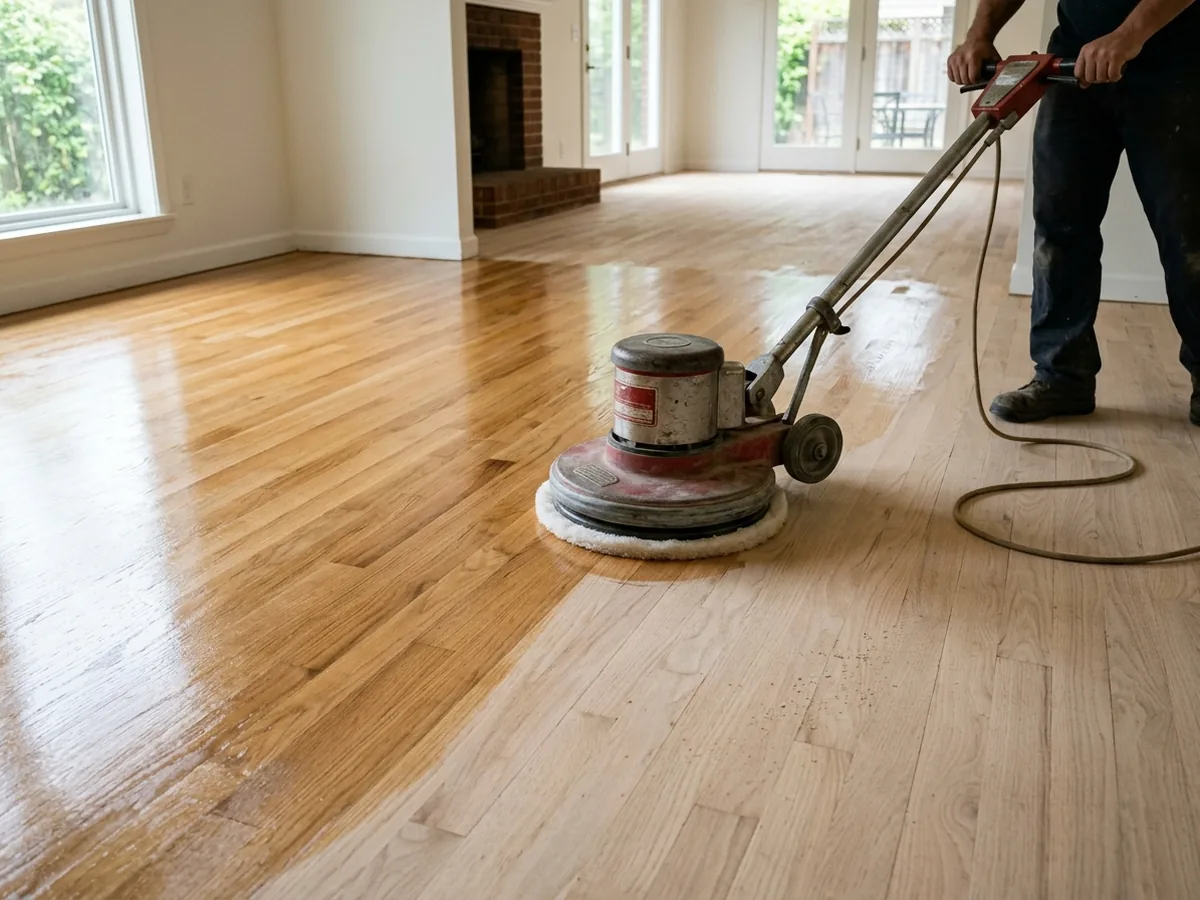
Single-Coat Hardwax Oils
A single-coat oil bonds with the top fibers of the wood in one application. Rubio Monocoat describes its Oil Plus 2C as protecting and coloring wood "in one single layer", with 0% VOC. Because there's only one coat, the prep has to be right. The application instructions call for a final sanding at 80 to 120 grit followed by a screen at the same grit, and warn that uneven sanding shows up as uneven color.
Dust is the other enemy. The oil reacts with whatever it touches first, so if dust is left on the floor, it bonds with the dust instead of the wood. The instructions say to vacuum very thoroughly and wipe with a cleaner or microfiber cloth before the oil goes down.
The application itself moves fast. The finisher works in sections of 50 to 150 square feet, spreads the oil with a pad, lets it react for at least 3 minutes, and then removes every bit of excess within 15 minutes (10 or less on a hot, dry day). Oil left on top doesn't make the color darker. It just stays sticky. Walking is normally fine within 24 to 48 hours and full move-in after 48. The two-part version cures in about 7 days. The floor should stay dry that week, and any protective covering waits 48 hours and has to be a breathable material.
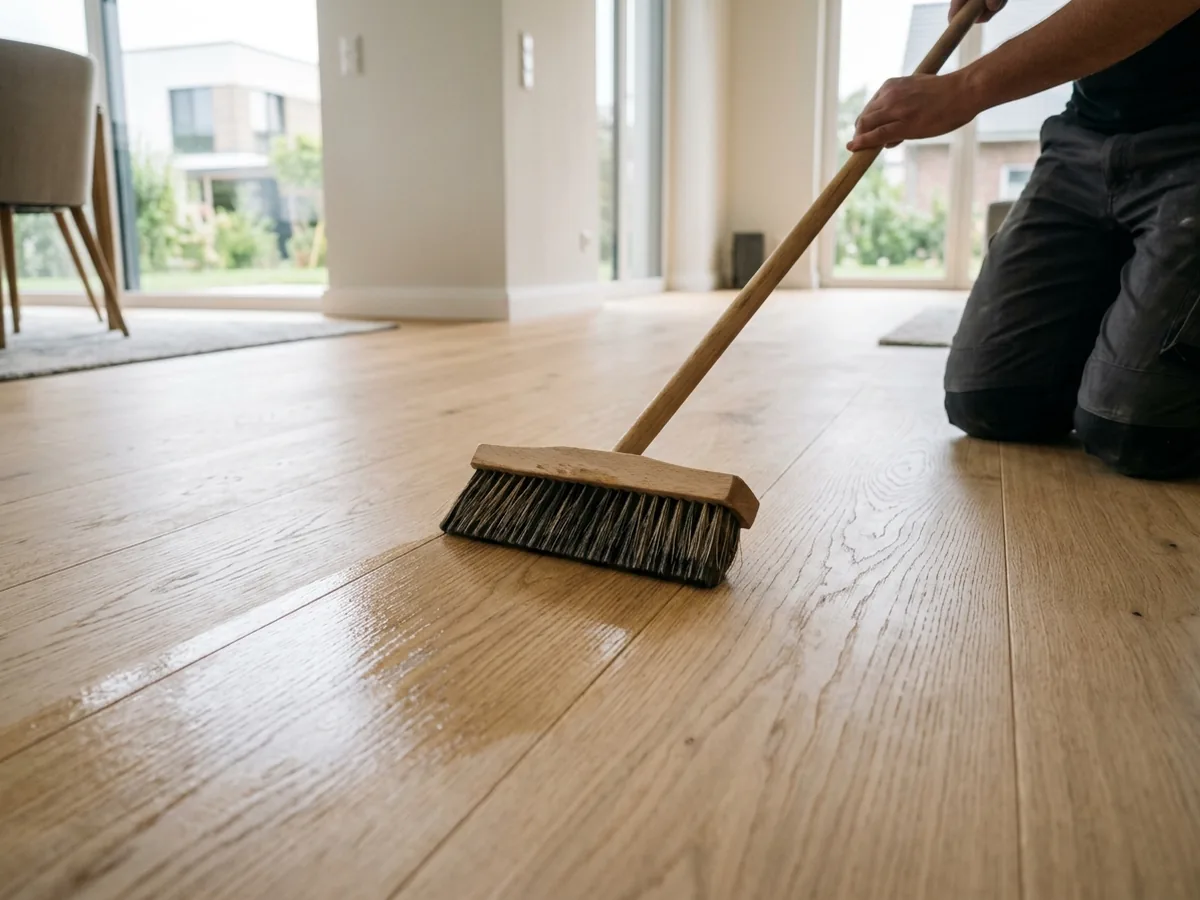
Multi-Coat Hardwax Oils
Multi-coat oils go on thin, twice. Osmo's Polyx-Oil Original, made from plant oils such as sunflower and soya with carnauba and candelilla wax, is the familiar example. Its data sheet calls for a final floor sanding at 120 to 150 grit, a thin first coat brushed or rolled along the grain, about 8 to 10 hours of drying with good ventilation, and a second thin coat. Lower temperatures and higher humidity stretch the drying. The surface is fully hardened after 2 to 3 weeks.
That means a longer job than a single-coat oil: a day for each coat, plus a gentle few weeks before heavy use. Osmo's sheet also says a trial application is always required, because the wood's own character changes the result. Every oil darkens the wood a little; Osmo calls it a "permanent wet effect".
Which system is better? Our view: single-coat oils suit people who want the job done quickly and like a very matte look. Multi-coat oils take longer, and the second coat gives the finisher another pass to even out coverage. Both are a different kind of finish from polyurethane, compared under hardwood floor refinishing.
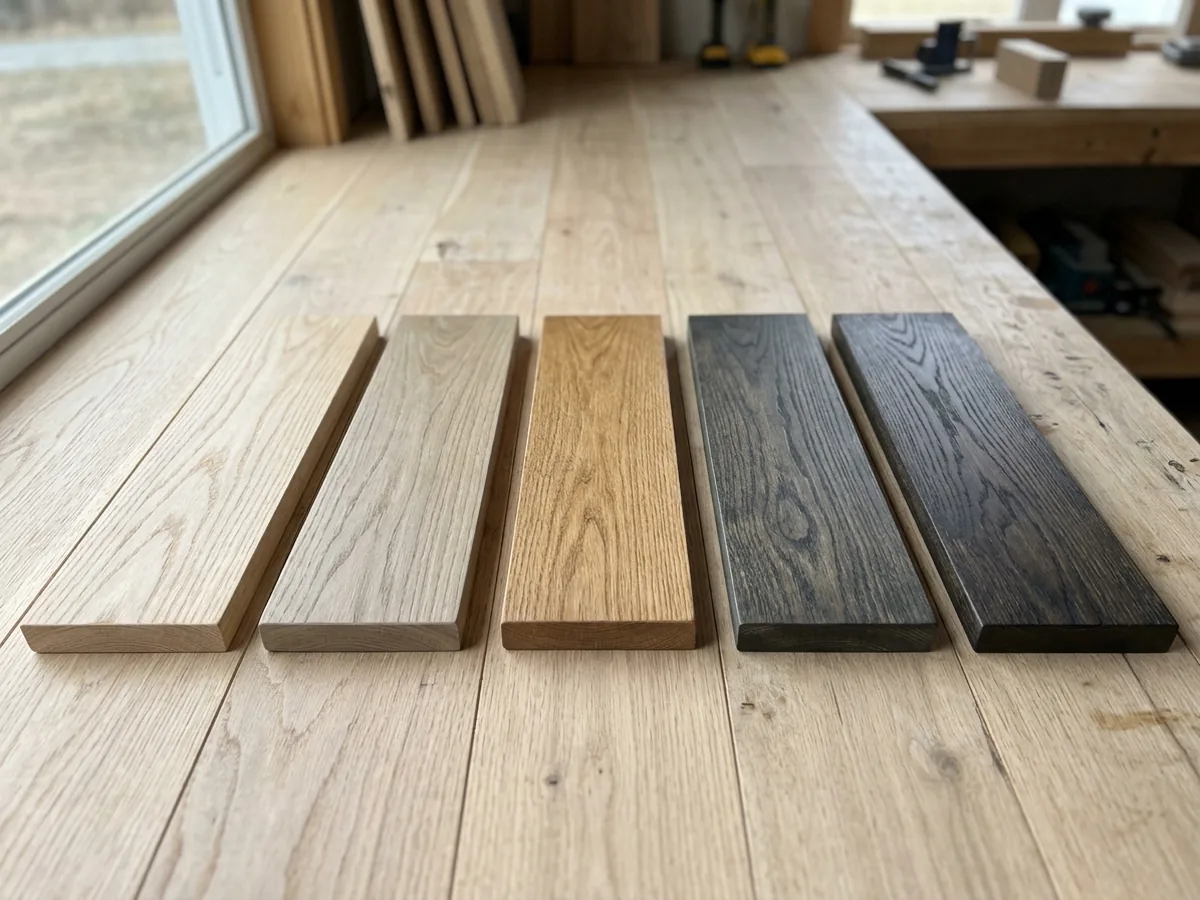
Color Oils on White Oak
Color oils put pigment and finish in the same coat, so there's no separate stain. Rubio's own color range is shown on white oak veneer, from "Pure", which has no pigment, through browns to Charcoal and Black. Our view: white oak makes a good base for color oils, since its pale tone lets the color read close to the sample. It also contains tannins that react with some products, which is covered under white oak flooring.
Sanding matters even more with color than with clear oil, since swirl marks and uneven scratches catch pigment. Ask for sample boards, or test squares on your own floor, sanded to the same grit the room will get. A colored oil on red oak or maple will look different from the chip, just as a stain would; the hardwood floor staining page explains how species changes color.
Spot Repairs and Maintenance Oil
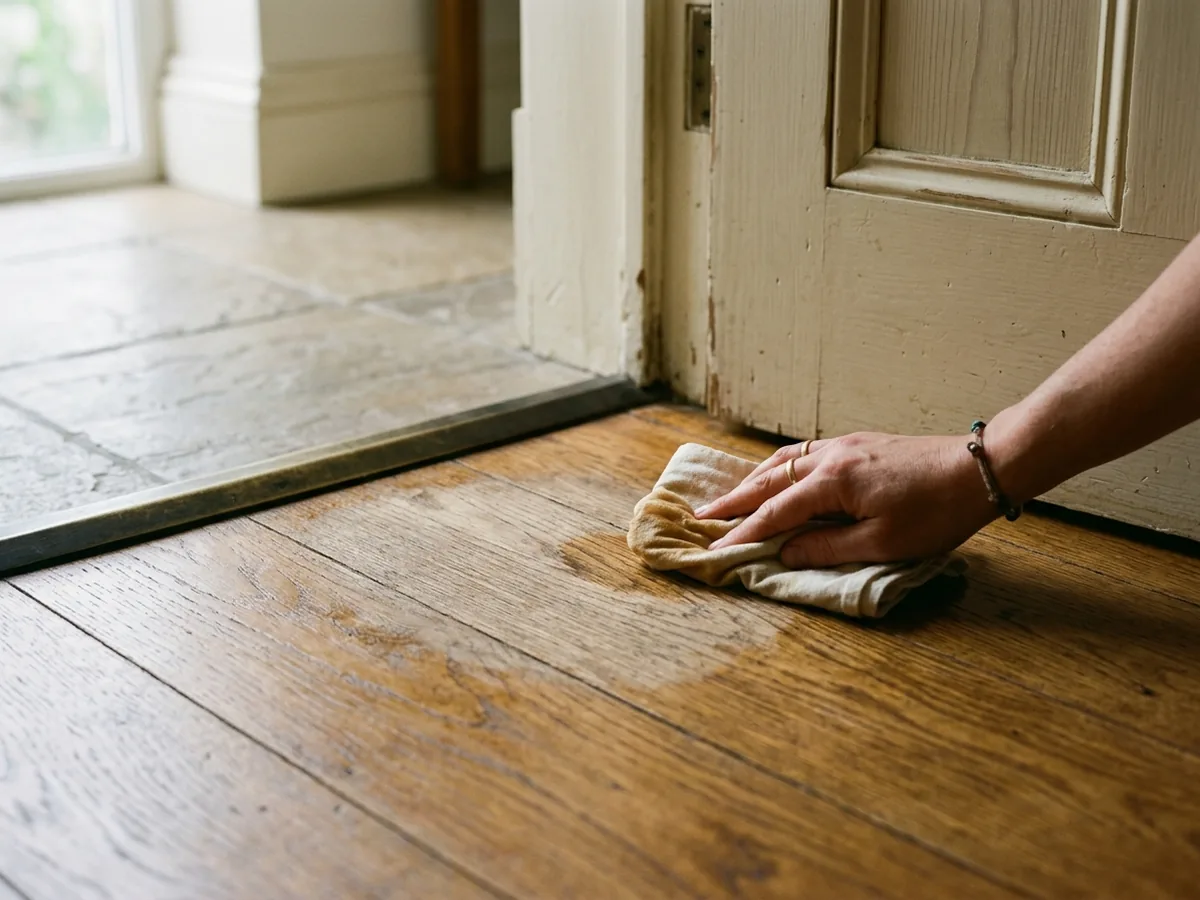
The best argument for hardwax oil is maintenance. A worn spot in front of the sink or at a doorway can be cleaned and re-oiled on its own, without sanding the whole room.
Rubio's Universal Maintenance Oil shows the routine. Clean the floor with the brand's soap and water, rinse, let it dry, apply a little oil with a cloth or a buffer and beige pad in patches of about 2 to 4 square meters, and wipe each patch dry within 15 minutes. The floor is dry after 6 to 8 hours, and the first week it gets only a damp cloth. Rubio advises doing it just before the color starts to fade. Osmo says one coat is usually enough when renewing an already oiled surface. Day to day, oiled floors get cleaned with the finish maker's own soap; Rubio says not to use other cleaners.
Rags are the safety issue. Rubio's data sheets warn that oil-soaked rags can catch fire on their own. Rubio says to soak them in water for 24 hours before disposal. The National Park Service describes a crew's linseed-oil rag that caught fire while drying flat on a workbench outside, and advises spreading used rags in a single layer on concrete. Ask the refinisher how they'll handle rags at your house, and follow the same rule after any touch-up you do yourself.
Why Ann Arbor homeowners call Ann Arbor Wood Flooring
- Free estimate, and you can ask for it in writing, species and finish named
- One independent local floor contractor gets your request, not a call list
- No fee to homeowners for the referral
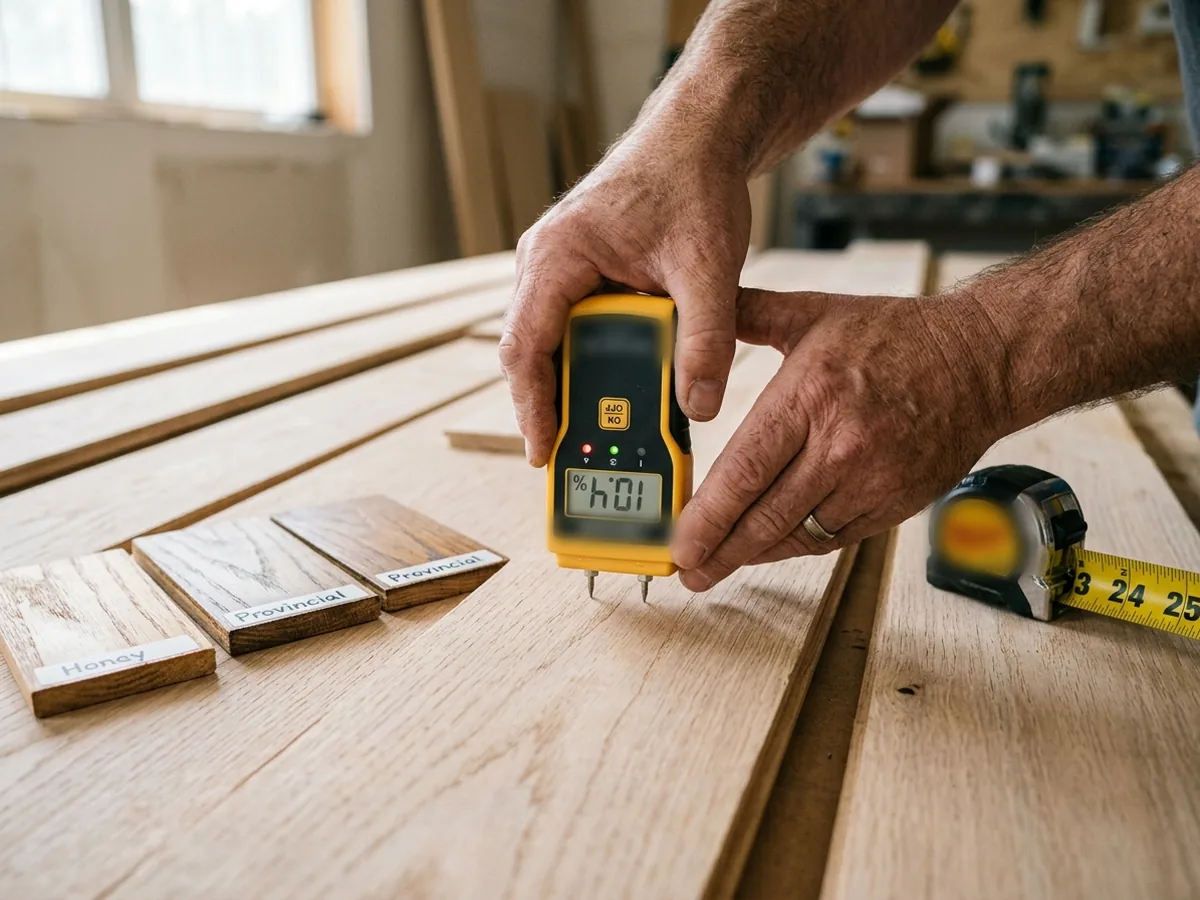
- Ask for moisture readings before any new floor goes down
Is Hardwax Oil a Good Finish for an Ann Arbor House?
Hardwax oil works well in houses where people would rather touch up a worn patch every year or two than recoat a whole floor, and where the matte, natural look appeals. It asks more of the owner: specific soap, periodic maintenance oil, and quick wiping of spills during the cure week. Polyurethane suits people who want to clean and forget.
Penetrating oils cost more per gallon than polyurethane (Angi lists $40 to $100 against $20 to $55); prices for the whole job are on the refinishing cost page. One local detail: Rubio says its oils dry and cure by oxidation, which depends on air movement, temperature and humidity, so a cold, closed-up winter house or a humid July week slows it down. A finisher may want the heat or air conditioning running steadily during the cure.
What Should a Hardwax Oil Estimate List?
The estimate should list the product and color, single-coat or multi-coat, the final sanding grit, whether color samples are included, the cure period before rugs and furniture go back, and the maintenance products you'll need afterward. It should also confirm that an existing polyurethane floor will be sanded to bare wood first, since both makers' instructions start from freshly sanded wood.
For the floor as a whole, start at hardwood floors in Ann Arbor.