
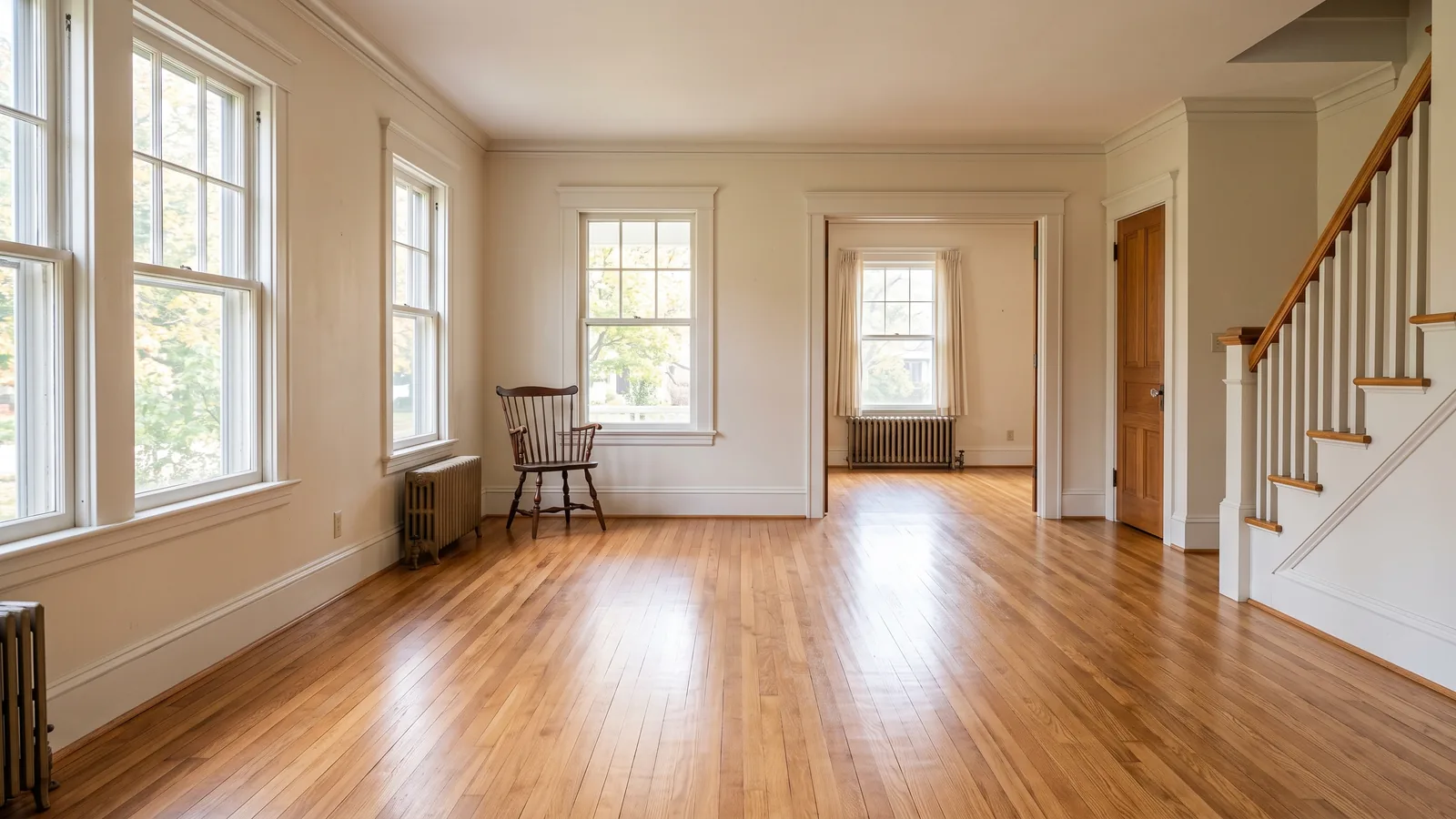
Hardwood Stairs Work, from Carpet Removal to New Treads
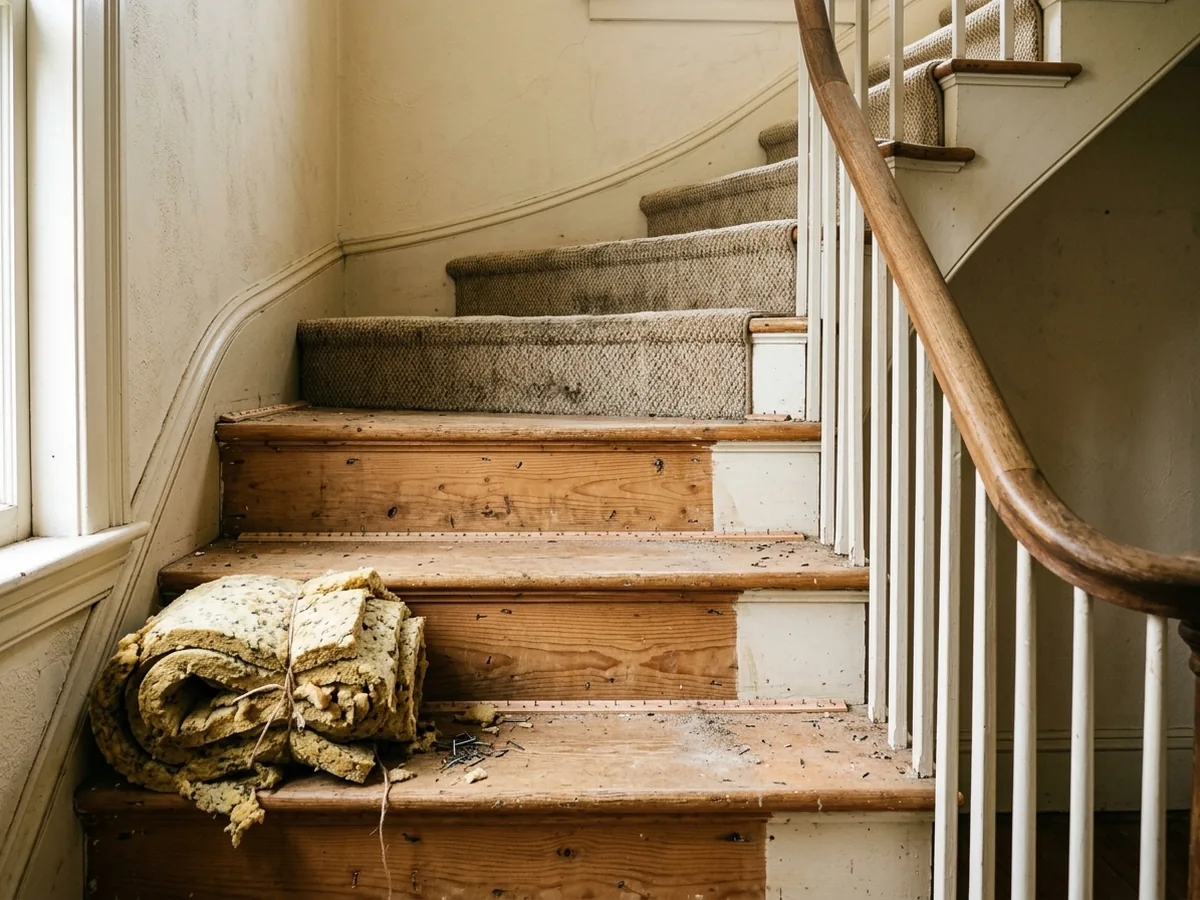
Carpet to Hardwood Stairs
Stair carpet comes up in pieces: the carpet, the pad, a wooden tack strip at the back of every tread and the foot of every riser, and a scatter of staples. What's underneath decides the job. In some houses it's oak treads that were carpeted later and only need stripping and sanding, which is staircase refinishing. More often the treads are softwood or plywood with a rounded overhang, never meant to be seen, and they get capped or replaced.
Pull up one tread's carpet before getting a price, or ask the contractor to. The difference between "refinish what's there" and "replace every tread" is the biggest swing in what the stairs will cost. For carpet on the floors around the stair, see replace carpet with hardwood.
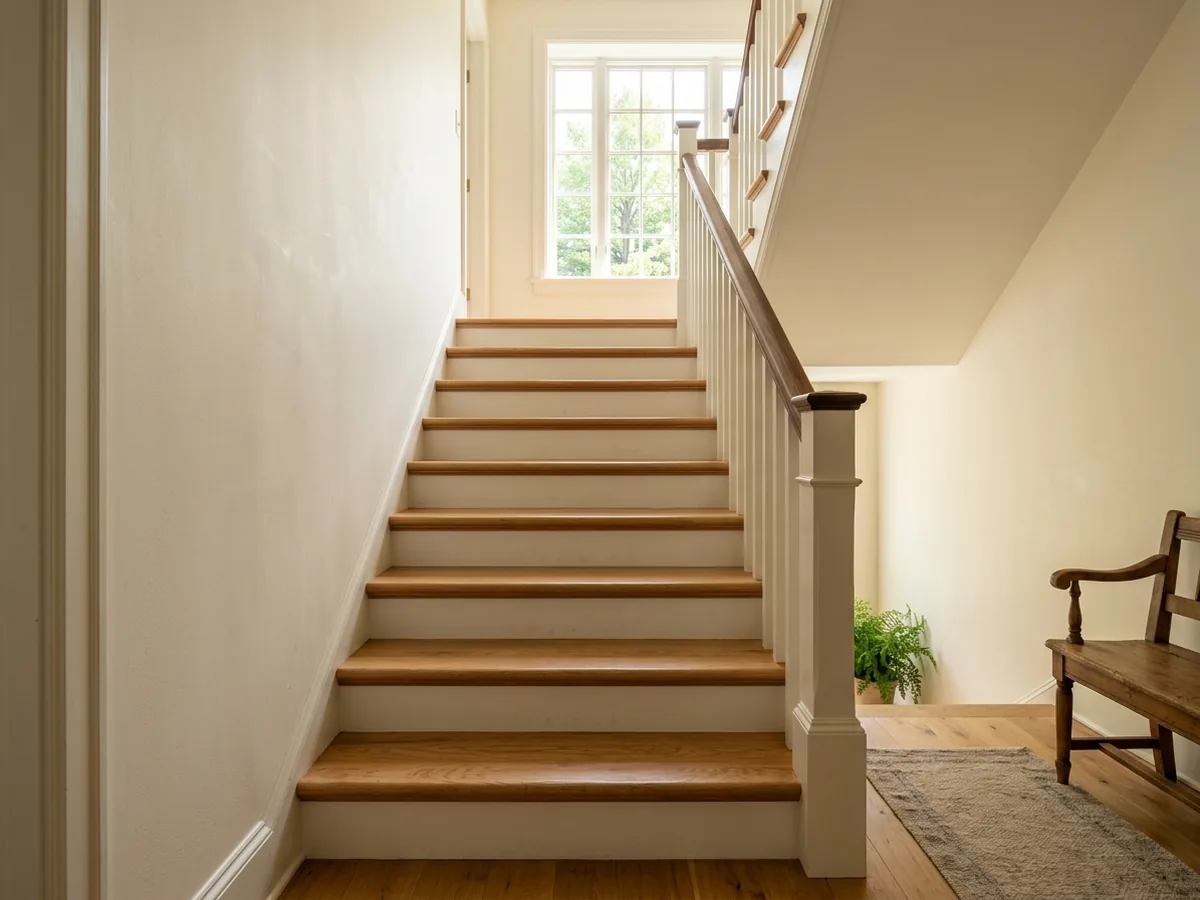
New Solid Oak Treads and Risers
Full replacement means removing the old treads down to the stringers, then installing new solid treads and riser boards, glued and fastened so they don't creak. It's the cleanest result, and it lets the contractor correct uneven steps instead of building on top of them.
Those dimensions are code. The 2015 Michigan Residential Code is the edition in force, and Michigan's amendment sets a maximum riser of 8-1/4 inches and a minimum tread depth of 9 inches. Within any flight, the tallest riser may not exceed the shortest by more than 3/8 inch, and the same 3/8 inch limit applies to tread depth. Winders need at least 10 inches of depth at the walkline. Stairs in older houses don't always meet today's numbers, so ask whether any steps will be adjusted. HomeAdvisor's 2026 national figure for oak is $100 to $200 a step installed.
Oak is the usual tread because it's hard and takes the same stain as an oak floor; the homepage compares species hardness. Treads also creak if they sit on old shims or loose stringers, and replacement is the one chance to fix that from the top. Our view: when the treads are already off, it's worth paying the contractor to check every stringer and re-glue anything that moves, because nobody will see under those treads again for decades. In an older Ann Arbor house with steep or narrow back stairs, ask to measure each riser before the bid, since an uneven old flight can push a retrofit past code.
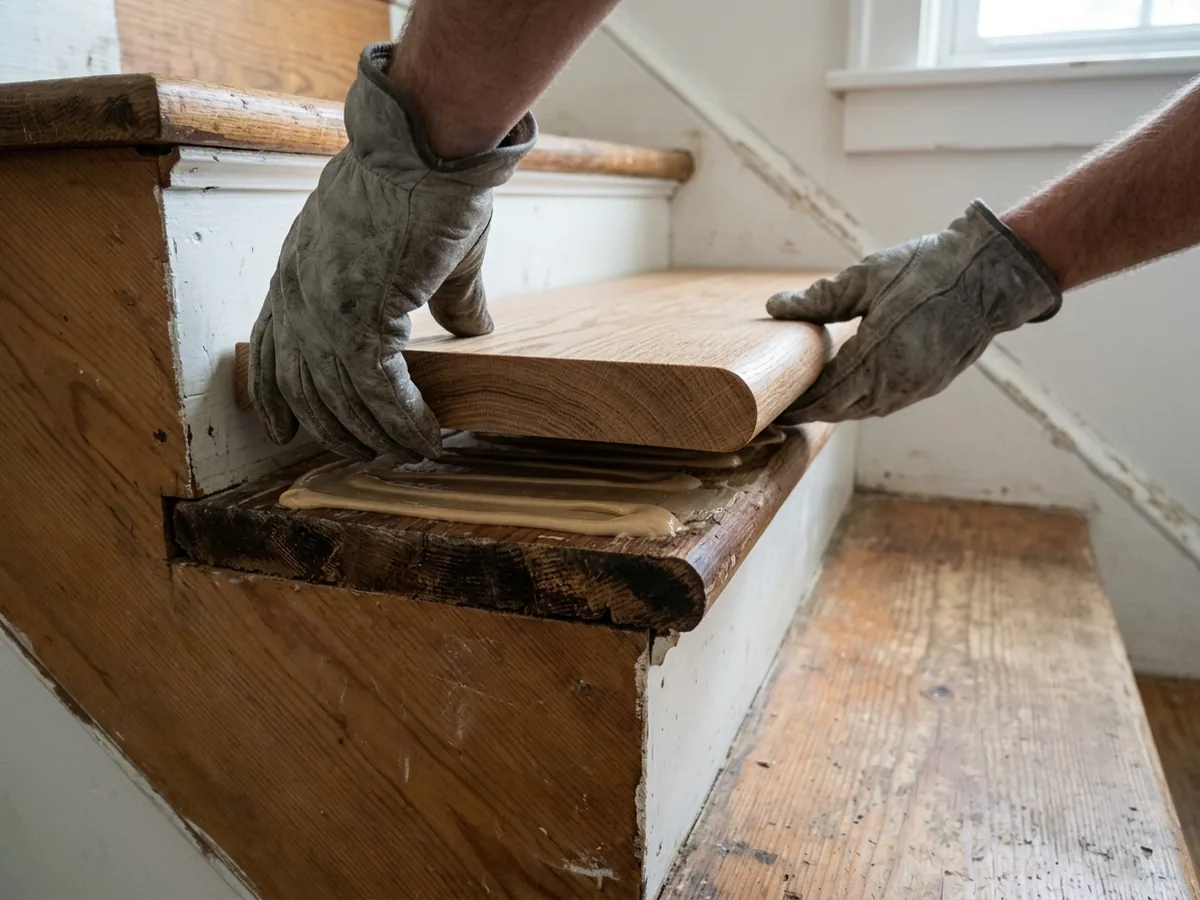
Retread Caps over Existing Stairs
Retread caps are thick hardwood treads made to go over the old ones. The installer cuts the old nosing flush with the riser below, glues the cap down, and adds a thin riser board over each old riser. There's no demolition and less dust.
The catch is height. A cap raises every tread by its own thickness, so the risers in the middle of the flight stay equal. The bottom riser grows by that thickness, though, and the top riser shrinks unless the floor above is raised too. Since Michigan allows only 3/8 inch between the tallest and shortest riser, a careful installer measures the top and bottom steps before ordering caps, and plans for a new floor on the landing if needed. Ask how they'll handle it.
Stair Nosing and Landing Trim Matched to the Floor
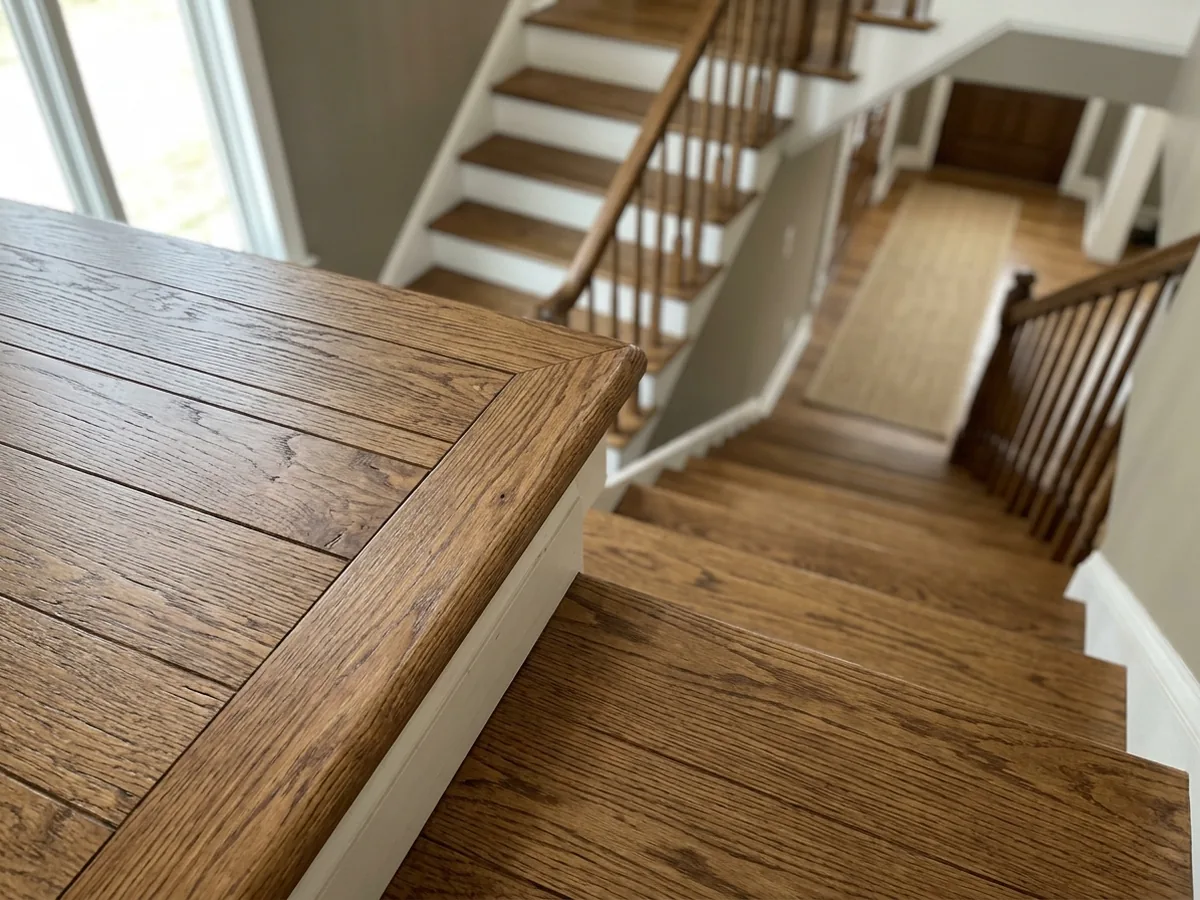
Where a hardwood floor meets the top of a stair, or a landing breaks a flight, a stair nose molding finishes the edge. The 2015 International Residential Code, the base of Michigan's code, calls for a nosing projection of 3/4 inch to 1-1/4 inches on stairs with solid risers. The biggest and smallest projections between two floors can differ by no more than 3/8 inch, and that includes the nosing at floors and landings. Treads at least 11 inches deep don't need a nosing.
Matching matters as much as measuring. The stair nose, treads and landing should be the same species, sanded and stained in the same session where possible. A prefinished nosing beside a site-finished floor can be hard to match. Floor-side transitions are on hardwood floor installation.
Open-Sided Stairs, Returns and Basement Stairs
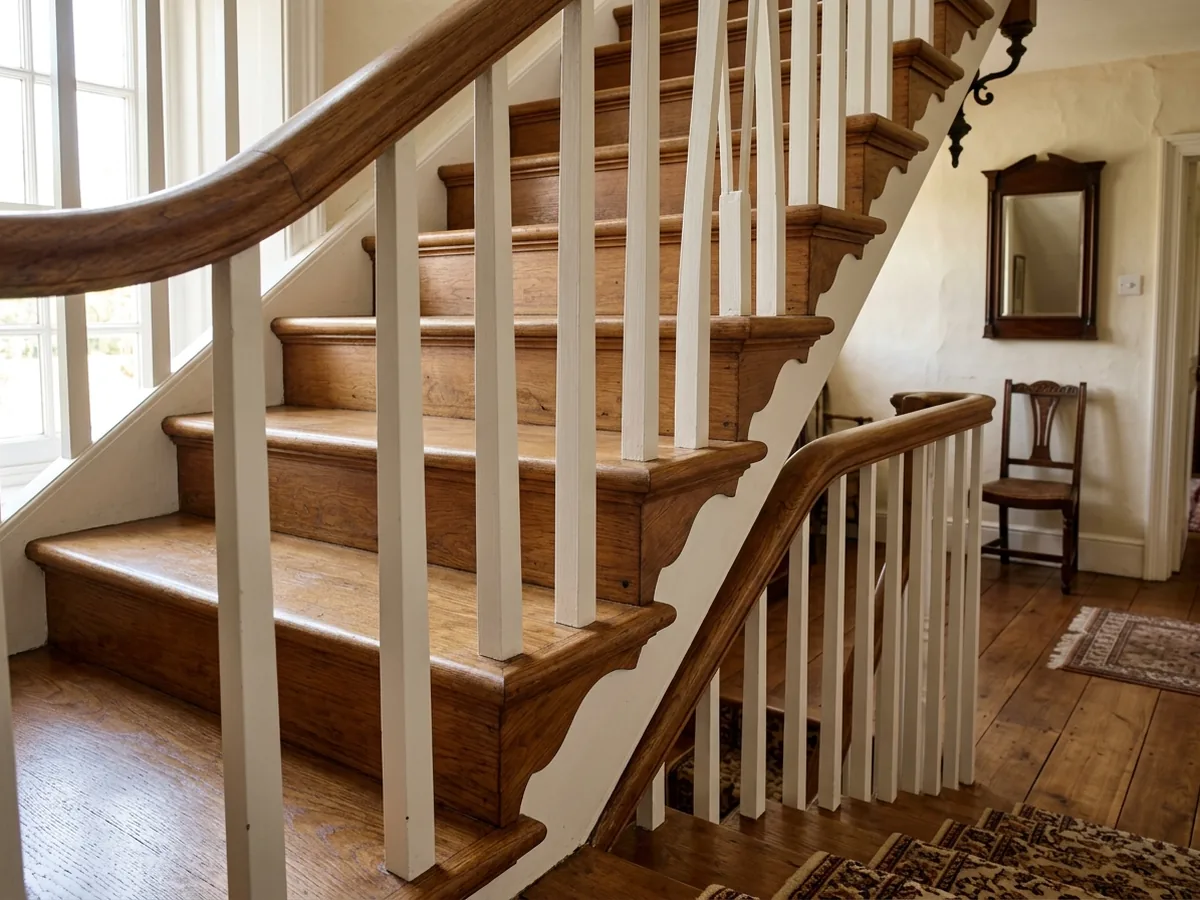
On an open-sided stair, the tread end shows, so it gets a return: a mitered piece that carries the nosing profile around the end of the tread. Balusters usually stand in holes drilled into the treads, which makes tread replacement slower on these stairs. New tread thickness matters here too. Handrail height is measured from the nosing line and must stay between 34 and 38 inches, so raising every tread shrinks the rail's height by the same amount.
Basement stairs are often open-riser softwood. The code allows open risers, but where the stair is more than 30 inches above the floor below, the gaps must not let a 4-inch sphere through. That decides whether you can keep them open when the stair gets hardwood treads.
Why Ann Arbor homeowners call Ann Arbor Wood Flooring
- Free estimate, and you can ask for it in writing, species and finish named
- One independent local floor contractor gets your request, not a call list
- No fee to homeowners for the referral
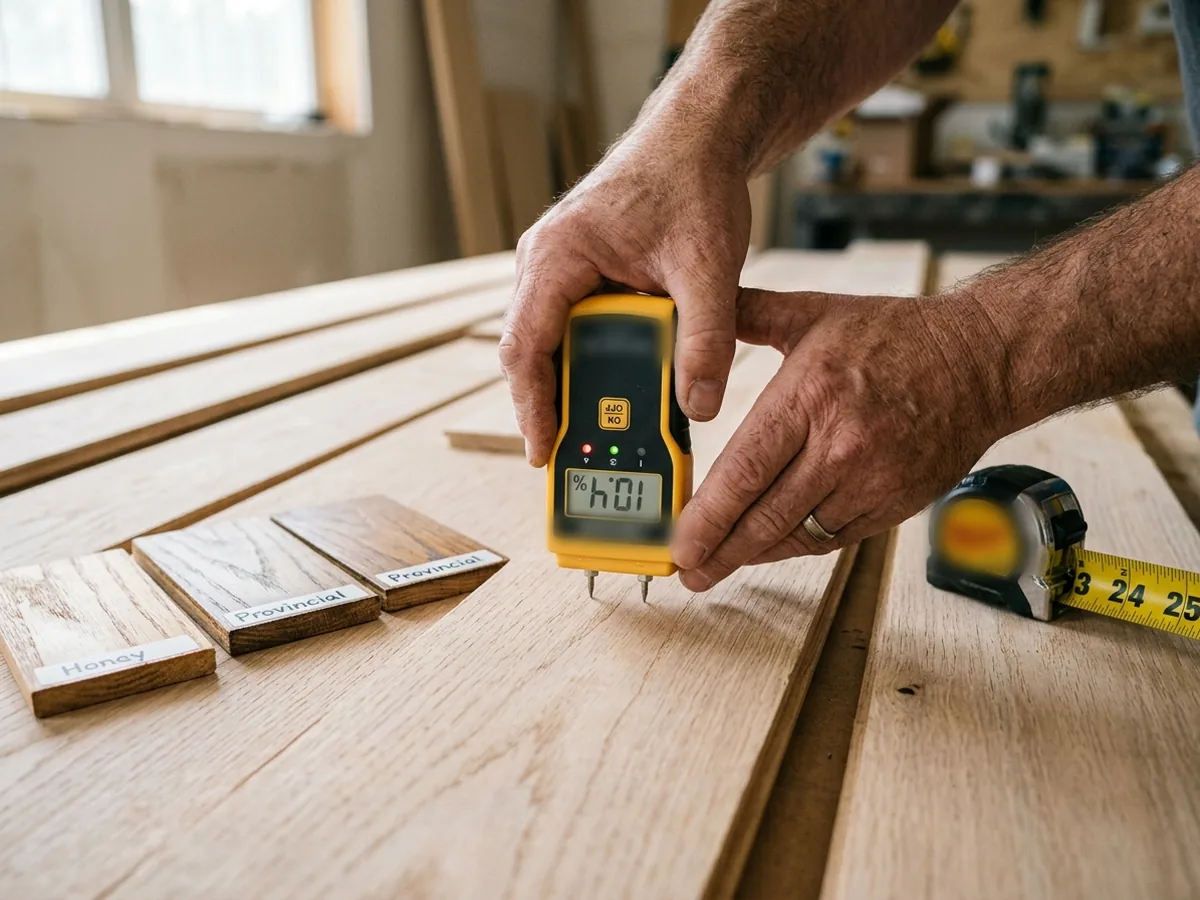
- Ask for moisture readings before any new floor goes down
What Do Hardwood Stairs Cost?
HomeAdvisor's mid-2026 national figures put most hardwood stair projects at $1,800 to $6,300, averaging $2,400, or $100 to $300 per step with materials and labor. Most homes have 10 to 20 steps. Removing carpet and repairing what's underneath adds $150 to $1,560.
Open sides with returns, winders, landings and painted risers all add labor. Refinishing existing wood stairs costs far less, $300 to $1,000 in the same HomeAdvisor data. New-floor prices are on hardwood floor installation cost.
What Should a Stair Estimate Spell Out?
A stair estimate should state the tread and riser material, whether treads are replaced or capped, how the top and bottom riser heights will be kept within code, the nosing and landing trim, returns on open sides, and the stain and finish, plus who removes the carpet.
Ask whether the stairs will be finished at the same time as the floor, and in what order. In a house with one staircase, ask whether alternate steps can be finished on alternate days so the stair stays usable. For railings and painted risers on stairs you keep, see staircase refinishing in Ann Arbor. For the rest of the house, start with hardwood floors in Ann Arbor.