
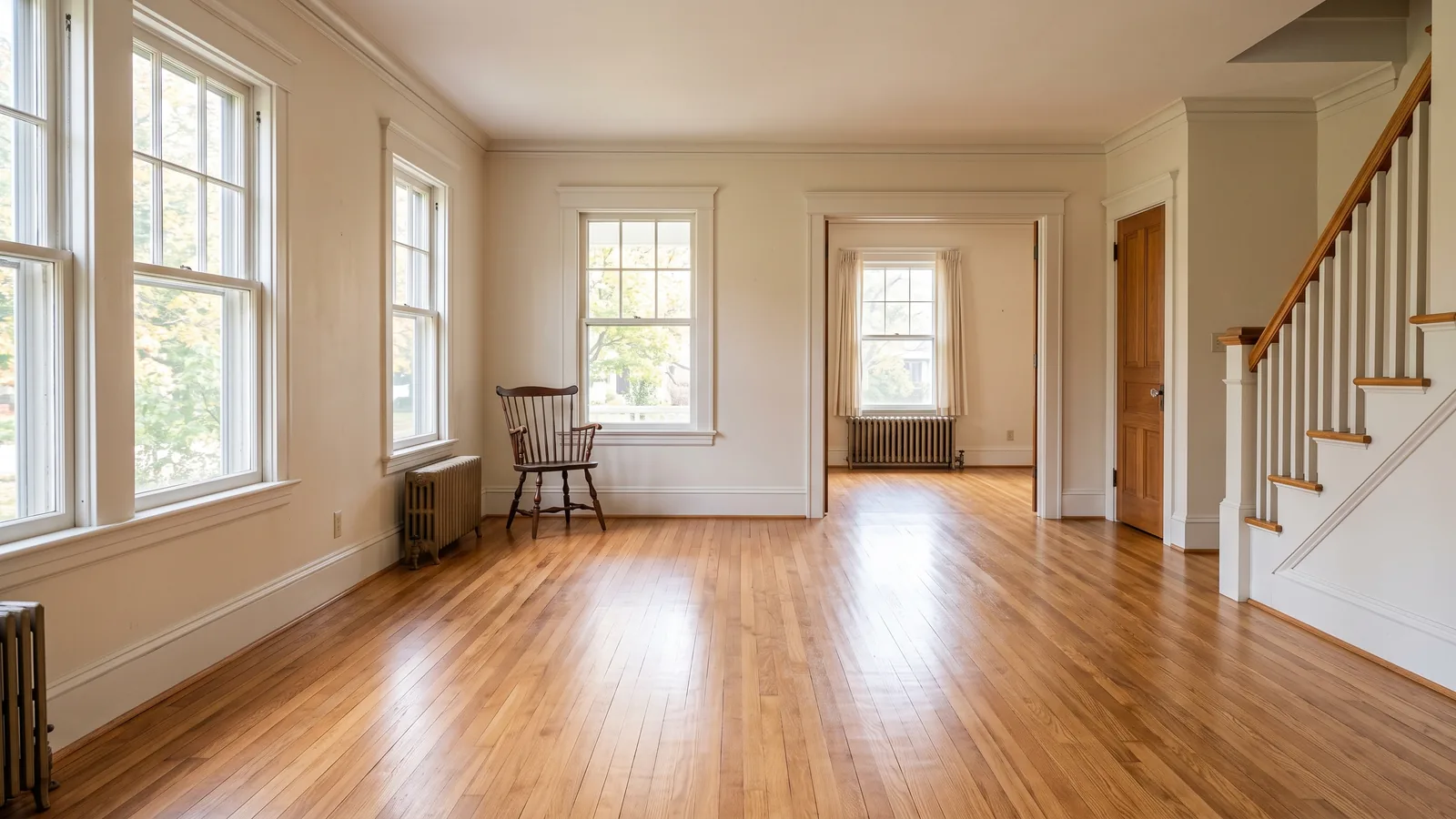
Hardwood Floor Stain Colors, from Natural to Ebony
Natural and Clear Finishes
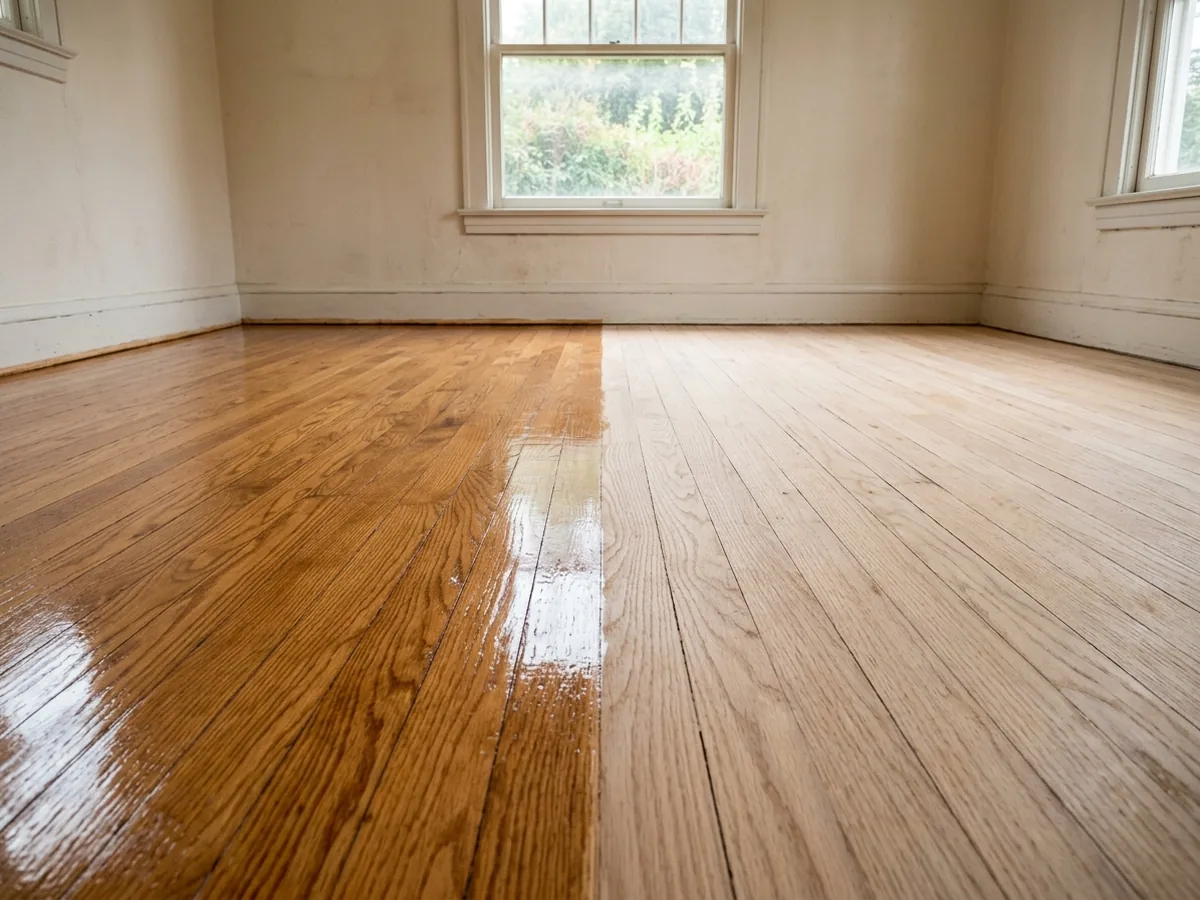
"Natural" means no stain at all: sanded oak with clear coats on top. It still isn't the color of raw wood, because any finish darkens the boards a little. Water-based polyurethane dries clear and stays close to the sanded color, while oil-modified poly gives the amber glow many older Ann Arbor floors already have (the chemistry is on hardwood floor refinishing). Osmo says its hardwax oils give wood a "permanent wet effect", so an oiled floor looks the way bare oak does when you wipe it with a damp rag.
Natural is also the cheapest choice. There's no stain line on the estimate and one less drying step. Our view: on red oak strip in a 1920s or 1950s house, natural under a waterborne finish is the look that ages best, since nothing goes out of fashion that was never added.
Brown Stains on Red and White Oak
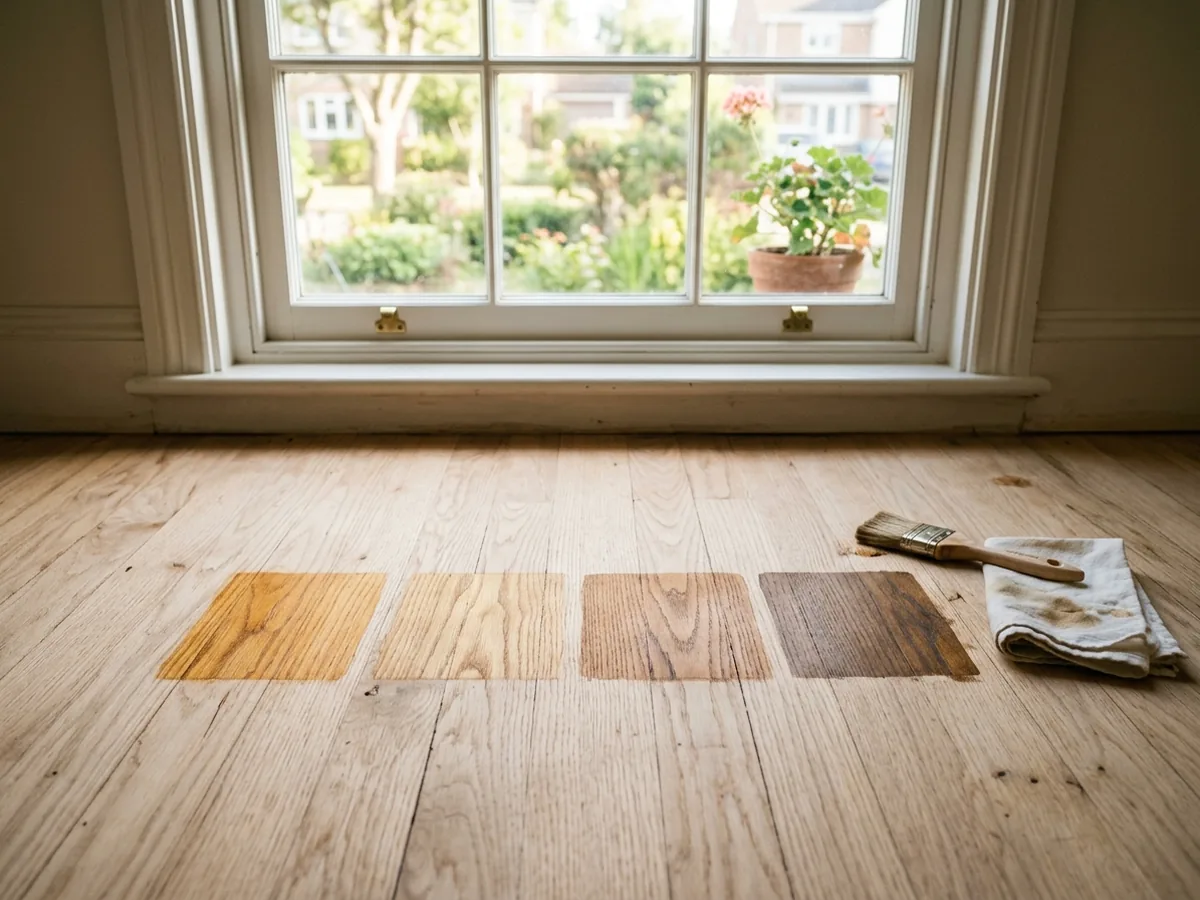
Brown stains are what most oak floors get, and oak takes them well. The Wood Database says both red and white oak stain and finish well. Red oak starts warm and slightly pink, white oak cooler (the species notes are on the Ann Arbor hardwood floors page), so the same can of stain can look like two different browns on the two woods. White oak also contains tannins that react with some finishes and chemicals; that's covered on white oak flooring.
That's why the color chip at a store is close to useless. Sample patches on your own floor are the only test worth trusting. Ask the refinisher to:
- sand the sample area to the same final grit as the rest of the floor, since the grit changes how the wood takes stain;
- brush out three or four candidates side by side, each labeled in pencil on the subfloor edge or tape beside it;
- put the actual topcoat over half of each sample, because the clear coat shifts the color;
- leave them for you to see in morning light, afternoon light and lamplight.
The Hardwood Floors Magazine article on water popping puts it plainly: the most important step is making sure the customer approves a sample color.
Gray, Whitewash and Light Tones
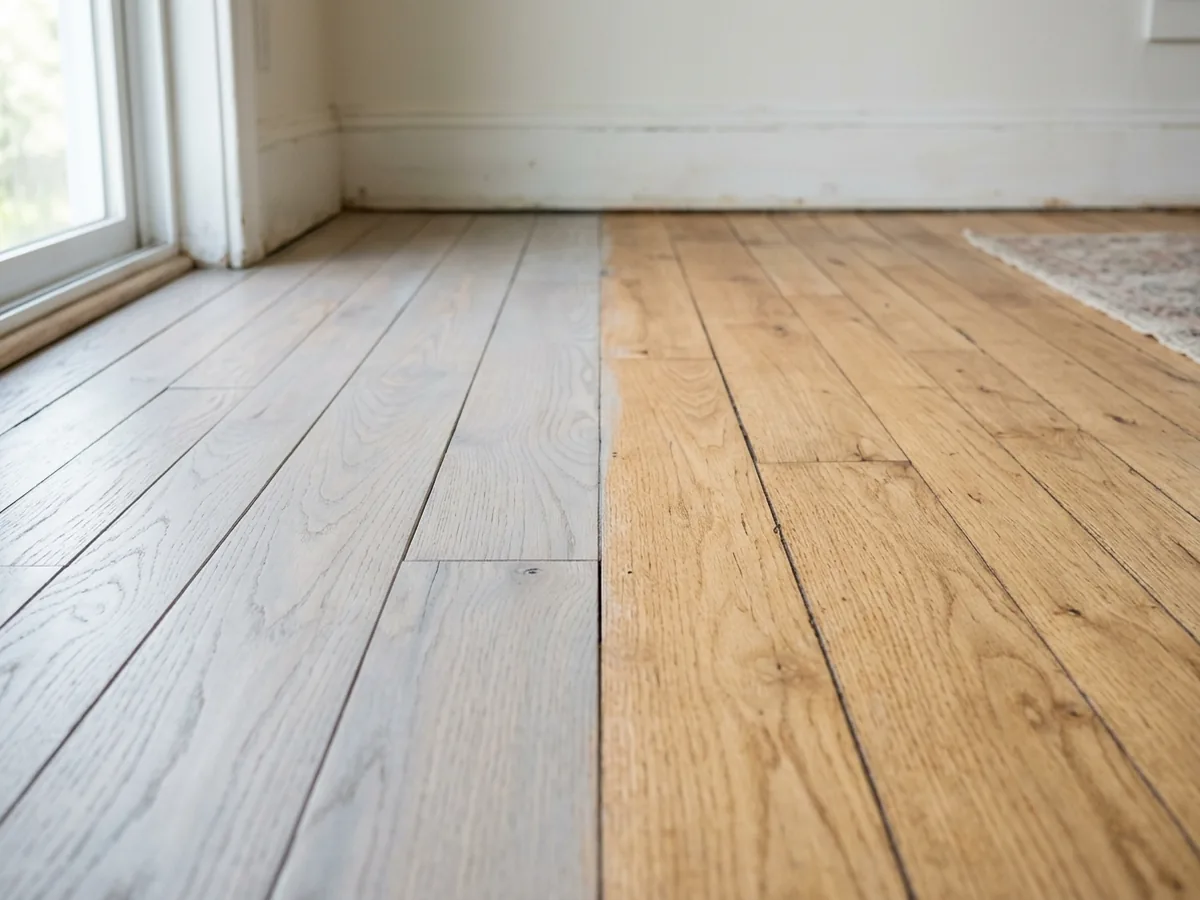
Going lighter is the hardest color change, and it always means sanding to raw wood. The NWFA's refinishing guidance says sanding back to bare wood is the time to change color. You can't bleach a dark stain lighter with a recoat. HomeGuide lists whitewashing at $3 to $8 a square foot, at the top of the refinishing range, because it takes both a full sand and a stain; full prices are on the refinishing cost page.
Gray and white stains are pigmented, and they sit on top of whatever undertone the wood has. Our view: gray over red oak can come out with a pink or purple cast, so test it twice before committing. One refinisher profiled by Wood Floor Business mixes gray and golden-brown stain half and half for a sandy "greige", and says the brown neutralizes some of the gray and makes it easier to work.
Species matters more here than with brown stains. Minwax says its pre-stain conditioner is especially necessary on pine, alder, birch and maple, all woods that blotch. The Wood Database notes that hard maple may need a conditioner, gel stain or toner. A maple floor stained light gray without one of those can come out blotchy, and the only fix is another full sand.
Dark Stains and Ebony
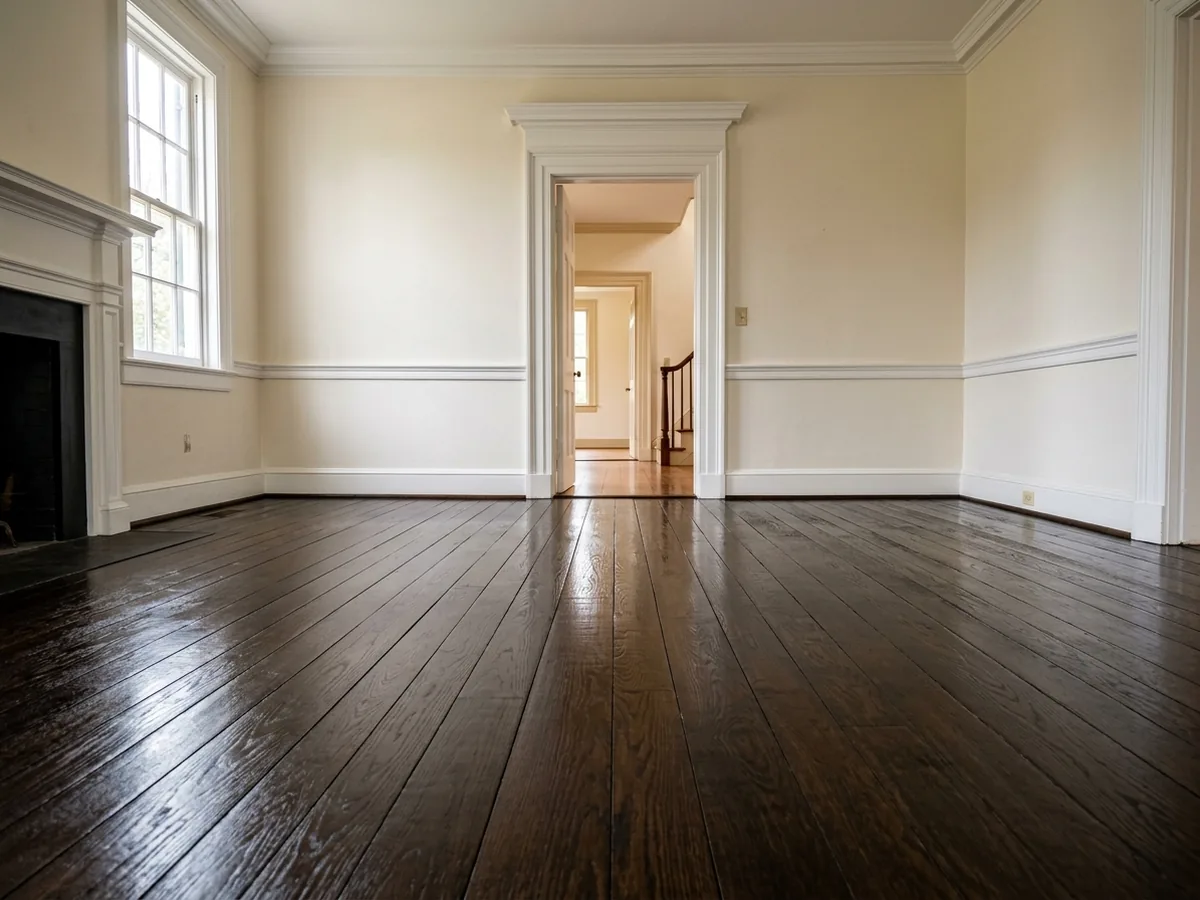
Dark walnut, jacobean and ebony look striking right after the topcoat goes on. Living with them is another matter. This Old House warns that darker stains don't hide dirt and actually make dust more visible. Our view from the same logic: a scratch through a dark floor exposes the lighter wood underneath, and dog claws show quickly.
Dark colors usually need a water pop to look even. After the final sanding, the refinisher wets the whole floor with clean water to raise the grain, lets it dry, then stains. Hardwood Floors Magazine says popping gives deeper, richer tones than putting on more coats of stain, which manufacturers often advise against because of adhesion problems. It also takes out the sweat drops, knee prints and hand marks a crew can leave on a sanded floor.
A popped floor is delicate until the stain goes on. Anything dragged across it crushes the raised grain, and that spot takes stain lighter. It's one reason to stay out of the rooms on staining day, even in socks.
Hardwax color oils are a different system: color and finish in one coat, with no separate stain. See hardwax oil finishes.
Why Ann Arbor homeowners call Ann Arbor Wood Flooring
- Free estimate, and you can ask for it in writing, species and finish named
- One independent local floor contractor gets your request, not a call list
- No fee to homeowners for the referral
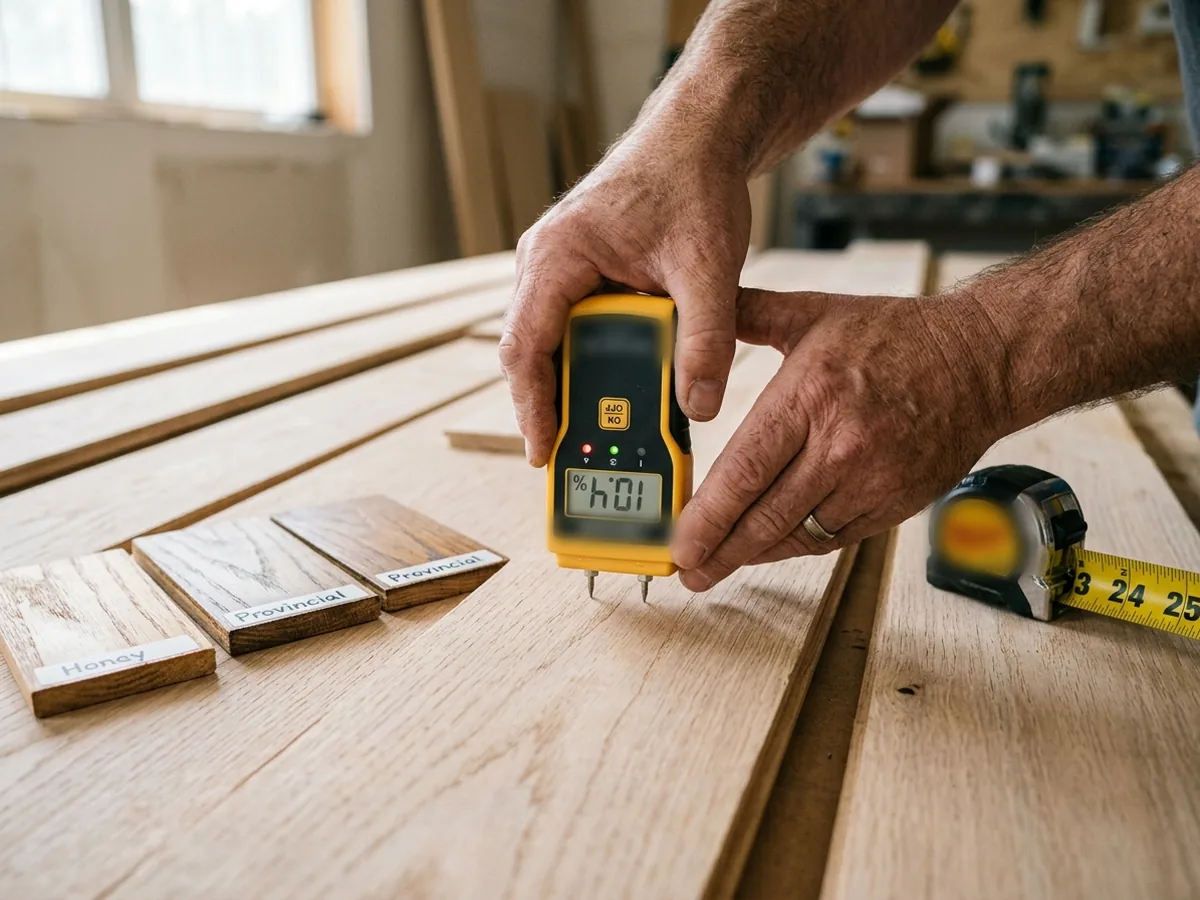
- Ask for moisture readings before any new floor goes down
What Should You Check Before Choosing a Stain Color?
Check four things before choosing a stain: the species (red oak, white oak, maple or pine each take color differently), sample patches on your own sanded floor with the topcoat over half, how the color looks in your own light at different times of day, and how much dust and pet traffic the room gets. Then pick.
A few details make the decision easier:
Pet stains
Black urine stains in oak are a repair question before they're a color question. See hardwood floor repair.Matching rooms
If a new patch or a new room has to match an old stained floor, the refinisher may need a test board stained both popped and unpopped to work out how the old color was made.
How Long Does Staining Add to a Refinishing Job?
Staining adds at least one drying step to a refinish, and a water pop adds another. The stain has to dry before the first coat of finish goes on, and the popped grain has to dry before the stain. HomeGuide's 2 to 6 days for a refinish stretches toward the long end with color, and humid weather or a cold house slows each step.
The order is sand, pop if needed, stain, dry, then finish coats. Plan to keep the rooms empty for the whole stretch. If you're weighing a full color change against a quick refresh, screen and recoat keeps the current color and costs less.