
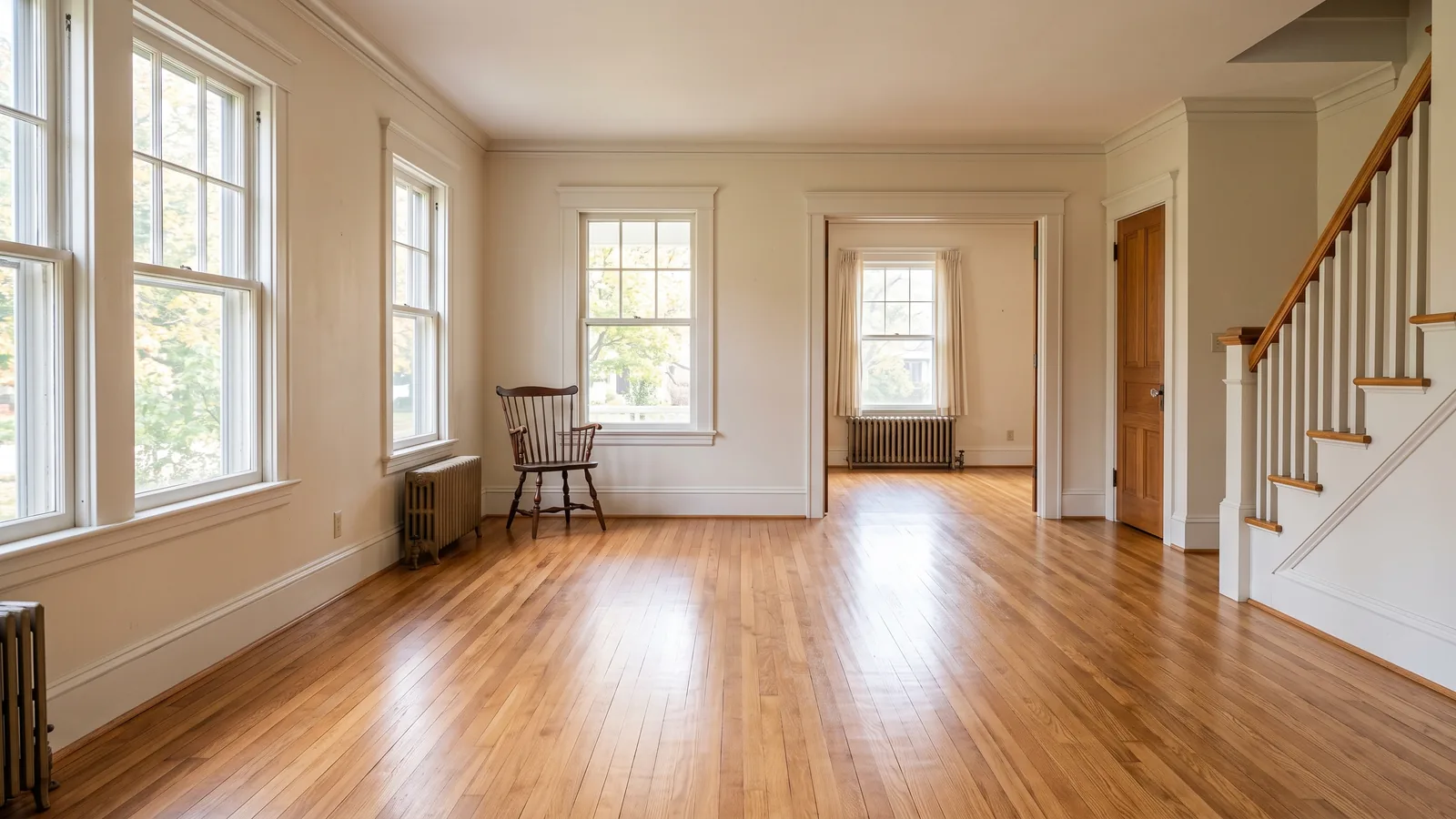
Hardwood Floor Refinishing, From the First Cut to the Last Coat
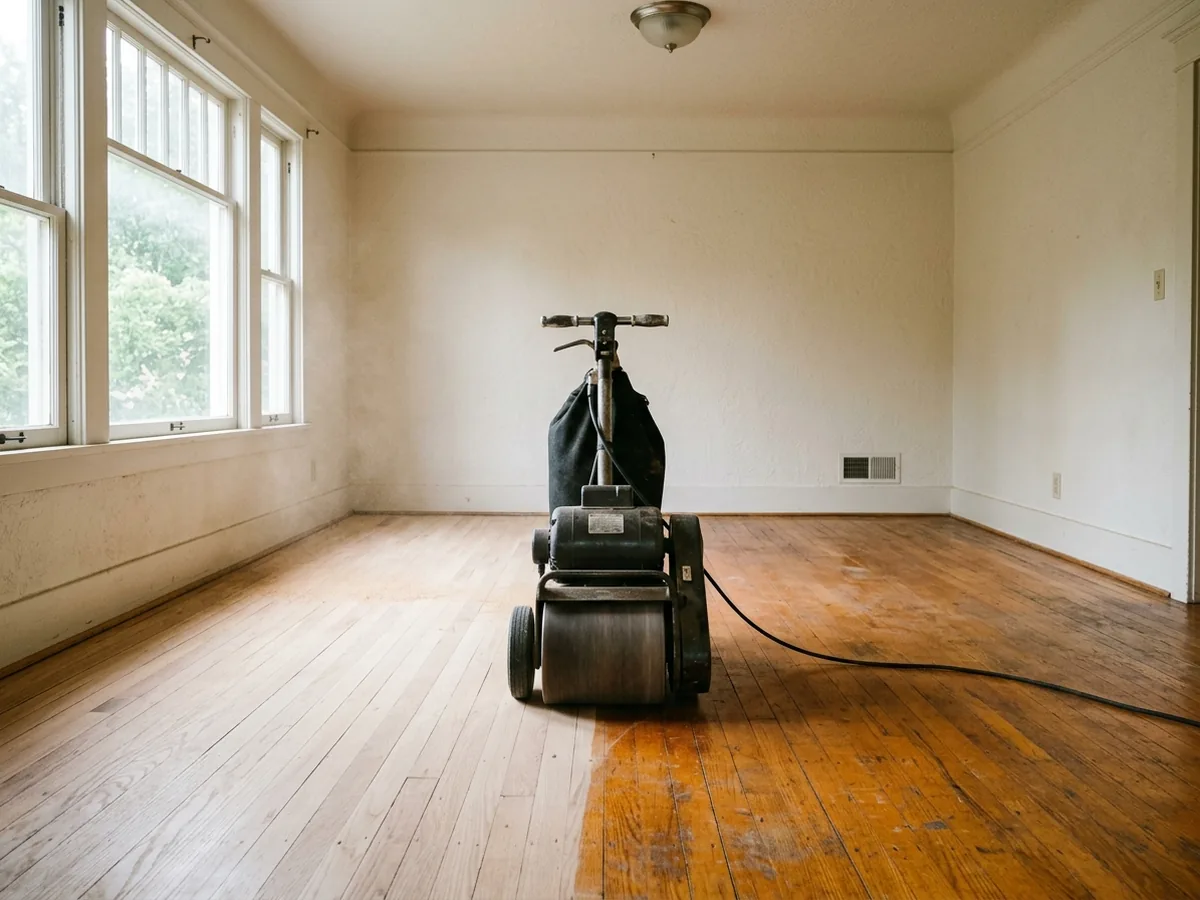
Full Sand and Refinish to Bare Wood
A full refinish removes the old finish and a thin skin of wood, leaving a flat, fresh surface ready for new coats. Wood Floor Business guidance calls for at least three cuts with the big machine and then a pass with the buffer. The rule that separates careful work from sloppy work is to skip no more than one grit between cuts: 36, then 50, then 80, or 40, 60 and 100 for a finer final cut. Jumping from 36 straight to 80 knocks the tops off the coarse scratches and leaves the valleys, which show up later under a glossy finish.
The edger follows each pass of the drum or belt sander along the walls, in closets and under radiators, with the same grit sequence. On strip and plank floors the big machine runs with the boards or at a 7 to 15 degree angle, never straight across them. After sanding the floor gets vacuumed. If you want color, stain goes on now, because stain only takes on raw wood (see hardwood floor staining for samples and water popping). Then the finish coats go on. Most of the fine dust comes off the drum, which is why it's worth asking about dustless hardwood floor refinishing.
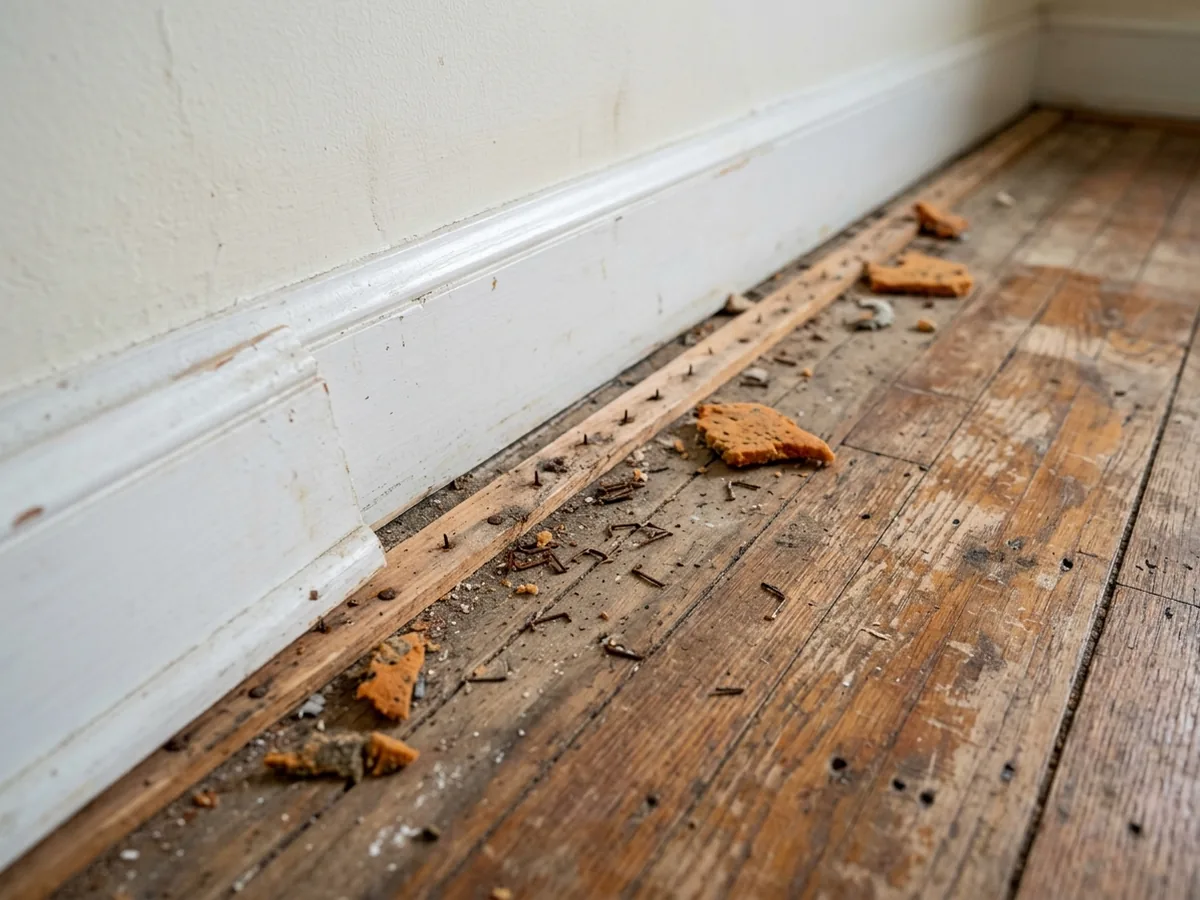
Refinishing Original Red and White Oak Strip Floors
A lot of older Ann Arbor houses have narrow red or white oak strip under carpet or behind decades of finish. Before any sanding, a careful crew pulls the base shoe so the edger can get tight to the baseboard, and it pulls every carpet staple and tack. One missed staple can tear a sanding belt and gouge a board.
Old finishes and the paint around them need a check before sanding. Wood Floor Business says to confirm that no finish, paint or adhesive contains lead or asbestos, and not to sand at all until you're sure. The lead rules for pre-1978 homes are covered on hardwood floor restoration.
Then comes the question of how much more the floor can take. HomeGuide puts a solid floor at 4 to 10 refinishes over its life, and Wood Floor Business says solid 3/4 inch flooring "can be sanded and refinished a number of times without problems." The NWFA adds that the true number depends on the contractor's skill and equipment, how flat the floor is, and its condition. Our view: a floor that's been sanded twice by different crews deserves a gentle first cut, not a 24-grit "just get it done" pass. Red oak's open grain takes stain evenly. White oak reacts to some products in its own way (see white oak flooring).
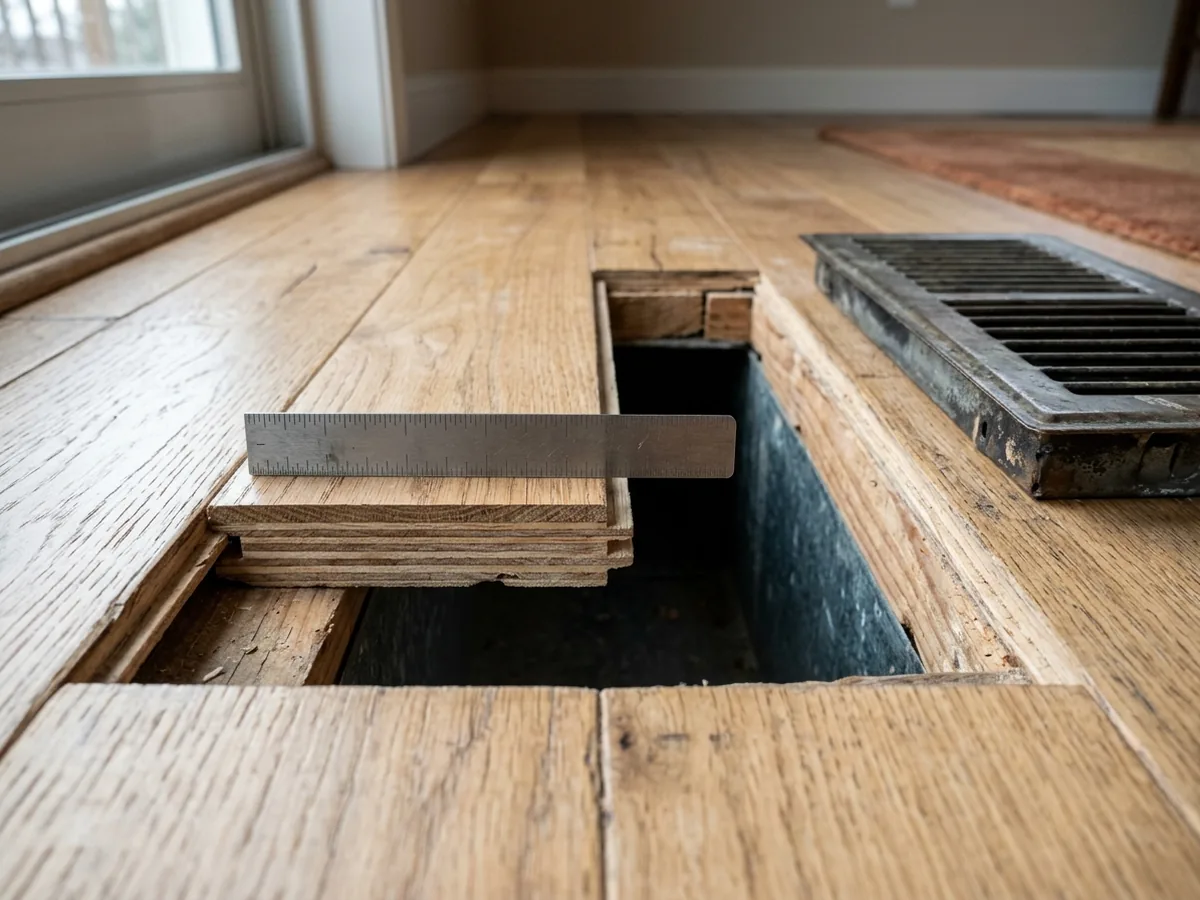
Refinishing Engineered Hardwood
Engineered floors can be sanded, but only through the real-wood veneer on top. How many times depends on that wear layer's thickness, which is explained on engineered hardwood installation. Wood Floor Business advises caution with engineered and thin floors, removing no more wood than necessary and starting with the least aggressive paper that does the job. If nobody knows the thickness, it says to pull a heat vent or find another spot where it can be measured. That takes two minutes and can save the floor.
Factory-finished boards can be resanded and refinished the same way as floors that were finished on site. Beveled edges are the catch. Sanding a beveled engineered plank flat means cutting deeper than the bevel. Leaving the bevels alone means old finish and grime stay in each groove. Get the contractor to say which approach they're pricing.
Waterborne vs Oil-Modified Polyurethane Coats
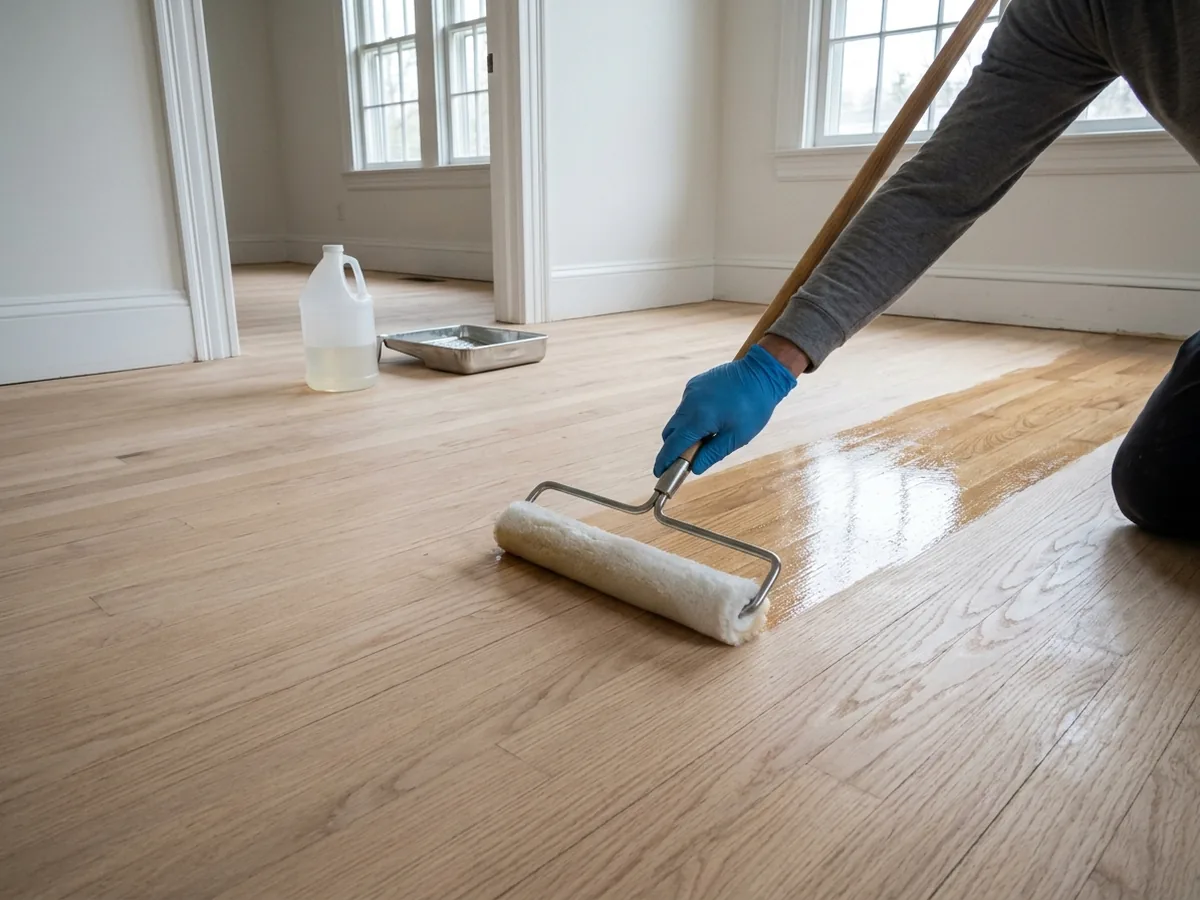
The finish decides the color you live with and how long the house is off limits.
- Waterborne polyurethane dries clear and stays clear, usually within about two hours (Family Handyman). A two-component waterborne such as Bona Traffic HD is dry in 2 to 3 hours, walkable after 24, 80 percent cured after one day and fully cured after three. Its data sheet says rugs stay off until full cure, and high humidity or low temperatures stretch the drying time.
- Oil-modified polyurethane gives an amber glow that deepens red oak. Family Handyman gives a five-hour wait between coats and 12 hours after the last, plus a strong odor that lingers for a few days. Minwax's fast-drying oil-based floor poly lists a 3 to 4 hour dry time and recoating within 12 hours without sanding.
Our take: oil-modified looks right on a 1920s red oak floor that has always been amber. Waterborne suits white oak, maple and anyone who can't leave the house for long. Hardwax oil is a third route with its own care routine; see hardwax oil floor finish.
Refinishing Kitchens, Hallways and Other High-Traffic Rooms
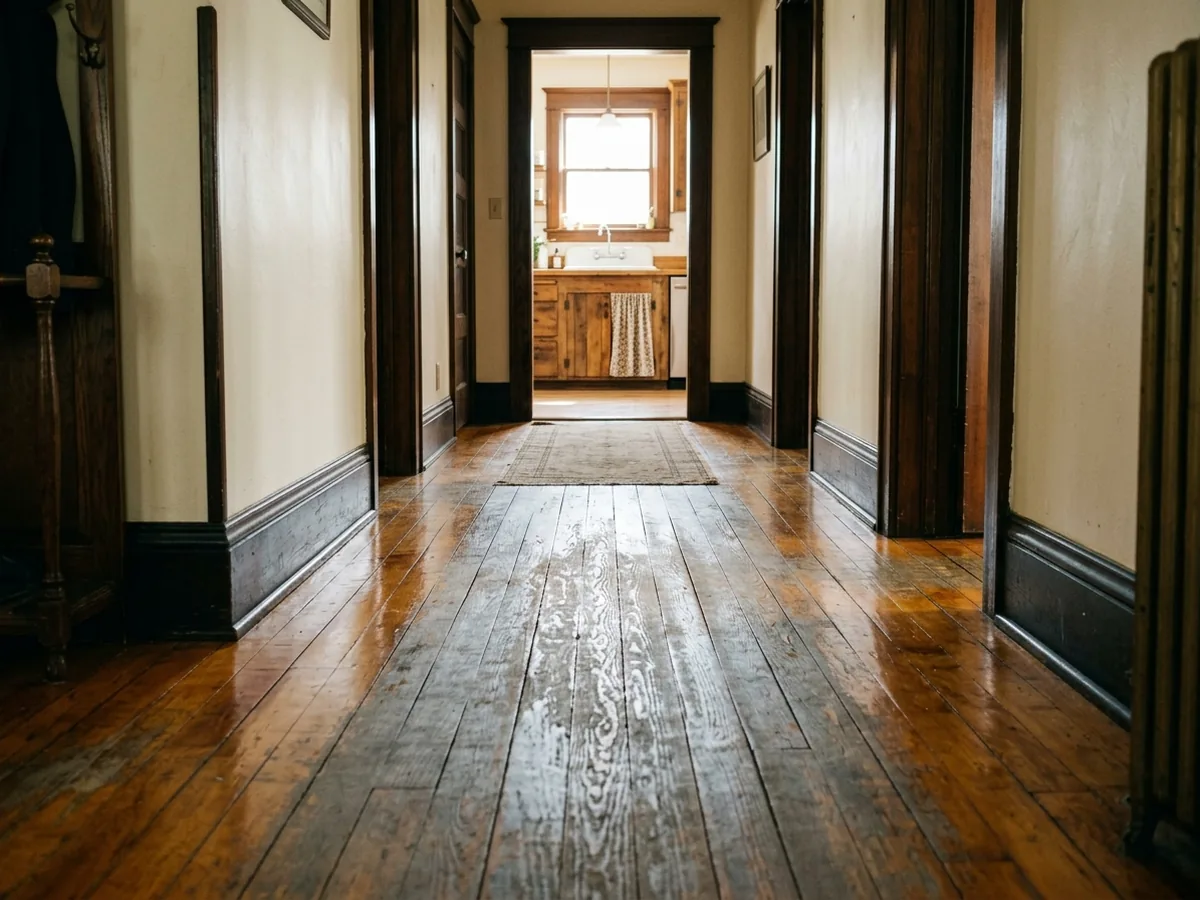
Kitchens and hallways wear out first, usually as a gray lane where the finish has gone and bare wood has started to soak up dirt. Wear that has reached the wood needs sanding. Wear that's still only in the finish can often be handled with a screen and recoat, which skips the sanding.
In a kitchen, the edger and a hand scraper do much of the work along cabinet toe kicks, and the fridge and range have to come out so the floor beneath gets coated too. Ask whether the contractor is pricing a one-component or two-component finish for these rooms, and how many coats. A hallway connecting every bedroom also needs a plan for getting around while the finish dries, often by doing the floor in two halves.
Why Ann Arbor homeowners call Ann Arbor Wood Flooring
- Free estimate, and you can ask for it in writing, species and finish named
- One independent local floor contractor gets your request, not a call list
- No fee to homeowners for the referral
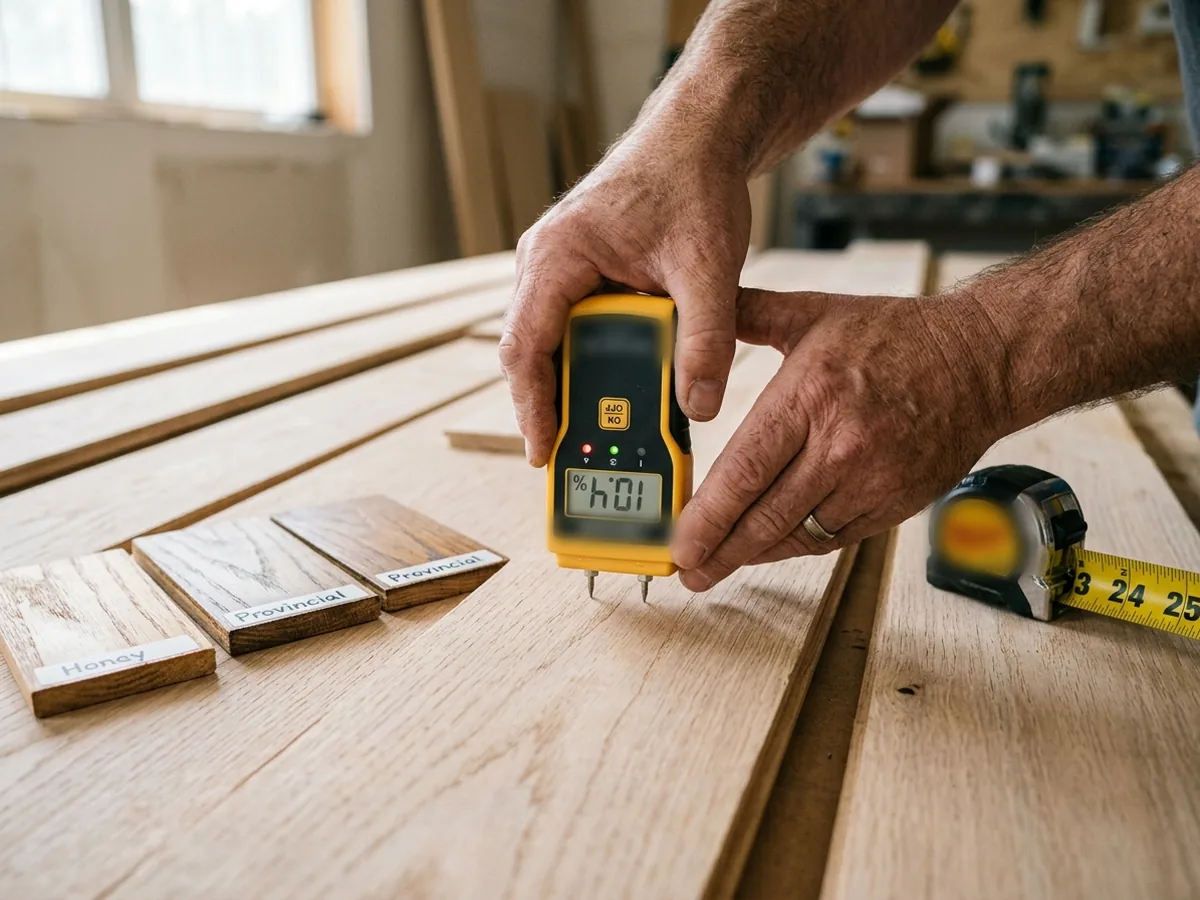
- Ask for moisture readings before any new floor goes down
What Should a Hardwood Floor Refinishing Estimate List?
A good refinishing estimate names the sanding sequence and final grit, the finish by product and type, the number of coats, the stain color, and every extra: board repairs, stairs, base shoe removal and reinstall, furniture moving and dust containment. If one of those is missing, you can't compare two bids fairly.
Two bids for the "same" job can differ by a whole coat of finish or by who reinstalls the trim. For price ranges and what moves them, see hardwood floor refinishing cost. Damaged boards should be handled before sanding, so a separate hardwood floor repair line may belong on the same estimate.
When Can You Walk on the Floor and Move Back In?
Plan for socks on a waterborne floor after about 24 hours, furniture back on felt pads once the contractor clears it, and rugs only after full cure (three days for a two-component waterborne like Bona Traffic HD). Oil-modified finishes need longer between coats and smell for days. HomeGuide puts the whole job at 2 to 6 days, depending on room size, coats and drying time.
Weather plays a part in Ann Arbor. Cold, humid stretches slow waterborne drying, and a dry heating-season house can open gaps that stain then highlights (more on humidity on the homepage). We'd ask the contractor to write down the walk-on, furniture and rug dates for your chosen finish rather than trust a verbal "a couple of days."
Related: screen and recoat in Ann Arbor, hardwood floor staining, dustless hardwood floor refinishing and the full range of hardwood floors in Ann Arbor.